

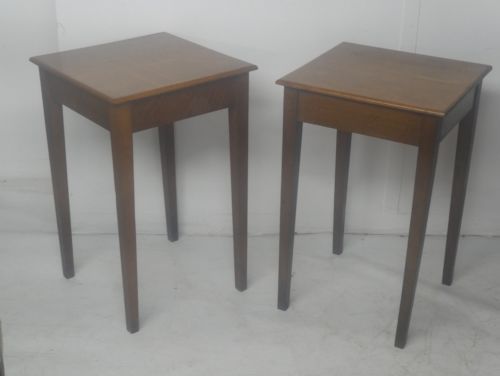

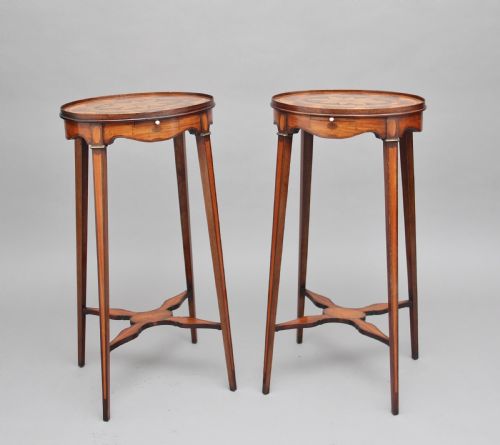


Pair Tall Occasional Tables
Pair tall occasional tables offer useful vertical display surface and balanced proportion, matching side table utility with heightened stature.
Pair Tall Occasional Tables
Pair tall occasional tables comprise matched pairs of elevated smaller tables designed for placement beside seating or in hallways, functioning as surfaces for lighting, plants or decorative objects. The selection draws primarily from nineteenth century, Edwardian and nineteen twenties periods, with origins spanning English workshops, Scottish country traditions and continental neoclassical movements.
The forms vary across urn stands, lamp tables, wine tables, bedside tables, and console tables, frequently sharing slender proportions and elevated height relative to standard coffee or low side tables. Swedish and French neoclassical designs appear alongside Sheraton revival mahogany pieces and burr elm constructions, providing diverse aesthetic options for interiors.
Buyers seeking these matched sets encounter variations ranging from simple painted Swedish stands to inlaid mahogany urn stands and Scottish oak lamp tables. Each piece serves functional surface needs while introducing symmetry to room layouts through its paired vertical format.
How they were made
Construction relies heavily on traditional timber selection, featuring hardwoods like mahogany, walnut, oak, burr elm, and amboyna alongside secondary woods such as pine. Cabinetmakers utilised these materials for structural stability and rich grain figure, often enhancing surfaces through decorative wood inlay and bone details.
Decorative finishing encompasses fine timber polishing, paint applications seen on neoclassical pieces, and intricate inlay work characteristic of the Sheraton revival style. These techniques reflect period workshop practices focused on combining structural durability with refined surface decoration.
Pair Tall Occasional Tables Retail Price Guide 2026
Typical asking prices for pair tall occasional tables among the pieces listed under this phrase on Sellingantiques today, from the lower quarter to the upper quarter. They describe what is for sale here now, not the wider market.
Listings feature mahogany, oak, walnut, burr elm, amboyna, and painted pine.
What varies in quality
Distinction across the range stems from timber selection, where dense burr elm, figured mahogany or amboyna with strong grain patterns surpass plain pine or standard oak. The crispness of wood inlay and the precision of joinery further separate standard utility pieces from finer cabinet work.
Design execution dictates overall refinement, visible in the harmony of proportions, the elegance of turned or tapered supports, and the retention of original painted or polished surfaces. Pieces displaying cohesive neoclassical styling or sophisticated Sheraton revival details demonstrate superior craftsmanship.
The Pair Tall Occasional Tables Glossary
- Urn stand
- A tall, slender table traditionally designed to support a decorative urn or vase. These pieces typically feature compact tops and elevated legs.
- Sheraton revival
- A late nineteenth and early twentieth century design movement that reinterpreted the lighter neoclassical furniture styles of George Sheraton. It frequently incorporates satinwood, mahogany, and delicate floral inlay.
- Inlay
- A decorative technique where contrasting woods, bone or other materials are inserted into recesses cut into the primary surface. This creates flat, patterned ornamentation across tabletops and friezes.
Pair Tall Occasional Tables: Frequently Asked Questions
Where should I place tall occasional tables?
These tables suit flanking positions beside larger upholstery, empty hallway corners, or paired beside a bed for extra height. Their elevated stature allows them to hold lamps or display items without dominating floor space.
Matching pairs create visual symmetry when placed either side of a fireplace, doorway or console, grounding the arrangement while adding functional surface area.
What periods do these tables come from?
The available pieces span the nineteenth century, Edwardian era, and the nineteen twenties, reflecting various historical revivals and regional designs. You will find nineteenth century English and Swedish examples alongside Edwardian Sheraton revival creations and nineteen twenties interpretations.
Each period imparts distinct characteristics, from neoclassical painted finishes to rich mahogany and burr elm grain patterns.
How do I identify a Sheraton revival piece?
Sheraton revival tables, dating around nineteen hundred, draw inspiration from eighteenth century neoclassical furniture through light proportions, straight tapered legs, and contrasting wood inlay. They often utilise mahogany and satinwood to achieve a refined, elegant aesthetic.
Examining the crispness of the inlay and the delicacy of the framework helps distinguish these revival pieces from earlier original items.
Are these tables sturdy enough for daily use?
Heightened tables naturally possess narrower footprints, making them ideal for display, lighting, and lighter items rather than heavy loads. Solid timber construction in woods like oak, mahogany and walnut provides dependable everyday stability.
Placing them away from high traffic zones protects their slender legs and delicate inlaid surfaces while ensuring secure daily placement.