

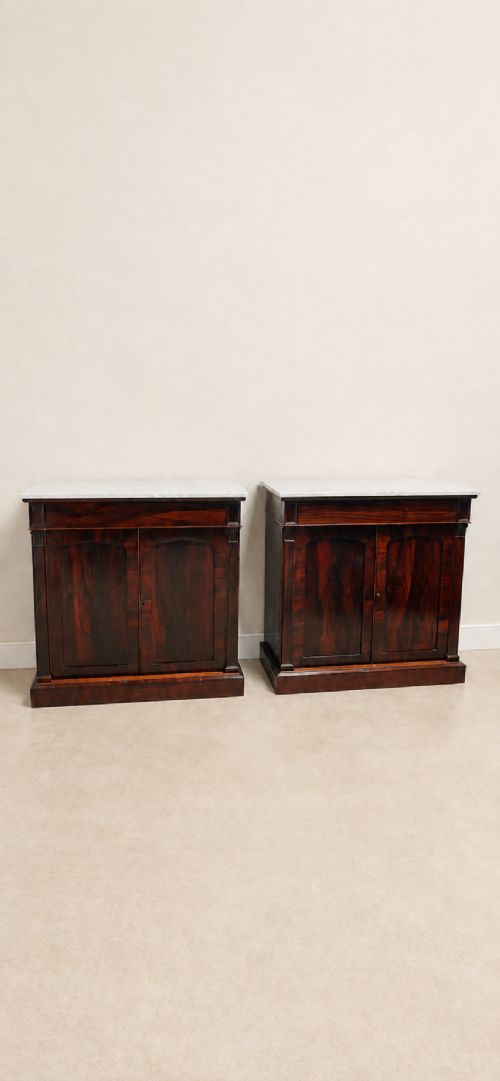
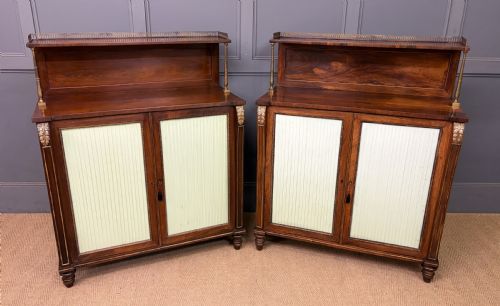


Pair Regency Sideboards
These pair regency sideboards and related twin pieces offer architectural presence and matched storage, making them essential for a formal dining room.
Pair Regency Sideboards
When you search for pair regency sideboards, you encounter twin dining room pieces spanning the Regency, Georgian and 19th Century periods, alongside related serving tables and pedestal cabinets. These matched compositions are designed to balance a large room, offering symmetrical display and storage surfaces that anchor a formal interior.
The versions most likely to meet you on this page are rosewood or mahogany side cabinets and serving cupboards, often featuring brass inlay and flame mahogany veneers. Alongside true Regency examples, you find Georgian serving tables and 19th century pedestal formats that share the same architectural ambition.
How they were made
Cabinet makers constructed these pieces using solid mahogany and rosewood, frequently applying flame mahogany veneer to large flat surfaces to create striking grain patterns. Fine brass inlay and occasional gilding pick out the structural lines, adding crisp contrast to the dark timber.
Internal elements and secondary structures utilise solid timber framing, while specialised hardware secures the doors and supports heavy serving dishes. The joinery reflects traditional cabinet making standards designed to withstand decades of domestic use.
Pair Regency Sideboards Retail Price Guide 2026
Typical asking prices for pair regency sideboards among the pieces listed under this phrase on Sellingantiques today, from the lower quarter to the upper quarter. They describe what is for sale here now, not the wider market.
Some warming dishes hiding among these sideboards were once filled with hot water to keep mutton hot for lingering lords.
What varies in quality
Quality rests in the selection of the timber and the precision of the brass inlay work, where finer pieces display continuous, unbroken grain across matching doors. The depth of the flame mahogany veneer and the crispness of any carved or applied ornamentation separate standard utilitarian storage from high design cabinet making.
Proportion and symmetry between the two pieces define the upper tier of the range, ensuring that matched pairs share identical timber figure and scale. Structural integrity in the carcase and the original condition of the surfaces determine the lasting merit of the piece.
The Pair Regency Sideboards Glossary
- Breakfront
- A piece of furniture whose central section projects forward from the flanking cupboards or pedestals. This configuration creates strong shadow lines and adds architectural depth to large dining rooms.
- Pedestal
- A tall, freestanding column or cabinet base used singly or in pairs to support urns, figures or serving items. In dining furniture, pedestals often conceal storage cupboards or warming compartments.
- Flame mahogany veneer
- A thin slice of mahogany timber cut from the fork of the tree where branches meet the trunk. This cut produces a characteristic swirling, flame-like pattern highly prized for cabinet doors.
- Chiffonier
- A low sideboard or cabinet equipped with enclosed shelving and occasionally a small superstructure. These pieces gained popularity during the nineteenth century for dining and drawing room storage.
- Serving table
- A long, narrow table designed for the preparation and presentation of food during meals. They pre-date comprehensive sideboard designs and often feature unencumbered open frames beneath the top.
Pair Regency Sideboards: Frequently Asked Questions
Why were they made as pairs?
Dining rooms of the Georgian and Regency periods required absolute symmetry to satisfy contemporary architectural taste. Twin sideboards or pedestals balanced the fireplace or large windows while providing functional workspace for large households.
Splitting the storage into two distinct pieces allowed servants to manage food service and silverware from opposite ends of the room. This layout also made it easier to move heavy pieces during cleaning and seasonal redecoration.
How do I style them in a modern room?
Place them on opposite walls or flank a large doorway to restore the architectural balance they were built to create. Use the tops for lamps, ceramics or decorative trays rather than everyday clutter.
Keep surrounding furniture simple to let the dark timber and brass details stand out without competing for attention. Their formal proportions anchor open plan spaces when positioned thoughtfully against main walls.
What is the difference between a sideboard and a pedestal?
A sideboard is a continuous low cabinet designed for serving food and storing dining linen, often featuring multiple drawers and cupboards. A pedestal is a taller, narrower vertical unit that can stand alone or link to other furniture components.
Pedestals in dining rooms frequently housed plate warmers or cellarets for wine bottles. Sideboards offered a broader surface area specifically suited to plating dishes before they entered the dining space.
How do I spot a true Regency piece?
True Regency pieces display classical restraint, often incorporating brass inlay, rosewood veneers and architectural motifs inspired by ancient Greece and Rome. The construction methods should align with early nineteenth century workshop practices.
Compare the timber selection, secondary woods and hardware against known examples from the period. Transitional pieces from the Georgian era or later nineteenth century revues often blend these elements with Victorian weight.