

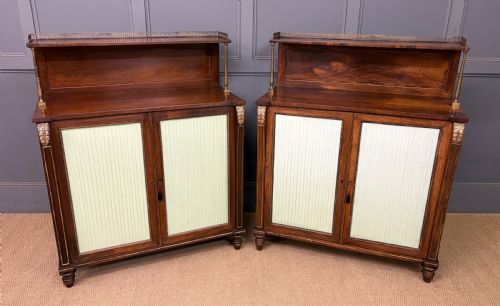


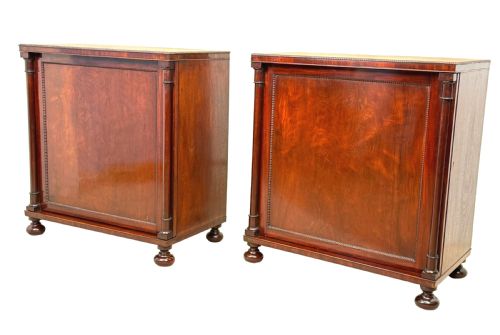


Pair Regency Side Cupboards
Pair regency side cupboards are matched sets of low storage timber furniture, built to bring symmetry and refined utility to nineteenth-century rooms.
Pair Regency Side Cupboards
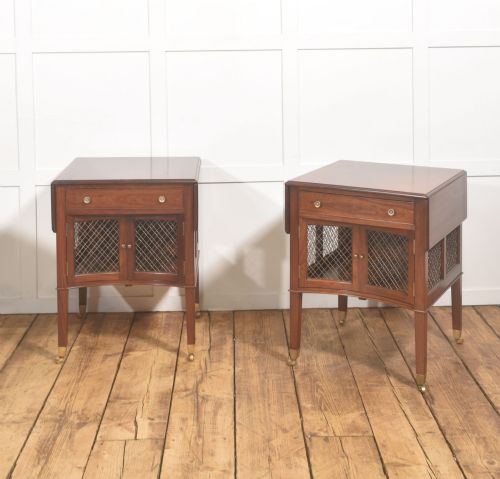
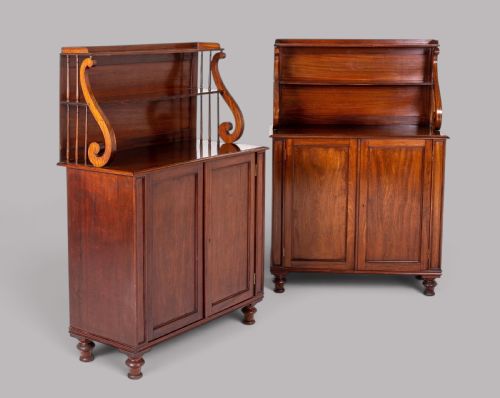
When searching for pair regency side cupboards, buyers encounter matched configurations of small storage furniture typically intended for formal rooms or private quarters. The examples available on this page lean heavily towards nineteenth-century craftsmanship, with Regency periods and related nineteenth-century revivals dominating the forms.
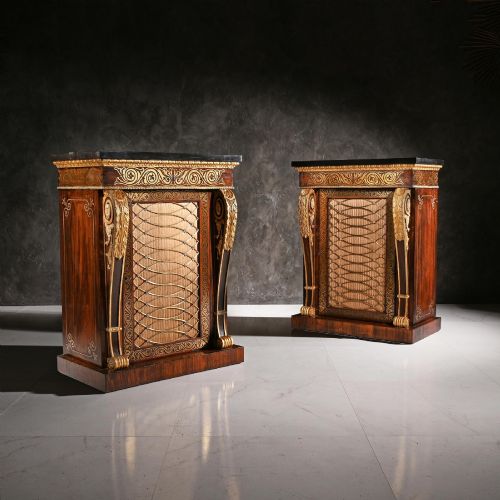
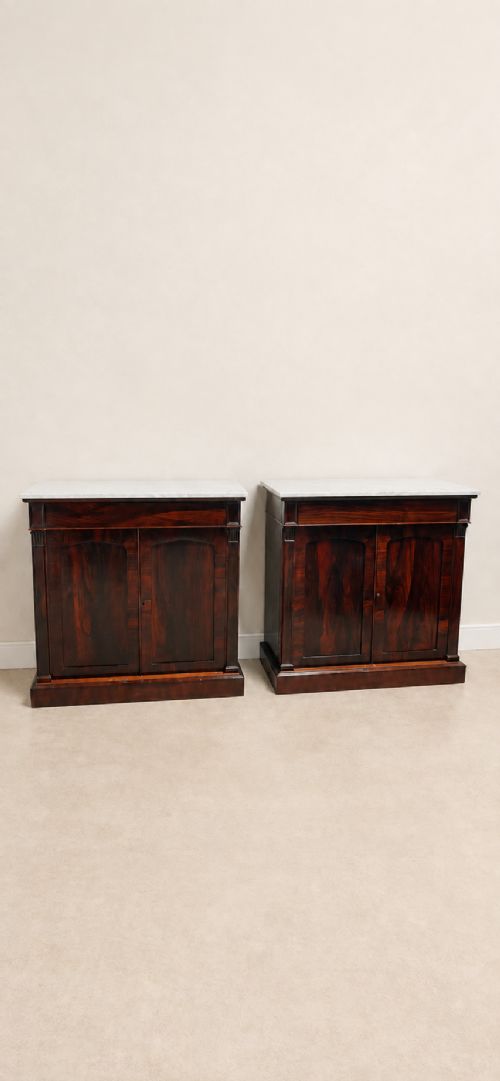
The objects themselves vary from side cabinets and pedestal cupboards to bedside units and chiffoniers, reflecting the diverse domestic needs of the period. Mahogany and rosewood form the backbone of the selection, frequently paired with secondary exotic timbers and functional brass hardware.
Most entries align with classic Regency, George IV, and William IV aesthetics, though occasional Gothic Revival or mid-nineteenth-century French influences appear. These paired items offer a cohesive layout for flanking a fireplace, doorway, or larger sideboard within a traditional interior.
How they were made
Makers utilised solid timbers alongside rich veneers, applying flame mahogany and rosewood over sturdy pine or oak carcases to achieve striking visual grain patterns. Brass inlay and fine mounts frequently accent the timber surfaces, requiring precise recessing and meticulous hand-fitting by skilled cabinet makers.
Marbled tops and silk fabric inserts occasionally appear within the construction, showing how diverse decorative arts were combined in a single item of furniture. Joinery relied on traditional dovetailed drawers and pegged frame construction to ensure durability across decades of daily domestic service.
Pair Regency Side Cupboards Retail Price Guide 2026
Typical asking prices for pair regency side cupboards among the pieces listed under this phrase on Sellingantiques today, from the lower quarter to the upper quarter. They describe what is for sale here now, not the wider market.
Materials appearing across current cabinet entries include mahogany, flame mahogany veneer, rosewood, goncalo alves, king-wood, marble, brass, and silk.
What varies in quality
The hierarchy of quality rests primarily on the choice of timber and the precision of its figure, from plain native hardwoods up to highly figured rosewood and exotic veneers. Superior examples display seamless book-matching on cabinet doors and crisp, deeply cast brass work that sits entirely flush with the wood.
Construction methods also separate standard workshop output from finer commissions, visible in the weight of the timber, the neatness of internal drawer dovetails, and the integrity of the original carcase. Pieces retaining untouched period surfaces and well-proportioned architectural lines command greater respect among serious collectors.
Louis Constantin Le Gaigneur
The Pair Regency Side Cupboards Glossary
- Regency
- A British design style spanning the late eighteenth century through the reign of George IV, noted for classical restraint and archaeological influence. It draws heavily on Greek, Roman, and Egyptian motifs.
- Rosewood
- A dense, heavily figured dark timber with characteristic purple or black grain markings, prized for high-end nineteenth-century cabinet work. It takes a brilliant polish.
- Chiffonier
- A low sideboard or cabinet featuring shelves or enclosed storage below, developed during the early nineteenth century for drawing rooms. It often includes fabric-panelled doors.
- Pedestal
- A standalone columnar or box-like cabinet base, frequently paired to support lamps, vases, or serve bedside functions. They provide compact vertical storage.
- Gothic Revival
- An architectural and decorative style mimicking medieval forms, characterised by pointed arches, trefoils, and ecclesiastical tracery. This aesthetic returned strongly during the nineteenth century.
Pair Regency Side Cupboards: Frequently Asked Questions
What rooms suit pair regency side cupboards?
These matched units work exceptionally well flanking a fireplace in a drawing room or framing a low sideboard in a formal dining space. Their balanced proportions bring immediate symmetry to an interior.
In private quarters, smaller variants serve effectively as bedside cabinets, offering enclosed storage while maintaining period character.
Are matched pairs harder to find than single cabinets?
Sustaining a matched pair across centuries is uncommon because furniture pieces often became separated through inheritance, house moves, or damage over generations. Surviving sets represent deliberate original commissions.
Buyers seeking symmetrical balance will find that matching pairs command distinct attention for their visual harmony.
How do I distinguish Regency from later Victorian pieces?
Regency and early nineteenth-century pieces generally favour clean classical lines, architectural restraint, and restrained brass inlay inspired by antique precedents. Timber choice leans towards rich mahogany and patterned rosewood.
Later Victorian interpretations, such as those from the mid-nineteenth century onwards, often introduce heavier carvings, bulkier proportions, or distinct Gothic Revival detailing.
How should I care for rosewood and mahogany surfaces?
Historic timbers require stable room environments protected from direct sunlight and dramatic humidity shifts to prevent veneer lifting and timber splitting. Regular dusting with a soft, dry cloth preserves the finish.
Applications of traditional wax polish should be done sparingly to feed the grain without building up heavy, dull residues over time.