

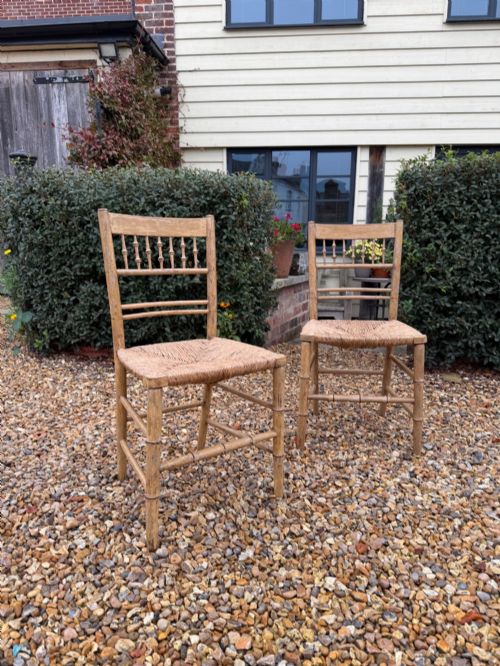
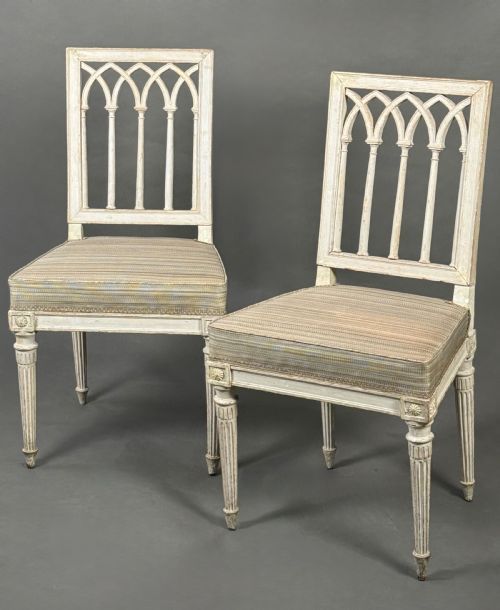
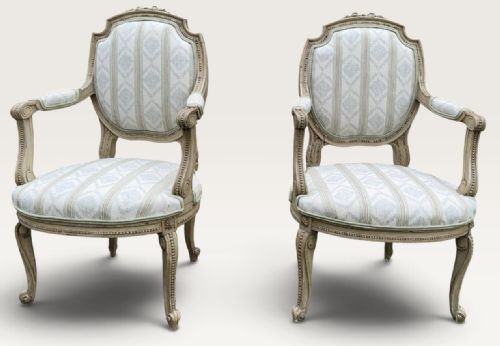
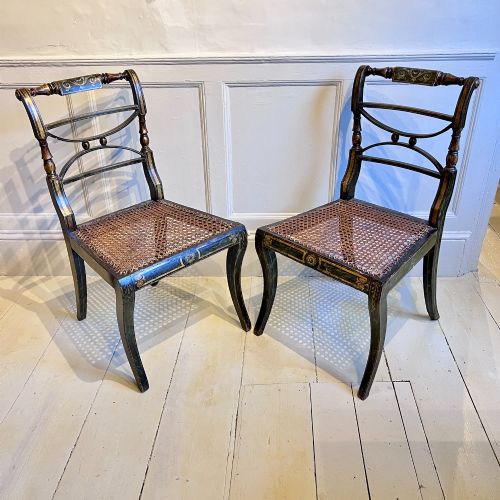
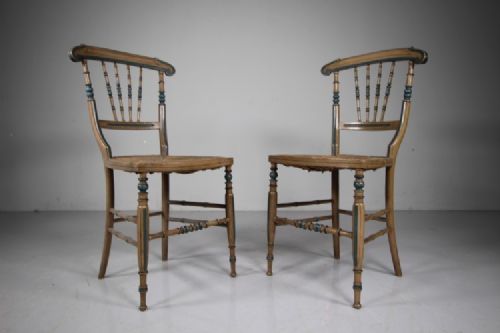


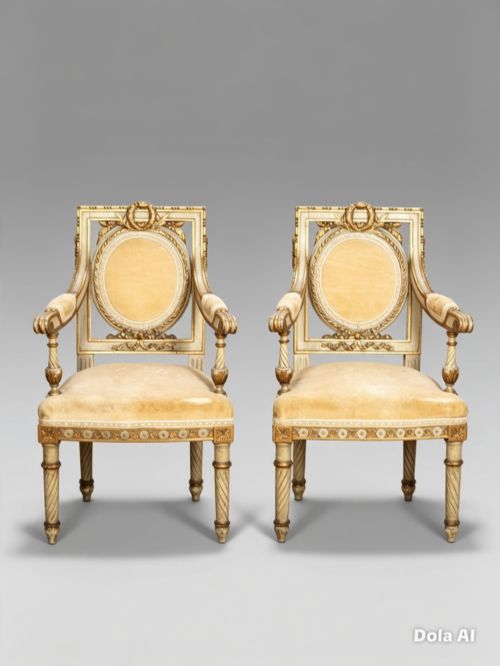


Pair Painted Bedroom Chairs
These pair painted bedroom chairs offer decorative elegance and practical seating, bringing period character and colour directly to a guest room or dressing space.
Pair Painted Bedroom Chairs
Pair painted bedroom chairs span several periods from the nineteenth century through the early twentieth century, encompassing Regency, Victorian, and Edwardian eras alongside French stylistic revivals. You will frequently encounter French armchairs, side chairs, and boudoir seating finished with decorative paintwork.
The forms range from compact bedroom chairs and side chairs to open armchairs and bergere seating. Many incorporate specific regional interpretations, including faux bamboo framing and neoclassical revival details derived from Louis XV and Louis XVI designs.
Originating largely from English and French workshops, these seats served domestic functions in private chambers and salons. The selection reflects diverse construction types, from cane-seat side chairs to upholstered boudoir models.
Materials and construction
Makers utilised timber substrates such as beech, pine, satinwood, and papier-mâché, often shaping them through hand carving and turning. Structural frameworks frequently incorporated natural supporting elements like cane, rush, and woven fabric.
Surfaces received decorative treatments involving paint, scumble finishes, gilding, and lacquering. Upholstery materials included velvet and diverse textiles, fixed to frames designed for domestic comfort.
Pair Painted Bedroom Chairs Retail Price Guide 2026
Typical asking prices for pair painted bedroom chairs among the pieces listed under this phrase on Sellingantiques today, from the lower quarter to the upper quarter. They describe what is for sale here now, not the wider market.
Listings feature wood, paint, cane, rush, and velvet across Regency, Victorian, and Edwardian periods.
Evaluating quality and finish
The standard of a painted chair rests heavily upon the preservation and depth of its original surface decoration. Pieces retaining authentic period paintwork or gilding present greater visual coherence than later or heavily restored coatings.
Construction integrity distinguishes finer pieces, evident in the crispness of hand carving on wood frameworks and the tightness of cane or rush weaving. The harmony between structural proportion and decorative motifs defines the upper tier of the range.
The Pair Painted Bedroom Chairs Glossary
- Bergere
- An enclosed upholstered armchair with wooden framing and solid sides, often featuring cane panels. These seats originated in France and provide deep, comfortable proportions.
- Scumble paint
- A decorative surface technique where a translucent glaze is manipulated over a base coat to create mottled or grained effects. This finish mimics more expensive timbers or adds textural depth to simpler woods.
- Chinoiserie
- A decorative style reflecting European interpretations of Chinese artistic traditions, featuring hand-painted motifs and scenic depictions. It appears frequently on satinwood and lacquered furniture.
- Faux bamboo
- Wood turned and carved to imitate natural bamboo stalks, popular during the Regency period. This technique combined exotic aesthetic appeal with durable domestic timber construction.
Pair Painted Bedroom Chairs: Frequently Asked Questions
How do I care for antique painted chairs?
Keep the timber away from direct heat sources and strong sunlight to protect the painted surfaces from drying or fading.
Dust gently with a dry, soft cloth and avoid chemical cleaning agents that might lift or damage historical paint layers.
Are these chairs suitable for daily seating?
Most of these chairs function well for occasional sitting in bedrooms or dressing rooms rather than heavy, constant use. Cane and rush seats benefit from sensible weight distribution and careful handling.
Checking the stability of the joints ensures the frame remains secure during everyday domestic life.
What defines the Regency style in these chairs?
Regency pieces often feature clean structural lines, classical motifs, and painted finishes that sometimes emulate bamboo or incorporate gilt detailing. They reflect early nineteenth-century English design tastes.
Their proportions tend to be neat and architectural compared to later Victorian iterations.
How do I identify French revival pieces?
French revival models draw inspiration from Louis XV and Louis XVI aesthetics, showing curved cabriole legs or straight fluted supports. They frequently feature carved floral details and painted or gilded surfaces.
These characteristics emerged strongly in late nineteenth-century and early twentieth-century production.