
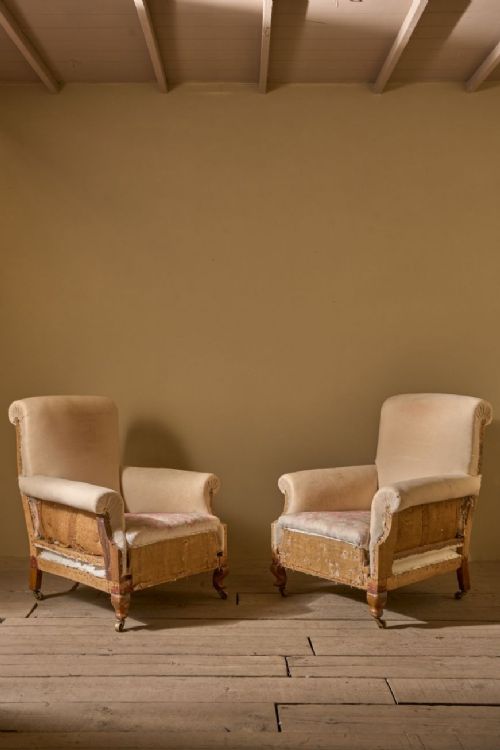
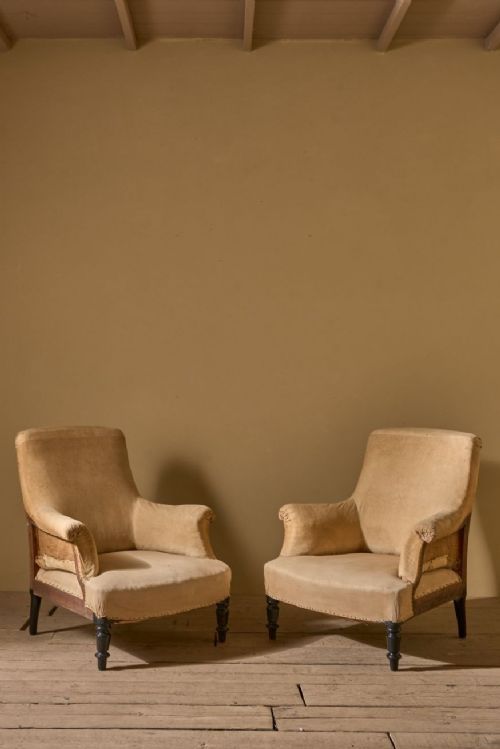
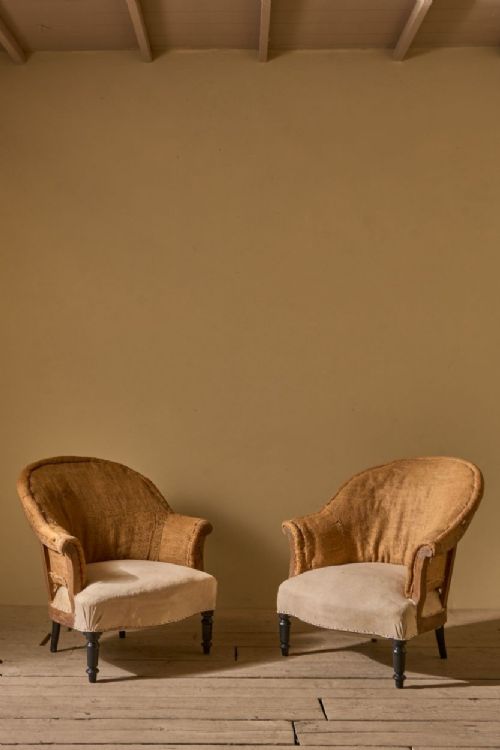
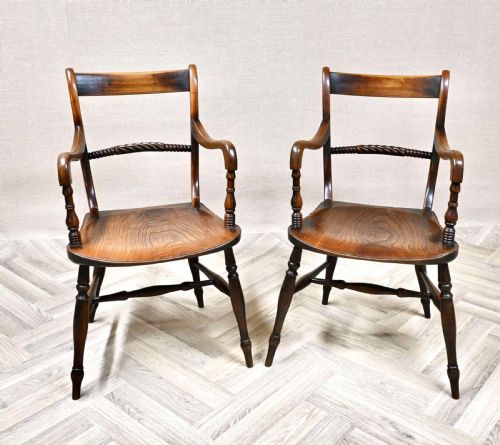
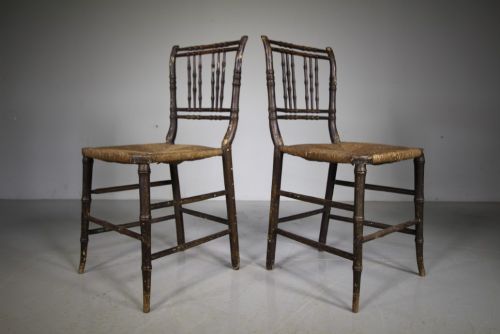

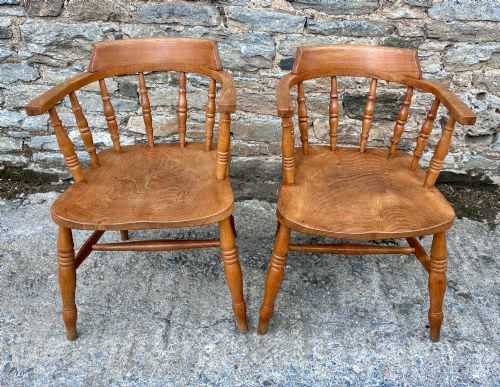
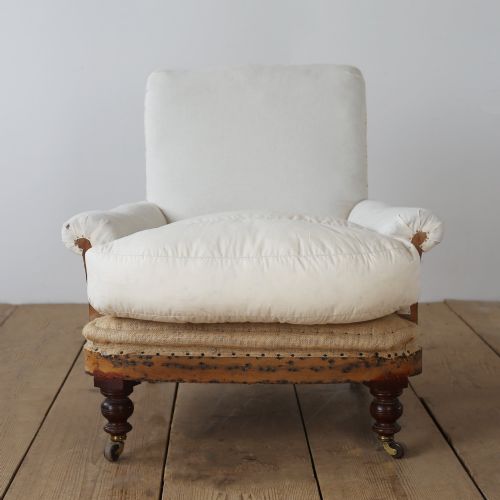
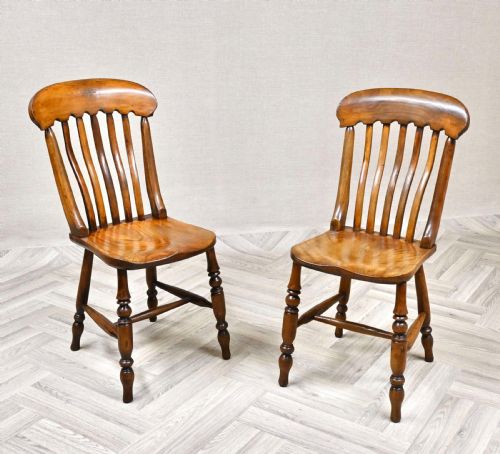
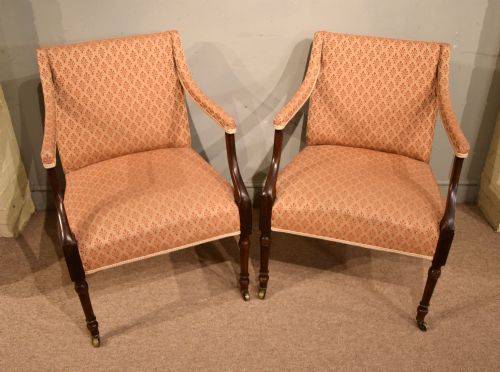
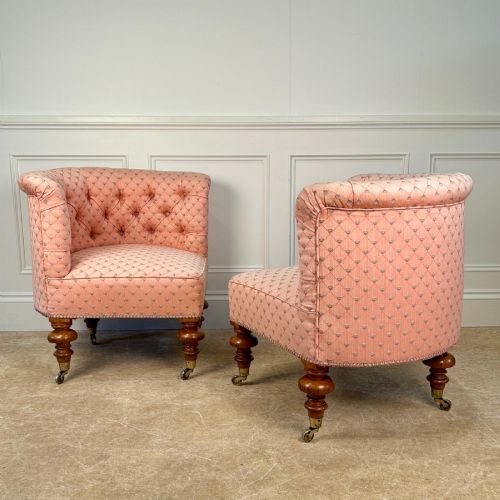
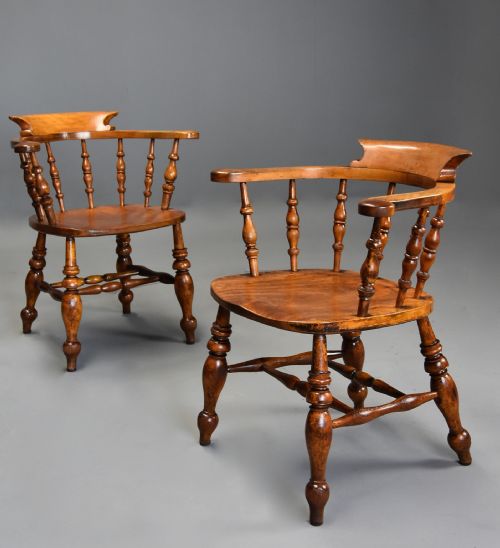
Pair of Turned Chairs
A pair of turned chairs brings matching historic seating into a room, offering both balanced proportion and practical utility.
Pair of Turned Chairs
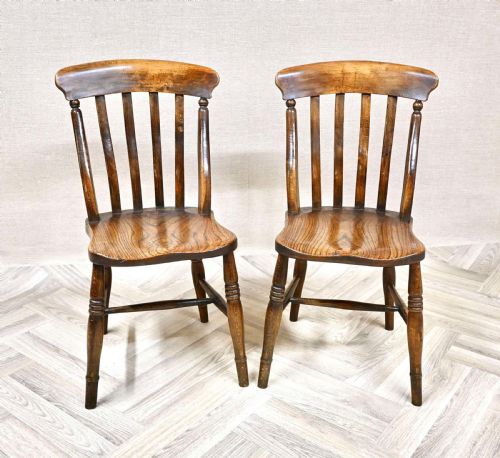
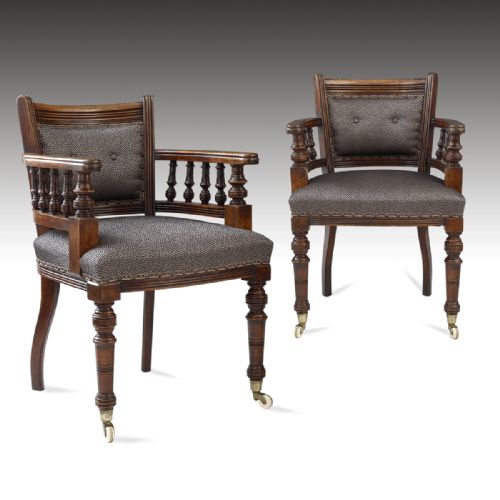
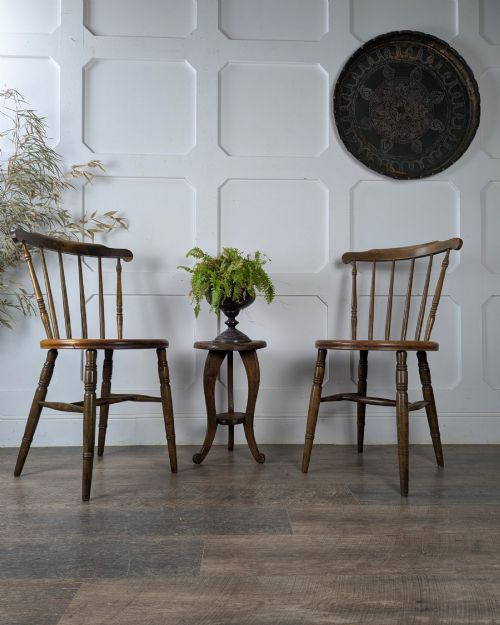
A pair of turned chairs consists of matching seating pieces shaped on a lathe, appearing across multiple eras from the eighteenth century through to the Edwardian period. These listings feature various forms including side chairs, armchairs, corner chairs, and kitchen styles.
The materials span native timbers such as oak, elm, ash, and beech, alongside imported hardwoods like mahogany and walnut. Upholstered variants incorporate fabrics such as calico, hessian, velvet, and leather.
Origin styles range from English country workshops and Scottish houses to French salon pieces and Regency dining rooms. The turned components provide structural rhythm to the legs, stretchers, and back supports across these diverse regional designs.
What varies in quality
The distinction between ordinary and superior pieces rests on the crispness of the lathe turning, the selection of figured timber, and the integrity of the original joints. Tighter grain in woods like oak or walnut indicates a sturdier foundation.
Original surface finishes, whether polished mahogany or early painted pine, dictate desirability. Examples retaining their initial upholstery webbing or authentic turned stretchers command greater interest among collectors.
Certain Victorian pairs proudly advertise their romantic origins as matching 'His' and 'Hers' library armchairs.
Howard and Sons·Morris and Co·Liberty and Co
The Pair of Turned Chairs Glossary
- Bobbin turned
- A style of woodturning characterised by a series of rounded, spool-shaped protuberances resembling bobbins of thread. This decorative spindle work appears frequently on seventeenth and eighteenth century seating.
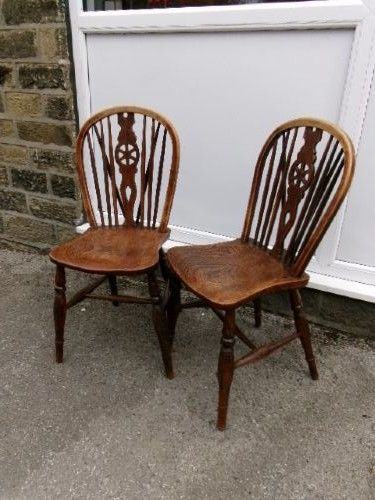
- Windsor
- A traditional chair construction method where legs and back spindles fit directly into a solid wooden seat rather than a framed chassis. These robust vernacular seats often feature curved back rails and shaped elm boards.
- Stretcher
- A horizontal wooden brace connecting the legs of a chair to provide structural stability. Turned variants frequently incorporate these cross-bars for both reinforcement and visual rhythm.
- Bergere
- An enclosed upholstered armchair featuring cane or woven sides within a wooden frame. These French-influenced seats often incorporate exposed turned wood elements.
- Captain's chair
- A low-backed wooden armchair designed for swivel desks or dining tables, usually featuring a continuous curved armrail supported by turned spindles.
Pair of Turned Chairs: Frequently Asked Questions
Where should I place a pair in my home?
A matched pair works effectively flanking a fireplace, framing a window, or positioned against a hallway wall. Their balanced proportions create a natural focal point in sitting rooms and studies.
They also function well as bedside seats or as decorative additions to larger dining spaces when extra seating is needed.
How do I identify the period of turned chairs?
Dating relies on timber selection, turning profiles, and construction methods characteristic of specific decades. Earlier eighteenth-century pieces often display heavy bobbin work in oak or walnut, while Victorian versions favour beech and mahogany.
Structural details like seat shaping and stretcher placement help distinguish Regency and Victorian reinterpretations from earlier vernacular models.
Are these chairs suitable for daily seating?
Most solid timber and upholstered variants remain structurally robust for regular use if joints are sound. Wooden-seated Windsor and captain's chairs offer durable utility, while upholstered versions depend on modern internal support.
Checking the stability of the turned legs and stretchers ensures safe everyday placement in contemporary living spaces.