
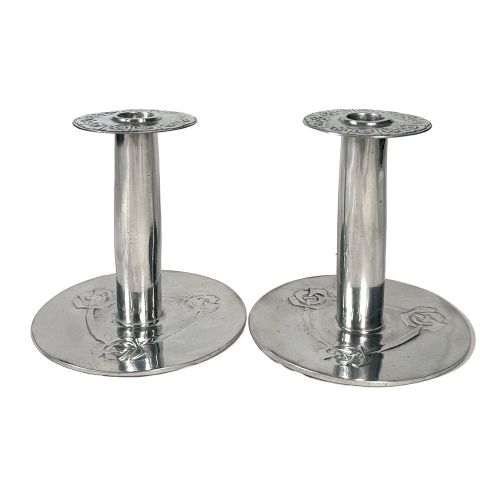
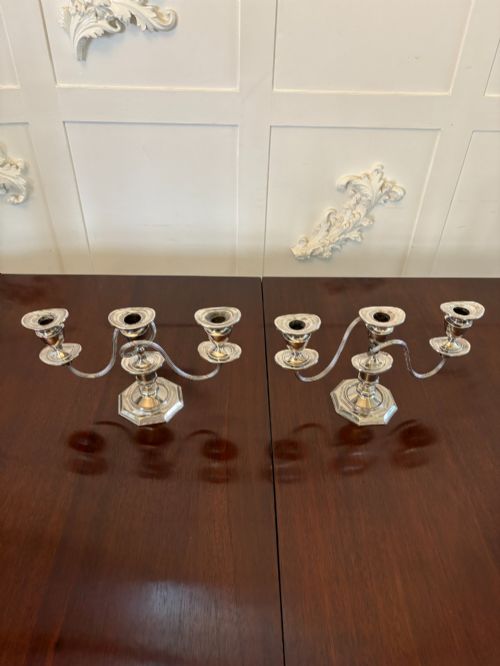
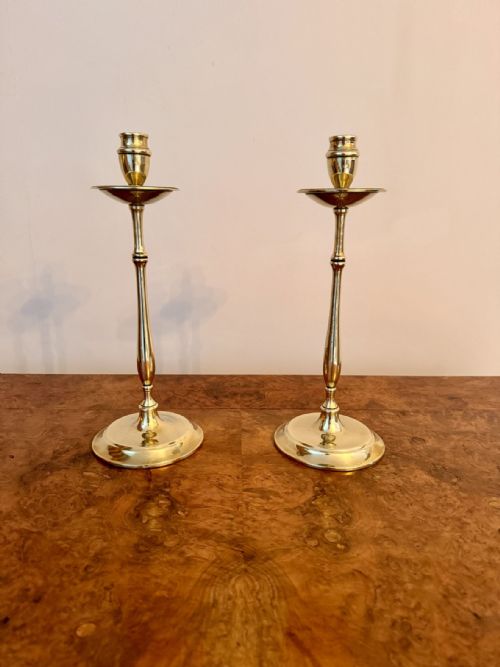
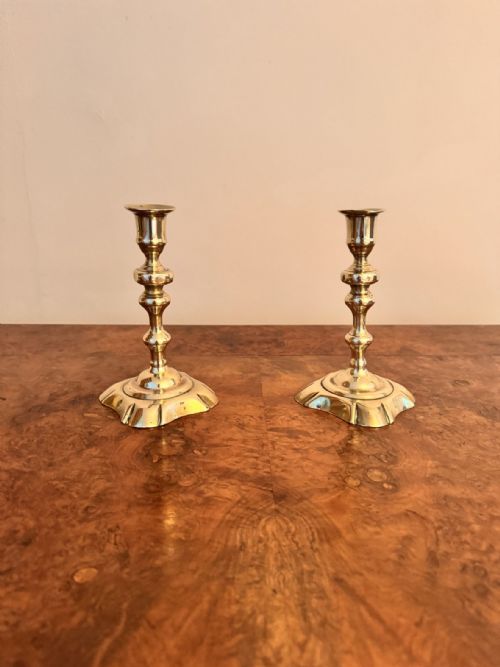
Pair of Table Candlesticks
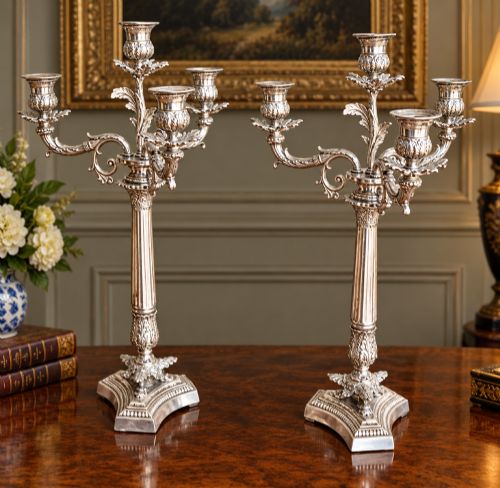
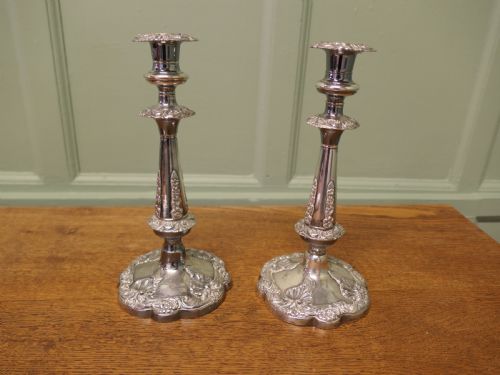
A pair of table candlesticks brings functional light and sculptural symmetry to a room, spanning brass, silver plate, and sterling silver across multiple centuries.
Pair of Table Candlesticks
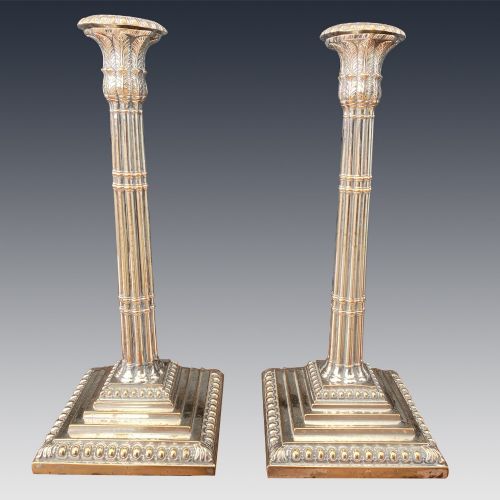
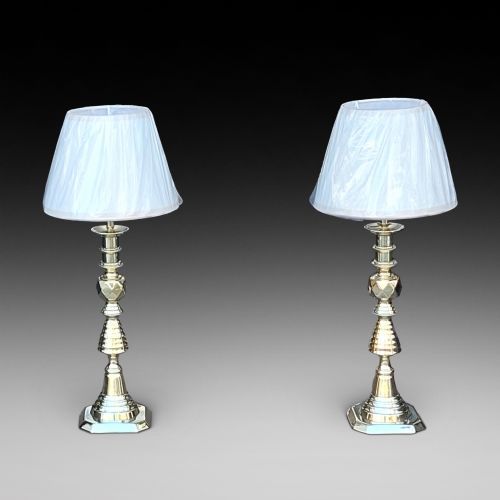
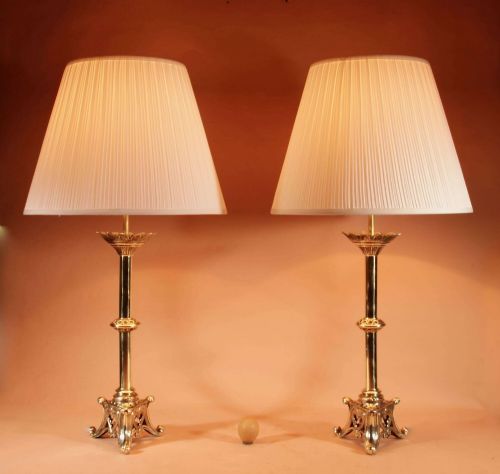
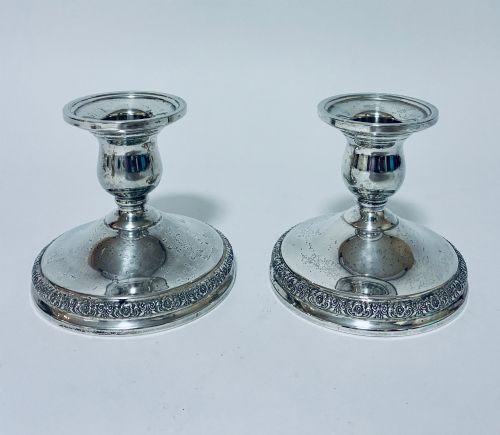
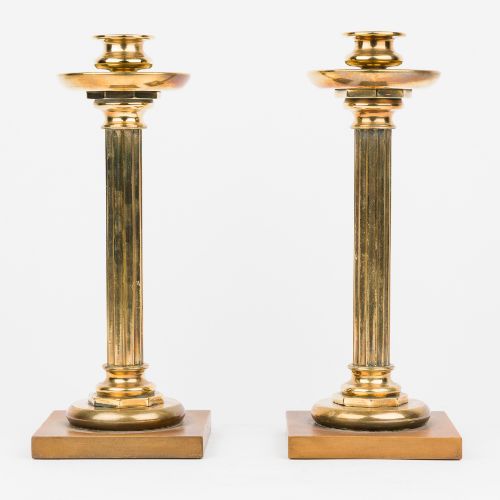
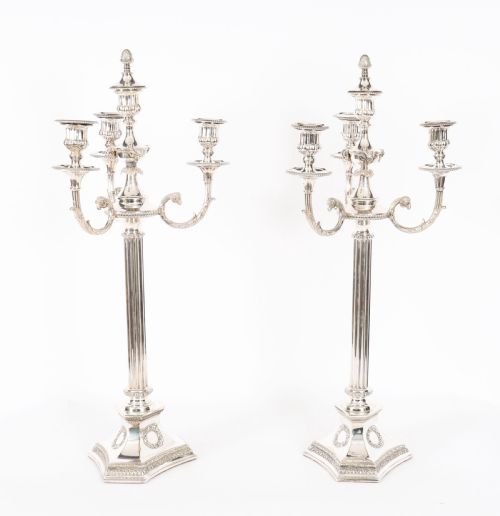
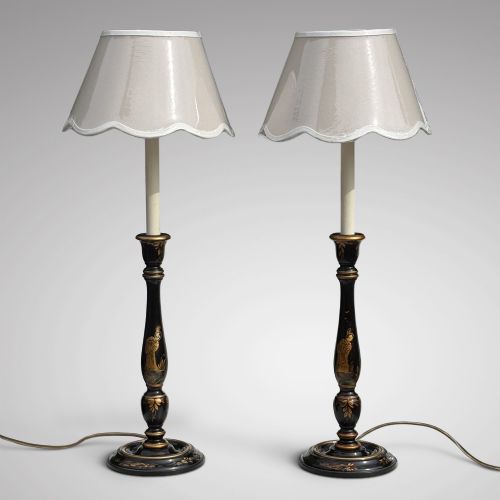
A pair of table candlesticks comprises matched lighting accessories designed for domestic interiors, frequently adapted across periods into multi-light candelabra or converted into table lamps. The selection spans Georgian, Victorian, and Edwardian eras, displaying forms from classical columns to figural terrier dogs.
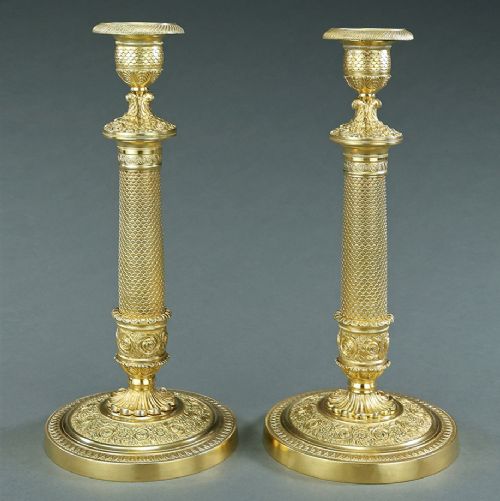
Brass examples dominate the earlier centuries, particularly Georgian and 19th-century designs, while sterling silver and silver plate emerge strongly in Victorian and Edwardian manufacturing. Buyers encounter both utilitarian domestic pieces and ornate French Empire revival or Louis XVI style gilt bronze works.
The category also embraces hybrid forms such as hurricane lamps, glass lustre pairings, and adjustable wooden stands. These lighting devices reflect shifting domestic habits from candle illumination to electrified living.
Materials and construction methods
Early brass candlesticks often utilise seamed construction techniques, where metal sheets are shaped and joined, alongside cast brass components seen in ejector models. Silver-plated pieces rely on copper bases coated via Sheffield plate methods or later electroplating processes.
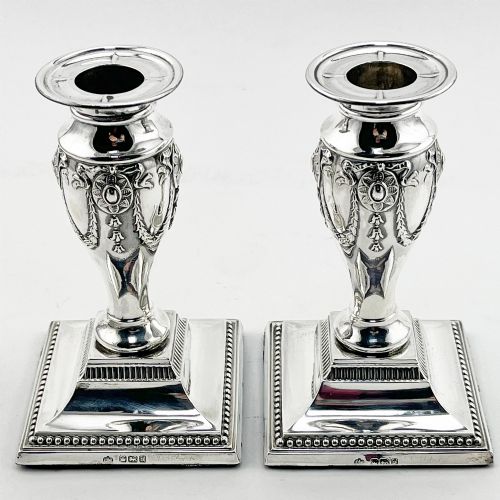
Sterling silver items incorporate weighted bases for stability, frequently displaying hallmarks identifying makers and assay offices in London and Sheffield. Gilt bronze and ormolu introduce fire-gilding techniques over base metal cores, paired occasionally with fossil marble or cut glass.
Listings feature brass, sterling silver, silver plate, ormolu, and yew wood, spanning the 18th, 19th, and early 20th centuries.
Distinctions in craftsmanship and design
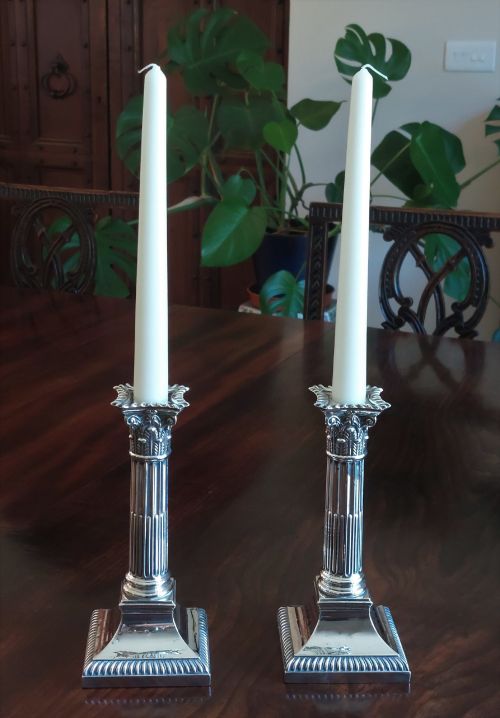
Quality reveals itself in the crispness of casting detail, particularly visible on Corinthian column capitals, neoclassical swags, and figural sculptures. Superior examples maintain exact symmetry within the pair, retaining original detachable sconces or nozzles without excessive wear to the underlying metal.
The integrity of silver hallmarks, the weight of the metal, and the precision of seamed joints separate workshop standards. Finer pieces demonstrate careful hand-chasing after casting, ensuring ornament remains sharp rather than smoothed by over-cleaning.
Mappin & Webb·Garrard & Co·Hawksworth Eyre·Matthew Boulton·Birks
The Pair of Table Candlesticks Glossary
- Sheffield Plate
- A fused composite material made by melting a sheet of sterling silver onto a thicker copper base. This technique was largely superseded by electroplating in the mid-19th century.
- Ormolu
- Gilt bronze decorative metalwork produced by applying a mercury and gold amalgam to a bronze base. It creates a durable, luminous golden finish characteristic of French Empire and revival pieces.
- Ejector Candlestick
- A brass candlestick fitted with an internal sliding mechanism designed to push out the remaining candle stub. It represents a practical innovation of the 18th and 19th centuries.
- Corinthian Column
- A classical architectural order featuring an ornate capital decorated with acanthus leaves. It proved a popular decorative motif for silver and brass candlesticks during the Georgian and Victorian periods.
- Sconce
- The detachable metal pan or nozzle fitted at the top of a candlestick to catch melting wax. Surviving with the original matching sconce adds considerably to a pair's completeness.
Pair of Table Candlesticks: Frequently Asked Questions
How do I date a brass candlestick?
Dating relies on manufacturing techniques such as seamed construction, casting methods, and base profiles, alongside stylistic cues from Georgian or Victorian design.
Changes in proportion and the presence of ejector mechanisms further help narrow the decade of production.
Were these candlesticks converted to lamps?
Many period examples were adapted for electricity during the 20th century, altering the original candle socket into a lamp fitting.
Collectors sometimes seek out convertible or reversible designs that preserve the underlying antique structure.
What is the difference between silver plate and sterling silver?
Sterling silver contains a high, regulated purity of solid silver throughout the object, usually accompanied by official town and maker hallmarks.
Silver plate consists of a thin layer of silver bonded to a base metal like copper or brass.
How should I clean antique brass and silver?
Maintenance requires gentle cleaning with appropriate non-abrasive metal polishes to preserve patination and fine chasing detail.
Harsh chemical dips or aggressive rubbing can strip away historical surface texture and silver plating.