
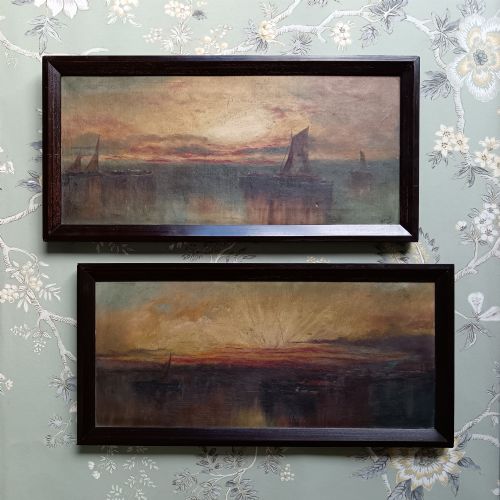
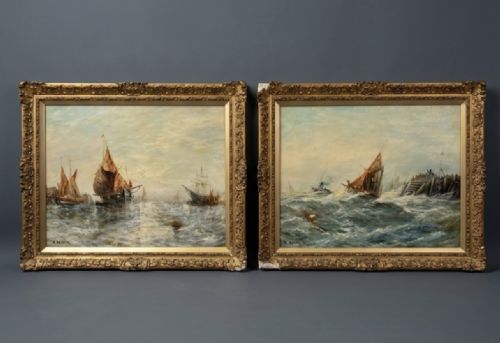
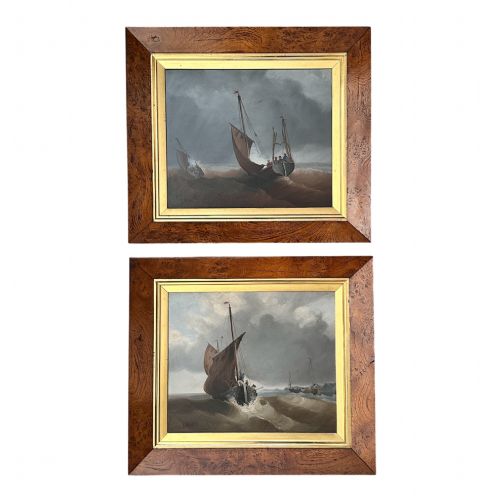
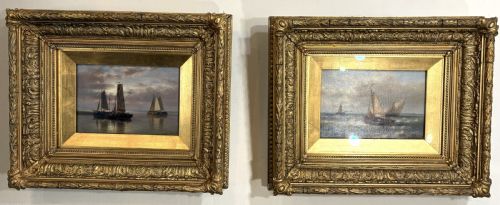


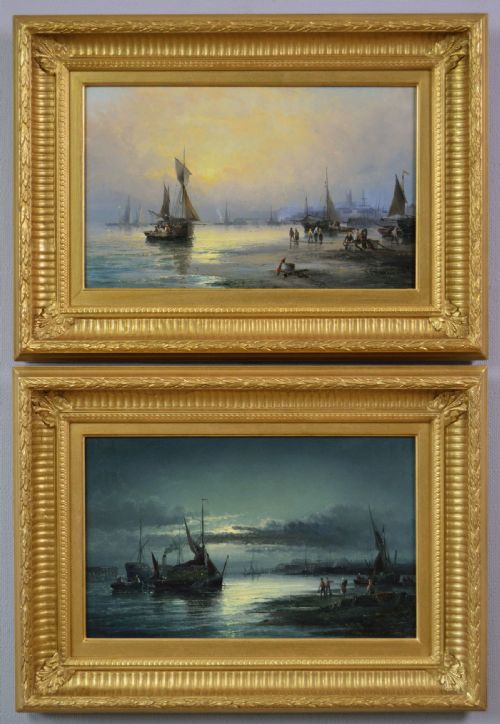

Pair of Seascape Artworks
A pair of seascape artworks brings the movement and light of the ocean into a room.
Pair of Seascape Artworks
A pair of seascape artworks offers a matched view of coastal and marine subjects, usually conceived as companion pieces to hang side by side or across a mantelpiece. When you search for a pair of seascape artworks, you encounter Victorian and Edwardian canvases and watercolours depicting fishing boats, choppy channels, and tranquil sunrises. Most examples on this page date from the nineteenth and early twentieth centuries, capturing maritime life from Dutch shores to English harbours.
The subjects range from bustling shipping traffic off Scarborough and Portsmouth to quiet coastal scenes with sailing vessels on the Medway. These works rely on paired compositions, often contrasting sunrise with sunset or calm waters with stormy weather to create balance on the wall. Painters from this era favoured oil on canvas and board, framed in giltwood or ebonised surrounds that enhance the maritime atmosphere.
What varies in quality
Quality rests upon the artist's ability to render atmosphere, light, and maritime anatomy with conviction, distinguishing standard decorative studio pieces from works by named marine specialists. Stronger paintings demonstrate a deft handling of rigging, hull construction, and the shifting tones of sea and sky.
The framing contributes significantly to the overall integrity, with original giltwood and gesso frames holding greater visual harmony than later replacements. The condition of the canvas surface, free from excessive retouching or heavy varnish discolouration, also elevates the standing of the pairing.
The listings span the Victorian and Edwardian eras, featuring oil paintings and watercolours set within giltwood and ebonised frames.
John Moore of Ipswich·Abraham Hulk I·Gustave De Bréanski·Pieter Cornelis Dommersen·Adrian Van Porten·George Dodgson Callow·Thomas Bush Hardy·Ebeneezer Colls·Hubert Thornley·John James Wilson·Walter Meegan·Thomas Rose Miles·Francis Moltino·Walter Williams
The Pair of Seascape Artworks Glossary
- Gesso
- A plaster-like mixture applied to wooden frame mouldings as a base for gilding. It allows craftsmen to carve crisp decorative details before applying gold leaf.
- Giltwood
- Timber that has been coated with a thin layer of gold leaf or metallic powder. This finish reflects candlelight and daylight, brightening dark Victorian interiors.
- Marine art
- Painting that focuses primarily on ships, shipping, and coastal views. It encompasses historical naval battles, portraiture of vessels, and open-water scenes.
- Provenance
- The documented history of a painting's ownership and origin. It helps establish authenticity and traces the journey of the artwork through time.
- Companion pieces
- Two separate artworks created by the same hand to be displayed together. They share similar dimensions, subject matter, and tonal palettes.
Pair of Seascape Artworks: Frequently Asked Questions
How should I hang a pair of marine paintings?
Hang them at eye level with a consistent gap between them to preserve their visual balance as companion pieces.
Keep them away from direct sunlight and damp walls to protect the canvas and the gilt frame from deterioration.
What is the difference between oil and watercolour seascapes?
Oil paintings feature heavier textures and richer pigments on canvas or board, offering greater durability over time.
Watercolours on paper deliver a lighter, more translucent quality and are usually presented under glass within sealed frames.
How do I identify a Victorian seascape?
Look for the characteristic subject matter of nineteenth-century maritime life, including paddle steamers, Thames barges, and coastal fishing smacks.
Examine the framing methods and stretcher bars at the back, which often reveal the age and construction techniques of the period.
Are these paintings cleaned or restored?
Many nineteenth-century works have received minor conservation care, such as surface cleaning or varnish renewal, to restore their original clarity.
Professional restoration helps stabilize old canvas and secures flaking pigment without erasing the natural patina of age.