



Pair of Iron Beds
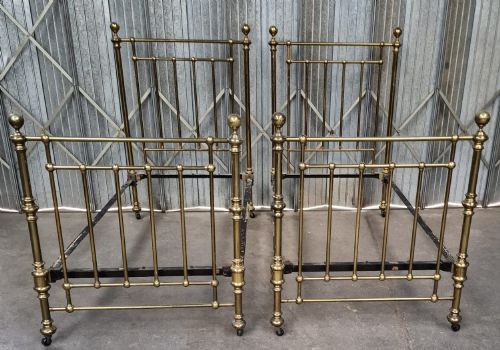
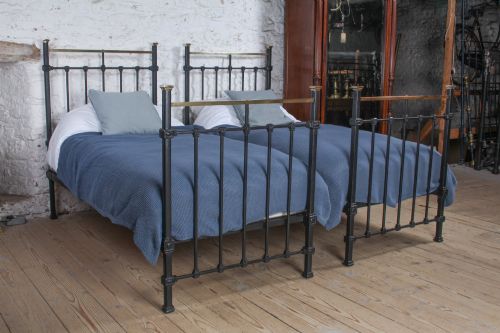
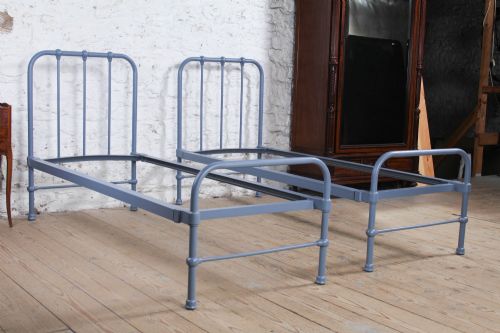
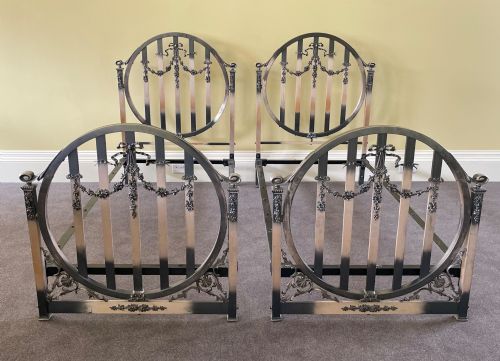
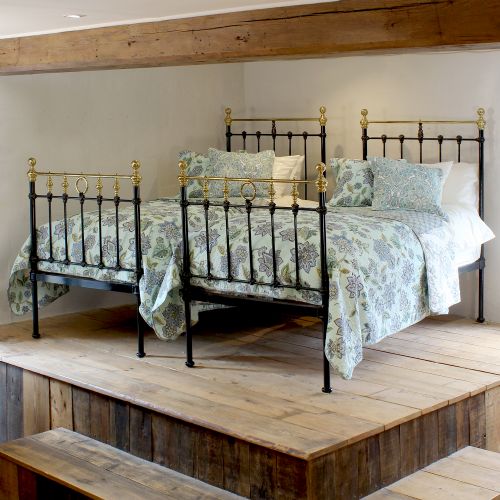
These pair of iron beds offer sturdy sleeping frames from the nineteenth and early twentieth centuries, prized for joining together into wider sizes.
Pair of Iron Beds
When you search for a pair of iron beds, you encounter matching twin bed frames primarily dating from the Victorian and Edwardian periods, stretching from the late nineteenth century into the early twentieth century.
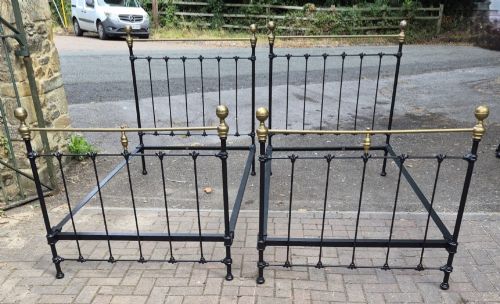
Many of these bedsteads are designed with modular utility in mind, specifically noted in descriptions as capable of being joined together to form a larger double or super king size bed.
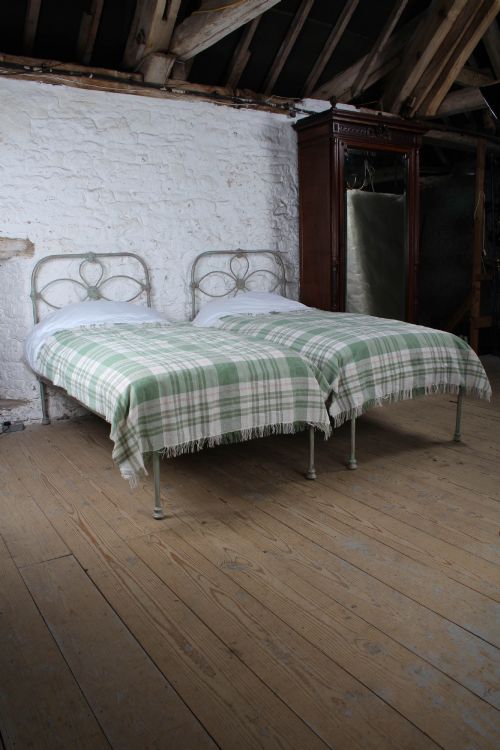
The selection encompasses various single bed formats, including traditional high-footend models, low-profile platform beds, and no end variants originating from English, French, Irish, and Portuguese workshops.
How they were made
Construction relies heavily on cast iron and forged wrought iron framework, frequently ornamented with contrasting brass components, nickel plating, or steel elements.
Surfaces are often finished with traditional coatings including hand-applied paint in colours like cream, white, black, green, and charcoal, or left as hand-finished bare metal.
Pair of Iron Beds Retail Price Guide 2026
Typical asking prices for pair of iron beds among the pieces listed under this phrase on Sellingantiques today, from the lower quarter to the upper quarter. They describe what is for sale here now, not the wider market.
Materials recorded across these listings include cast iron, wrought iron, brass, steel, nickel plating, and painted metal.
What varies in quality
The sophistication of the decorative metalwork distinguishes standard utilitarian dormitory frames from finer domestic models adorned with brass rings, cast detailing, and Art Nouveau motifs.
Quality also rests in the precision of the joining mechanisms, where pieces engineered to link together securely into a single larger bed demonstrate higher manufacturing complexity.
Maple and Co·Staples
The Pair of Iron Beds Glossary
- Cast iron
- A strong, hard iron-carbon alloy poured into moulds to create rigid structural bed components and ornate decorative headboard details.
- Wrought iron
- Tough, malleable iron heated and hammered into shape by blacksmiths to form simpler, durable bed frames.
- No end bed
- A bedstead featuring a low footboard or lacking a footend entirely, allowing for an open sightline in smaller bedrooms.
- Nickel plating
- A thin protective layer of nickel electroplated over iron to provide a bright, corrosion-resistant metallic sheen.
- Bedstead
- A framework of wood or metal supporting a mattress and sleeper.
Pair of Iron Beds: Frequently Asked Questions
Can these twin beds be joined together?
Many listings specify that the individual frames can be joined to form a wider sleeping surface, often reaching super king dimensions.
Buyers should check individual descriptions for this feature, as coupling mechanisms vary across nineteenth and early twentieth-century examples.
What styles are available?
The available styles span Victorian, Edwardian, Art Nouveau, and regional European designs like French Country and Portuguese Traditional.
Simple utilitarian frames also appear alongside decorative models featuring brass finials and painted metal surfaces.
How do I identify Victorian examples?
Victorian pieces typically date from the nineteenth century and often combine cast iron with polished brass rails or decorative rings.
They appear in both high-end headboard configurations and simple no end single bed formats.
What materials are used?
Frames are constructed primarily from cast iron and forged wrought iron, frequently augmented with brass, steel, and nickel plating.
Surface finishes include traditional painted coatings in shades such as cream, white, charcoal, and black.