



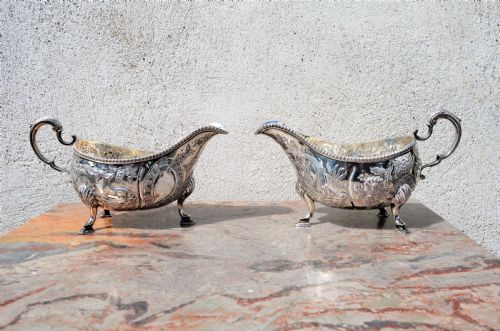
Pair of Gravy Boats
A pair of gravy boats brings symmetry to the table, and these matched sets span Georgian elegance to twentieth-century silver plate.
Pair of Gravy Boats
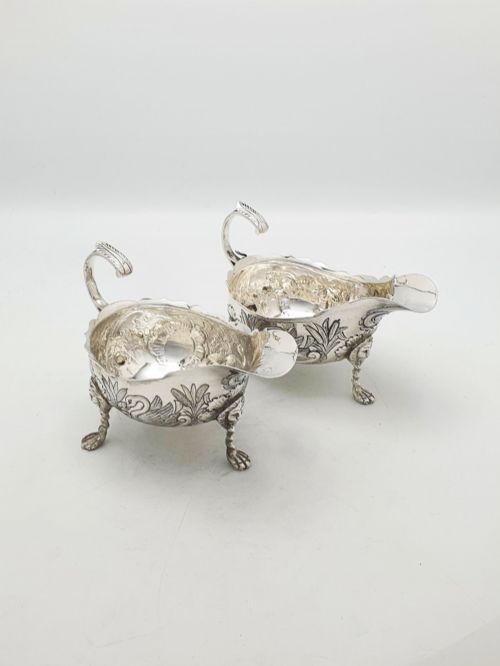
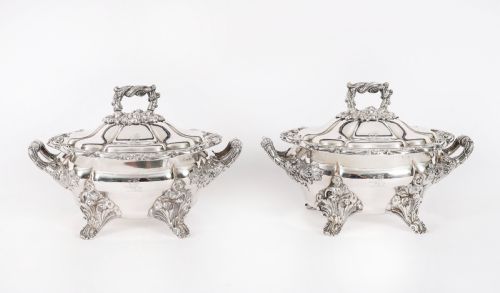
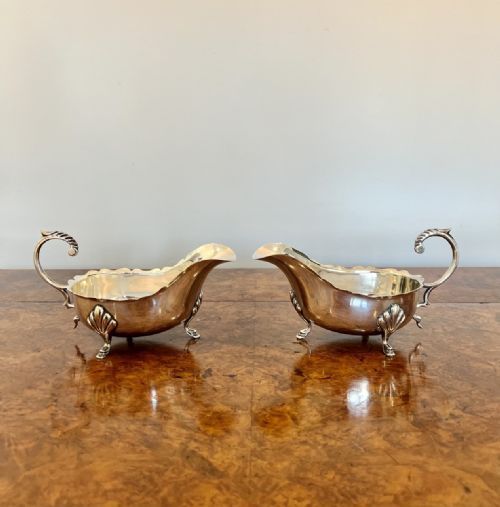
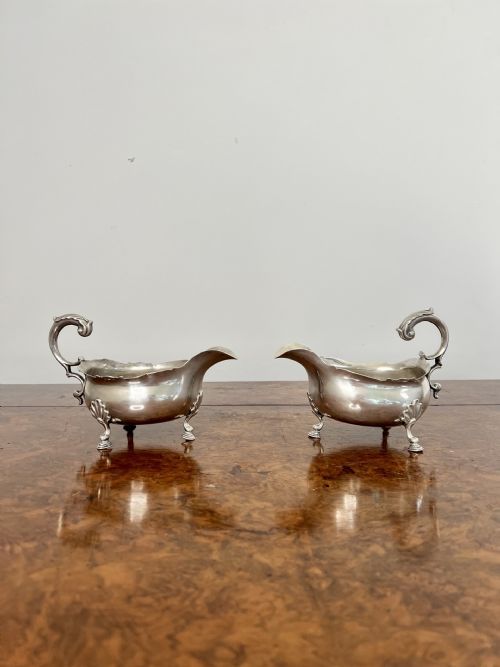
A pair of gravy boats provides matching vessels for serving sauces, gravies and creams at either end of a formal dining table. When you search for a pair of gravy boats, you encounter open vessels on pedestals or three-footed bases, alongside covered tureens complete with ladles.
The pieces on this page originate across the eighteenth, nineteenth and twentieth centuries, taking the form of sterling silver, silver plate, Old Sheffield plate, porcelain and ironstone. Versions from the Georgian and Victorian eras predominate, frequently accompanied by Edwardian and later twentieth-century interpretations.
Makers and silversmiths shaped these serving pieces in distinct regional styles, including Irish silver examples and English designs reflecting George III and Regency aesthetics.
How they were made
Silversmiths formed sterling silver and silver plate variants through hand-hammering, casting and soldering, often incorporating applied wire rims and cast handles. Old Sheffield plate involved fusing a silver sheet onto a copper core before shaping and finishing.
Ceramic equivalents in porcelain and ironstone relied on moulded earthenware bodies finished with glaze and hand-painted or transferred armorial crests and enamels.
Listings feature sterling silver, silver plate, copper, porcelain and ironstone across Georgian, Victorian and Edwardian periods.
What varies in quality
Weight and gauge of metal dictate the substance of silver examples, separating solid cast vessels from thinner stamped alternatives. Crispness in chased engraving, armorial crests and cast scroll feet indicates the skill of the original workshop.
Completeness alters value, particularly when matching ladles, integral stands or original lids remain with the tureens rather than becoming separated over generations of use.
William Grundy·William Comyns·Mappin & Webb·Samson
The Pair of Gravy Boats Glossary
- Sauce boat
- An open vessel with a spout and handle designed for serving liquids at the dining table. They frequently stand upon three feet or a spreading oval pedestal.
- Sauce tureen
- A covered serving vessel used for gravies and sauces, usually supplied with matching ladles and an integral or separate base.
- Old Sheffield plate
- An early form of plated metal produced by fusing a thin sheet of silver to a thicker copper ingot. This technique was largely superseded by electroplating during the nineteenth century.
- Electroplated nickel silver
- A method of coating a base metal alloy with a layer of pure silver using electrical current. This process became widespread in the later nineteenth and twentieth centuries.
- Ironstone
- A durable type of heavy earthenware patented in the nineteenth century. It provided a robust alternative to porcelain for utilitarian tableware and tureens.
Pair of Gravy Boats: Frequently Asked Questions
How do I clean antique silver gravy boats?
Silver pieces require gentle washing in warm soapy water followed by thorough drying with a soft cloth. Avoid abrasive pastes that wear away thin silver plate or historical highlights.
Store silver in anti-tarnish wrappers if kept in a cabinet for long periods between dining uses.
Can I use these for hot gravy today?
Solid silver and ceramic tureens hold heat well and function effectively for modern dining. Take care with plated items to prevent thermal shock from boiling liquids.
Hand washing preserves the finish of older materials far better than modern dishwashers.
What is the difference between a boat and a tureen?
Boats are open vessels featuring a pouring lip and handle for direct serving. Tureens include a fitted lid and often a matching ladle for keeping sauces warm.
Both forms served similar functions on the dining table across different stylistic periods.
How do I identify Georgian silver examples?
Georgian pieces display hallmarks indicating duty marks, makers' initials and assay office symbols from the eighteenth or early nineteenth century. Stylistic cues include gadroon borders and cast hoof or pad feet.
Compare the weight and construction methods against known examples from the same decade.