
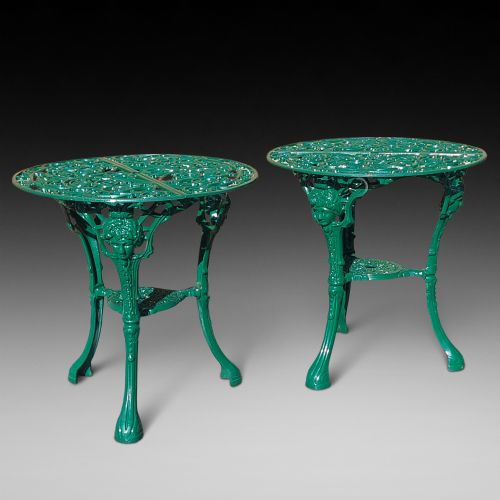
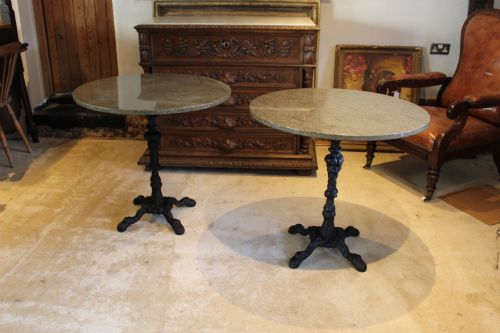


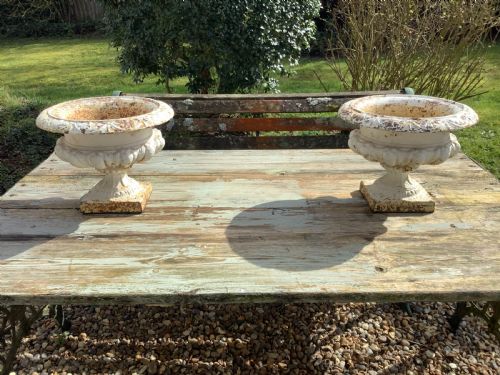


Pair of Garden Tables
These pair of garden tables bring robust metal and timber work to outdoor spaces, offering matching surfaces suited to patio use.
Pair of Garden Tables
When you search for a pair of garden tables, you find matching outdoor surfaces designed for seating areas, conservatories, and patios. These items appear in formats that include cast iron structures, timber tops, and French bistro designs.
The versions most likely to meet you on this page date from the nineteenth century and the early twentieth century. They range from heavy cast iron frames with granite inserts to wooden barrel forms and painted plant stands.
How they were made
Makers formed the metal frames of these pieces using cast iron, shaping intricate patterns through foundry work. Tops incorporated polished granite, slate, or wood to provide stable surfaces.
Wooden examples utilised hardwoods and burr wood, alongside lacquer and paint applications. Porcelain components on related seats and stands involved traditional firing and enamelling techniques.
Silver wheelbarrows serve as salt cellars.
What varies in quality
The fineness of the cast iron ornamentation dictates the distinction between standard and superior metalwork. Crispness in the moulded foliage and structural integrity of the legs set finer examples apart.
Material selection in the tops, such as solid granite or figured burr wood, elevates the standard of the piece. The preservation of original painted surfaces and lacquer also marks the difference in grade.
The Pair of Garden Tables Glossary
- Cast iron
- A strong, hard alloy of iron and carbon poured into moulds to create decorative and structural furniture. It provides the heavy foundation for nineteenth century patio tables.
- Granite
- A hard igneous rock cut and polished to form durable table tops. It resists weathering in outdoor environments.
- Burr wood
- Wood with a deformed grain pattern producing intricate swirls, used for decorative veneer on table surfaces. It adds visual texture to hardwood pieces.
- Cloisonne
- Enamelling work where wire compartments hold coloured paste before firing. This technique decorates accompanying side tables.
- Famille rose
- A palette of Chinese porcelain enamels dominated by pink opaque colours. It appears on nineteenth century garden seats.
Pair of Garden Tables: Frequently Asked Questions
Are cast iron tables suitable for outdoor use?
Cast iron construction handles outdoor placement well due to the heavy weight and durable metal structure. These pieces endure patio conditions across changing seasons.
Protective paint finishes help guard the metal against weathering over extended periods outside.
How do I date a nineteenth century table?
Dating relies on casting techniques, fastener types, and stylistic indicators such as Victorian or Rococo Revival motifs. Heavy sand casting marks older metal frames.
Comparator pieces in archives help narrow the decade of production based on structural forms.
Can these tables be used indoors?
Many examples transition easily into conservatories, garden rooms, and interior seating areas. The decorative cast iron and polished stone surfaces complement indoor spaces.
Porter and side table formats function effectively within domestic rooms.
What maintenance do granite tops need?
Polished granite requires simple cleaning with mild soap and water to maintain the smooth finish. The stone resists moisture naturally.
Awarding care to the surrounding metal frame prevents rust accumulation around the stone edges.
How do French bistro tables differ?
French bistro tables provide lighter portable surfaces intended for cafe and garden dining use. They contrast with the heavier stationary cast iron tables.
These pieces reflect continental outdoor seating traditions from the nineteenth century.