
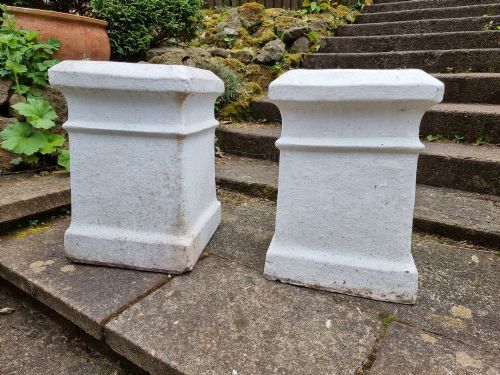
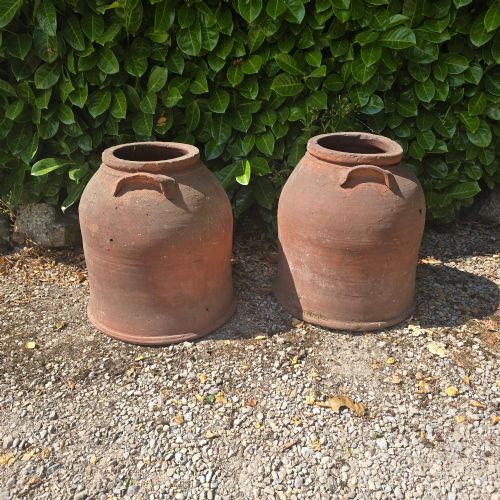
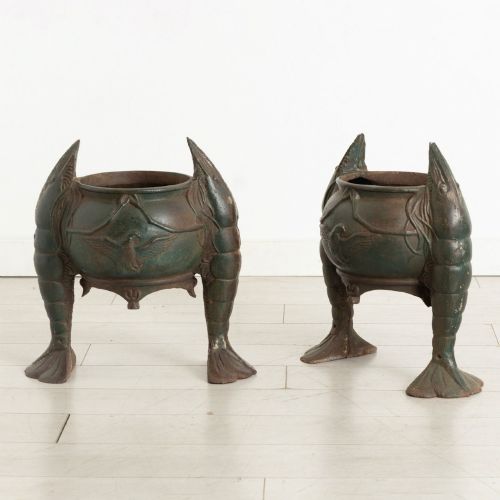
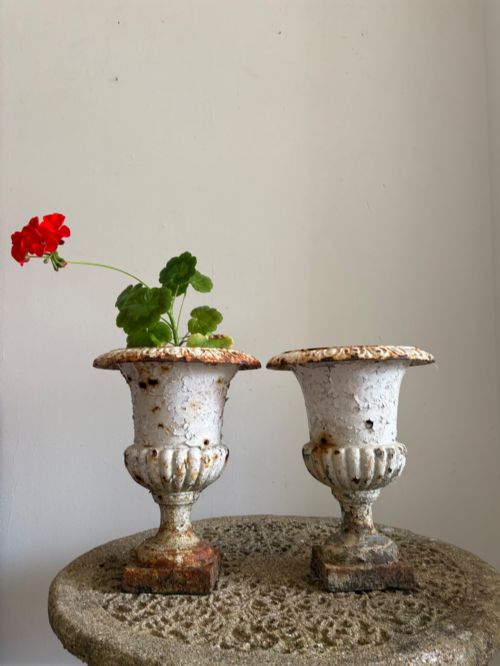





Pair of Garden Pots
A pair of garden pots establishes symmetry and weight on a terrace or pathway, bridging domestic rooms and the open landscape.
Pair of Garden Pots
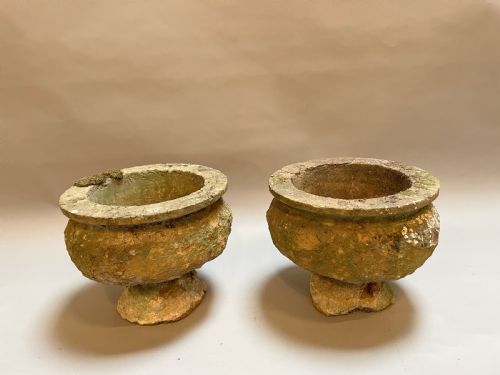
A pair of garden pots encompasses vessels designed for outdoor planting, ranging from classic campana shapes to urns, planters, and jardinieres. When searching for a pair of garden pots, buyers encounter forms intended to flank an entrance, gate, or garden path in matched configuration.
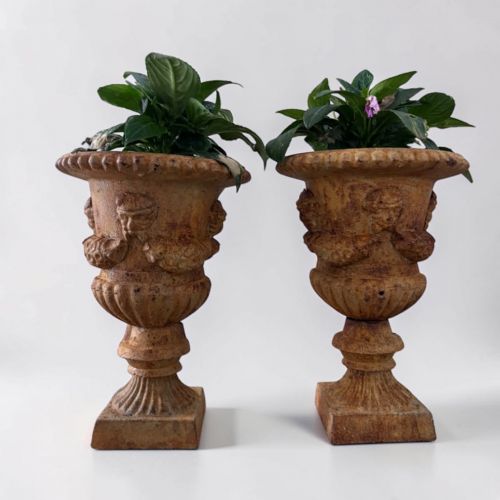
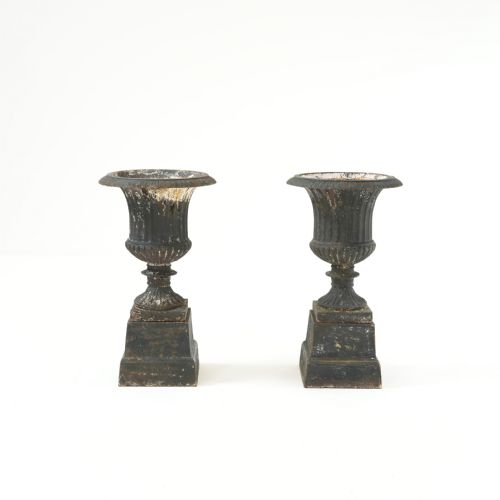
The selections span the nineteenth century through to the mid-twentieth century, including Victorian productions and continental examples from France. Forms include fluted urns, pedestals, and specialised vessels such as rhubarb forcers and scroll pots.
Materials vary widely across the inventory, dominated by heavy cast iron alongside terracotta, soft stone, reconstituted stone, and zinc. These items serve both ornamental and practical functions for holding substantial garden plantings.
Materials and construction methods
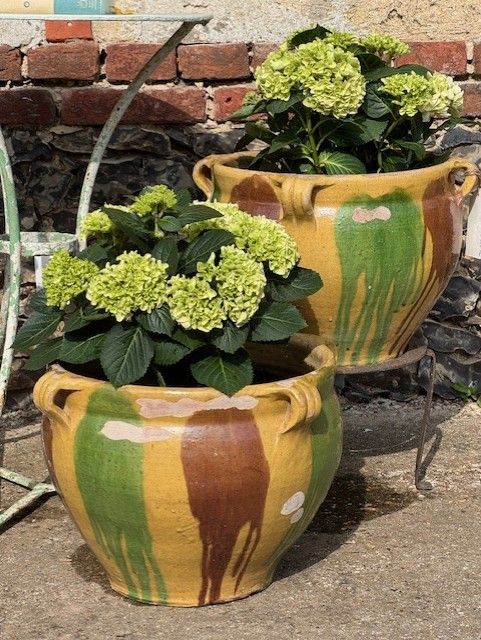
Cast iron production involves pouring molten metal into sand moulds to create robust urns and planters with sharp architectural detail, often finished with original painted surfaces or left to weather outdoors. Terracotta and earthenware clay are shaped and fired in kilns, sometimes receiving glazes such as the dribble glaze seen on southern French vessels.
Stone variants utilise soft stone, carved marble, or reconstituted and cast stone formed into substantial vessels capable of withstanding frost and weathering. Metalwork also incorporates wrought iron strapwork and zinc sheeting joined to form watertight planters and jardinieres.
Current listings feature nineteenth-century and Victorian pieces in cast iron, terracotta, soft stone, and brass.
Evaluating quality and execution
Quality rests in the crispness of the moulding and the weight of the material, where heavy cast iron and carved marble demonstrate superior substance compared to lighter modern alternatives. The integrity of the surface, whether original distressed paint, natural salt glazing, or weathered patination, marks the distinction between ordinary utility and finer decorative merit.
Proportion and classical styling dictate visual success, with well-balanced campana forms and fluted details outperforming plain or heavy-handed shapes. Matched pairs that retain equal weathering and identical casting characteristics achieve higher harmony than assembled near-pairs.
The Pair of Garden Pots Glossary
- Campana urn
- A bell-shaped garden vessel with a flared rim, widely produced in cast iron and terracotta during the nineteenth century. This classic profile remains a standard for formal garden placement.
- Jardiniere
- An ornamental pot or stand designed to hold growing plants indoors or on sheltered terraces. They frequently appear in ceramic or metal forms.
- Rhubarb forcer
- A specialised tall earthenware vessel placed over rhubarb crowns in winter to blanch the shoots. These objects double as sculptural garden planters today.
- Reconstituted stone
- A durable composite material made from crushed stone aggregate mixed with a binder to imitate natural stone. It provides heavy frost-resistant housing for outdoor planting.
- Salt glaze
- A vitreous coating formed by throwing common salt into the kiln during high-temperature firing of earthenware or stoneware. This process creates a textured, glossy skin on the pottery surface.
Pair of Garden Pots: Frequently Asked Questions
How do I clean old cast iron urns?
Wash the surface gently with warm water and a soft brush to remove accumulated dirt without damaging any historic paint layers.
Avoid harsh chemical strippers or abrasive pads that strip away the protective weathered patination built up over decades outdoors.
Can terracotta pots stay outside in winter?
High-fired and salt-glazed terracotta generally withstands frost if the soil drainage holes remain clear and unobstructed.
Placing pot feet underneath prevents the base from freezing directly to damp ground and splitting during hard frosts.
What is the difference between an urn and a planter?
Urns typically feature a footed pedestal base and a flared bowl designed for formal classical display rather than deep root cultivation.
Planters offer a wider or straighter cylindrical body dedicated primarily to holding soil and root systems for growing plants.
Are near pairs identical?
Near pairs consist of two vessels that match closely in size, material, and style but were likely made at slightly different times or by different hands.
They offer the visual symmetry needed for flanking a doorway while retaining subtle individual variations characteristic of antique pieces.