

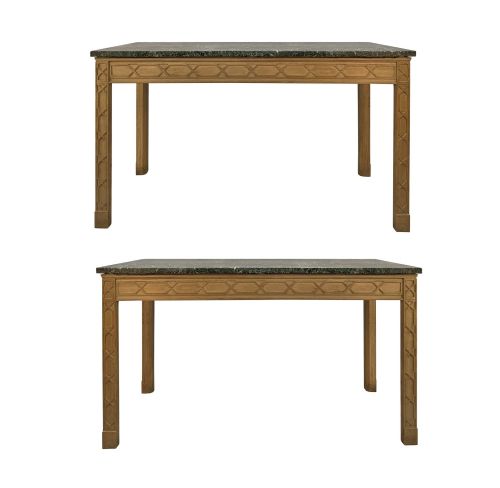

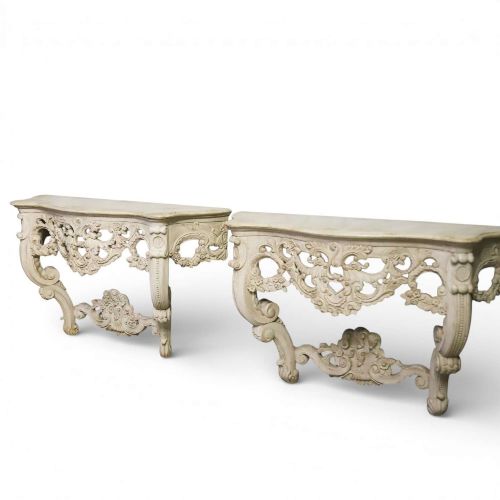


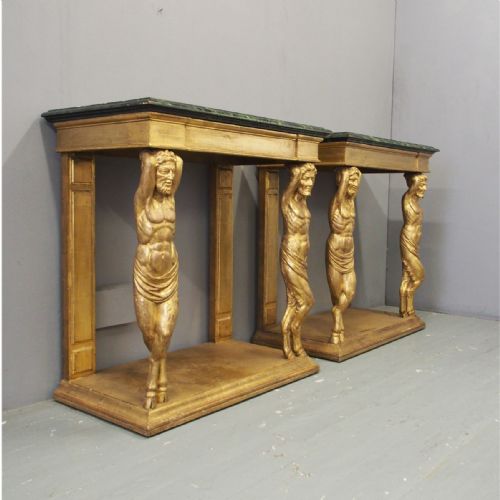


Pair of Entry Tables
A pair of entry tables brings balance and welcome surface space to a hallway, matching fine timber and marble with practical proportions.
Pair of Entry Tables
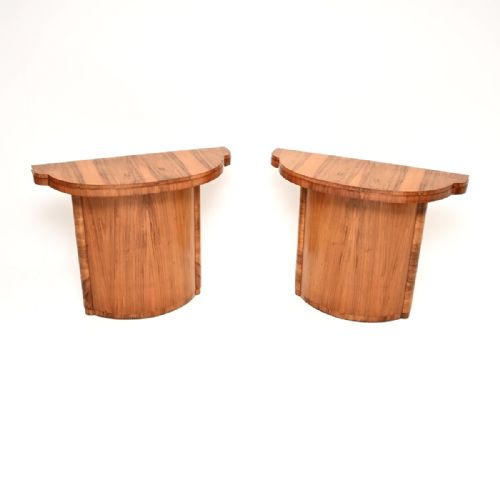
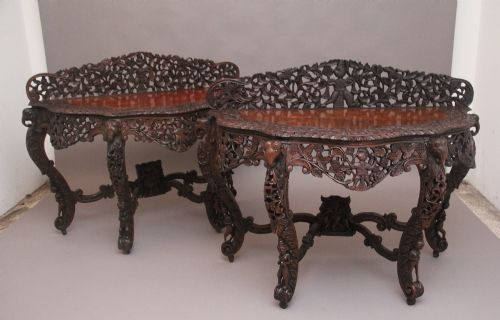
When you search for a pair of entry tables, you are looking at matched consoles designed to sit against a wall in a hall or reception space. The examples on this page span several centuries, including Georgian and Victorian periods, alongside later twentieth-century interpretations.
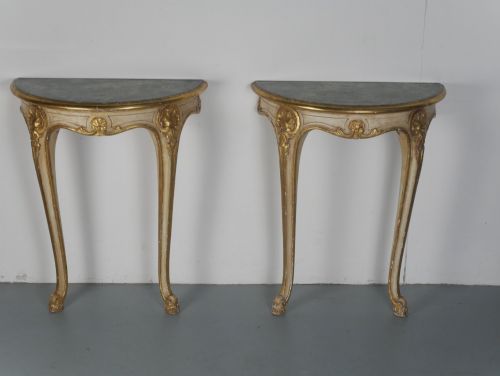
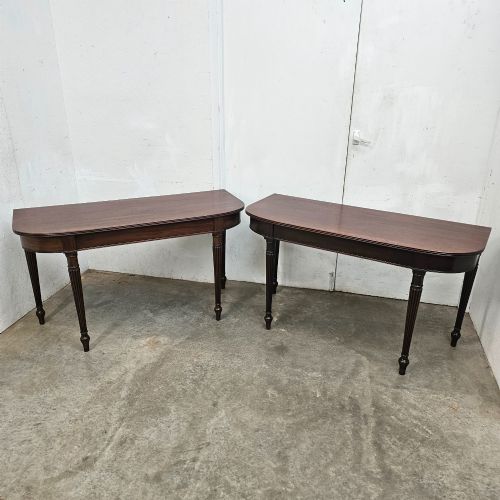
You are most likely to meet demi-lune or D-shaped forms, which curve outward to save floor space while offering a useful top surface. Many of these items originate from English and continental workshops, showing regional preferences in timber and decorative finish.
The selection ranges from classical mahogany pieces with inlaid details to painted French and Scandinavian country designs. Console tables function equally well as occasional side tables or bedside surfaces depending on their scale.
How they were made
Cabinet makers relied primarily on solid timbers and veneers, working extensively with mahogany, walnut, oak, and kingwood. These woods were often selected for their figured grain patterns and finished with polished wax or traditional paint.
Many surfaces incorporate contrasting inlay work, hand-carved elements, or fitted marble tops. Structural support typically comes from slender cabriole legs, tapering legs, or wall-mounted brackets designed to hold the console steady against a vertical surface.
Pair of Entry Tables Retail Price Guide 2026
Typical asking prices for pair of entry tables among the pieces listed under this phrase on Sellingantiques today, from the lower quarter to the upper quarter. They describe what is for sale here now, not the wider market.
The listings here include mahogany, walnut, oak, and painted wood, spanning the Georgian, Victorian, and twentieth-century periods.
What varies in quality
The standard of a pair of entry tables rests on the crispness of the timber carving, the choice of figured veneers, and the integrity of the original construction. Superior examples display precise joinery and well-matched grain across both halves of the pair.
Secondary details such as fitted marble slabs, hand-painted finishes, and subtle inlay work differentiate standard utility items from finer decorative pieces. The proportion and balance of the legs relative to the top dictate the visual weight of the furniture.
The Pair of Entry Tables Glossary
- Demi-lune
- Having a half-moon shape with a flat edge that sits flush against the wall. This form allows the table to project minimally into a narrow hallway.
- Console table
- A table supported against a wall by pillars or brackets rather than four freestanding legs. Earlier versions frequently required wall fixing for complete stability.
- Inlay
- A technique where contrasting pieces of wood or other materials are inserted into the surface to form a decorative pattern. It requires precise cutting to achieve a seamless finish.
- Veneer
- A thin layer of finely figured wood applied over a secondary timber base to provide a decorative exterior. This method prevents warping while showcasing expensive grain patterns.
Pair of Entry Tables: Frequently Asked Questions
Where should I place a pair of entry tables?
These tables sit neatly against a hallway wall, either pushed together to form a full circle or separated to frame a doorway or mirror.
They provide a convenient surface for letters and keys without blocking the flow of traffic through the entrance.
How do I clean wooden console tables?
Dust the surface regularly with a soft, dry cloth to prevent dirt from accumulating in the grain or carved details.
Apply a traditional beeswax polish occasionally to nourish the timber and maintain a soft sheen.
How can I tell the period of a table?
Dating relies on observing the timber species, construction methods, and stylistic details such as cabriole legs or inlay work.
Comparing the hardware fixings and secondary woods helps confirm the era of manufacture.