


Pair of Chenets
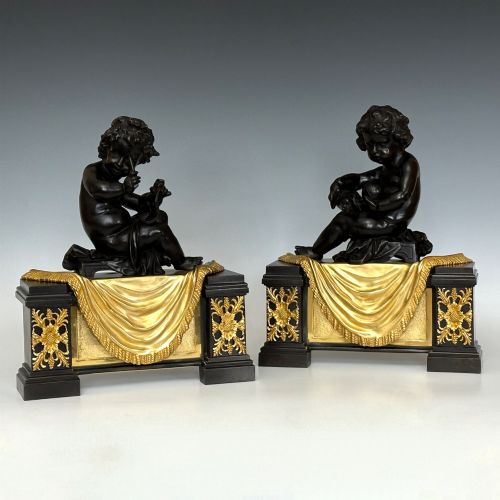
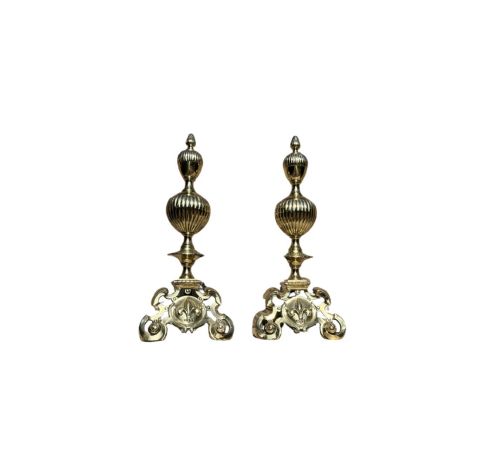
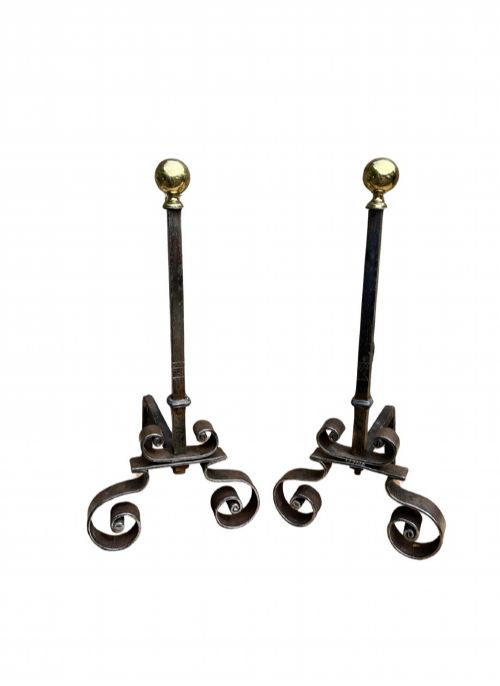
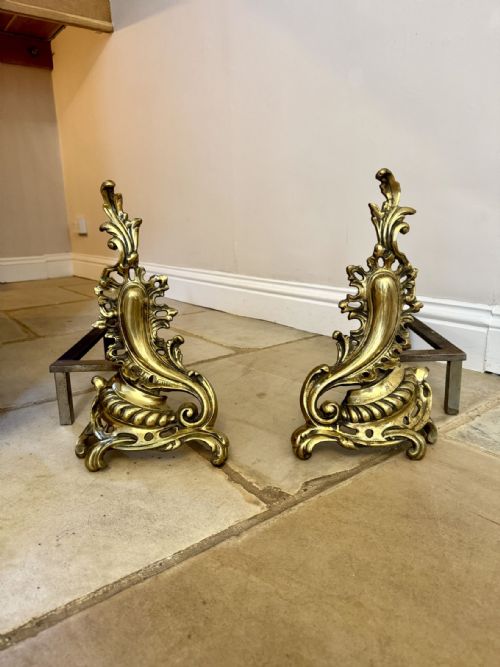
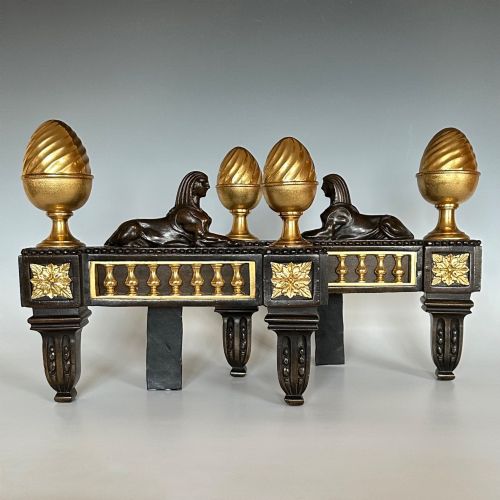
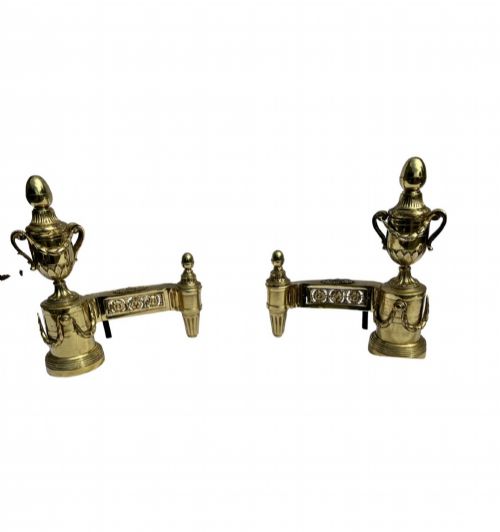
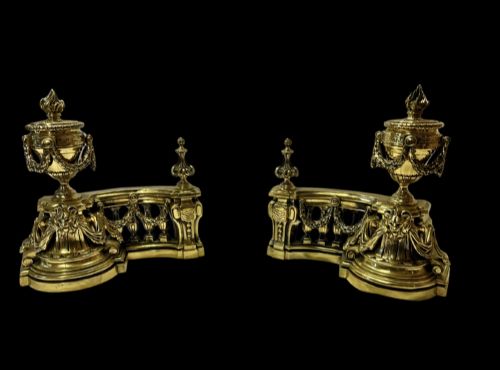
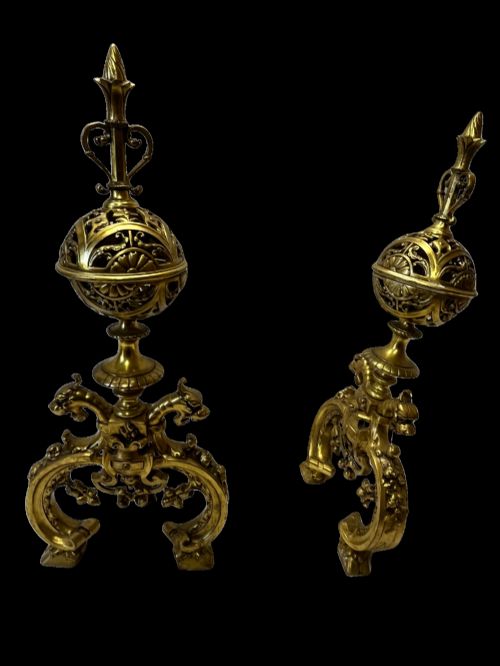
These pair of chenets form the decorative hearth supports of the nineteenth century, built to hold logs above the hearth floor.
Pair of Chenets
When you search for a pair of chenets, you look at decorative hearth supports designed to hold wood above the hearth floor. These pieces sit at the front of the fireplace, often accompanied by matching fire dogs or a centre bar.
The versions you meet most frequently on this page date from the nineteenth century, spanning Victorian, Regency, and various revival styles. French designs dominate the selection, bringing substantial bronze, brass, and ormolu into the room.
Makers and manufacturers produced these functional objects in diverse forms, from plain cast iron to elaborate figural compositions featuring cherubs, lions, and scrollwork. They serve both a practical role in supporting fuel and a purely decorative function within the domestic interior.
How they were made
Foundries utilised casting techniques to shape brass, iron, and bronze into intricate forms, creating durable frames for the hearth. Skilled workers then refined the surfaces through filing and fitting.
Gilding methods such as ormolu application brought a rich golden surface to bronze elements, contrasting with patinated bronze or dark cast iron. Artisans also combined materials like steel and wrought iron to achieve robust construction.
Some nineteenth-century fireside guards double as adjustable fenders, protecting hearth carpets with ornate brass owl faces.
What varies in quality
Weight and thickness separate solid cast pieces from lighter alternatives, dictating how substantial the hearth furniture feels in place. Heavier metalwork denotes greater material investment during production.
James Cartland and Son
The Pair of Chenets Glossary
- Chenet
- An alternative term for a fire dog or hearth support placed at the front of a fireplace. These decorative metal stands elevate burning logs to improve airflow.
- Ormolu
- Gilt bronze produced by applying a finely ground high-carat gold mercury amalgam to a bronze base. This technique creates a rich golden finish characteristic of French decorative arts.
- Firedog
- A heavy metal support used in pairs to hold logs in a fireplace. They often feature an ornate decorative front paired with a horizontal iron bar extending backward.
- Rococo
- An exuberant artistic style marked by asymmetrical C-scrolls, shell motifs, and naturalistic plant forms. It appears frequently in nineteenth-century revival metalwork.
- Patinated bronze
- Bronze that has developed a darkened or intentionally treated surface finish over time. This treatment enhances depth and highlights sculptural details.
Pair of Chenets: Frequently Asked Questions
What is the difference between chenets and fire dogs?
Chenets and fire dogs serve the same fundamental purpose of supporting logs within an open hearth. The term chenet often implies a more decorative French design, while fire dog can refer to heavier utility supports.
Both terms appear interchangeably across nineteenth-century listings to describe ornamental front firedogs.
Did people use chenets for burning wood?
These metal supports were placed at the front of the hearth to hold logs in position and allow air to circulate beneath the fire. They also prevented rolling embers from spilling onto the floor.
Many surviving nineteenth-century examples functioned primarily as decorative additions to formal reception rooms rather than working hearth equipment.
How do you style a pair of chenets in a modern room?
Placing these pieces inside an empty fireplace creates an immediate focal point within a room, echoing traditional interior arrangements. They sit directly on the hearth floor, often framed by a fender or marble surround.
Pairing them with complementary brass or bronze fireside accessories maintains a consistent period aesthetic throughout the space.
How can you tell a nineteenth-century pair from later copies?
Nineteenth-century metalwork typically exhibits heavy cast construction with hand-finished chasing and distinct patination across the bronze or brass surfaces. Maker marks or characteristic foundry sand-casting textures often provide further clues to age.
Later reproductions frequently lack the crisp sculptural detail and substantial weight found in period pieces from the eighteen-fifties and eighties.