
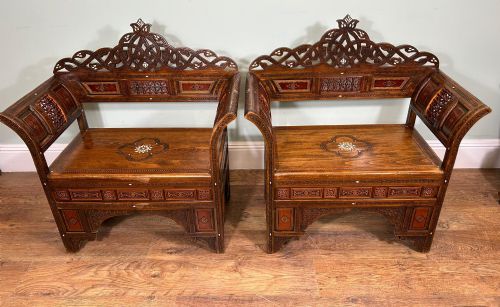
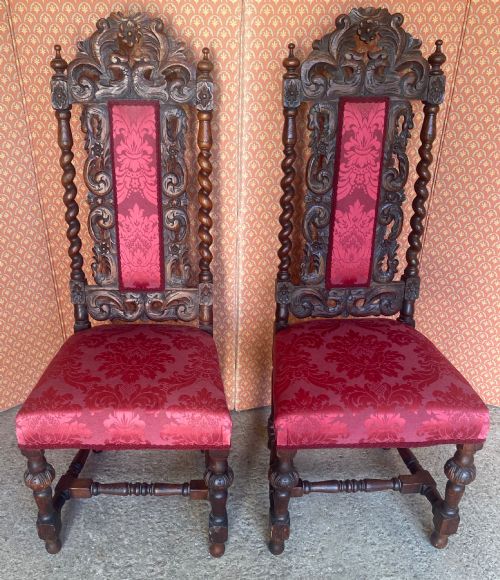
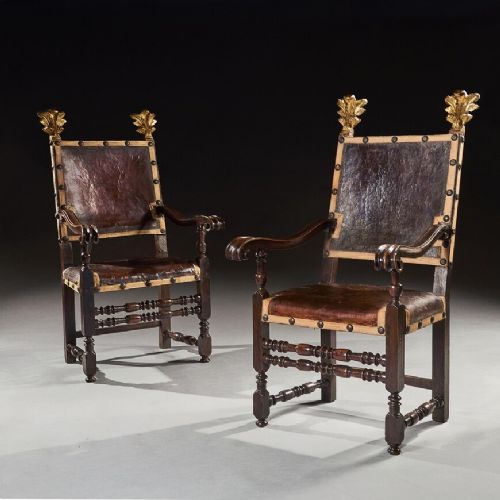
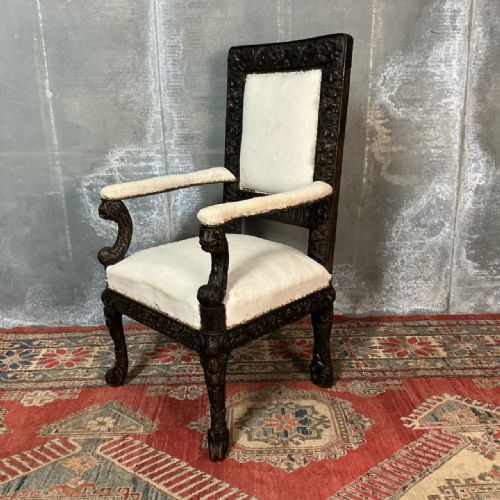
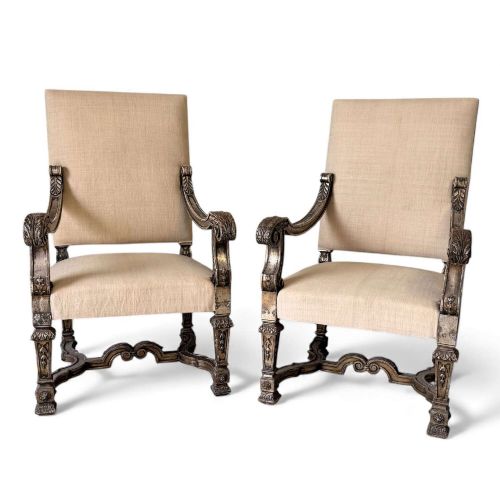
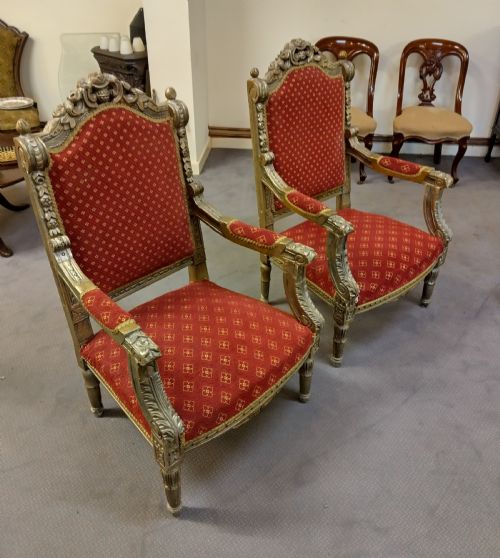
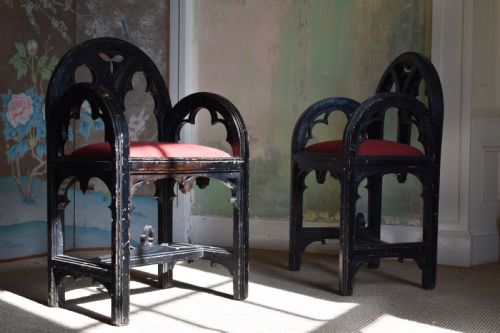
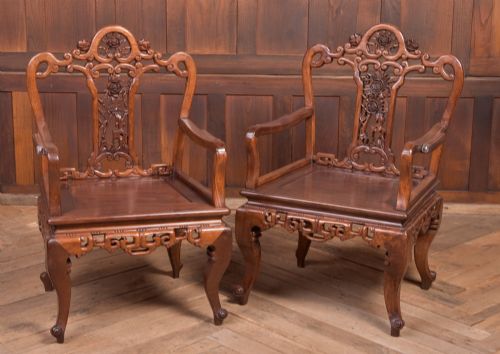
Pair of Carved Thrones
A pair of carved thrones brings monumental presence and commanding seating to a grand interior.
Pair of Carved Thrones
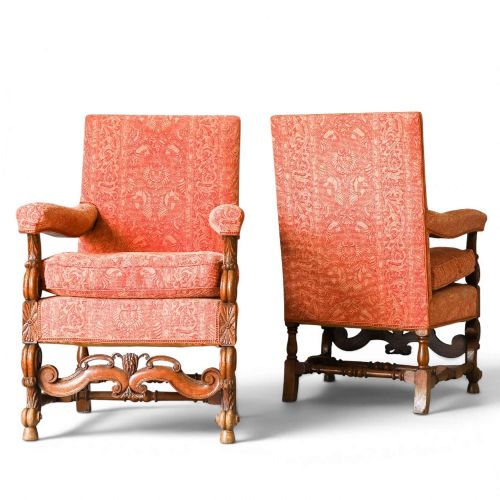
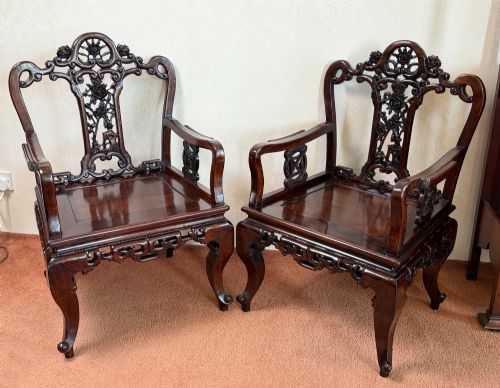
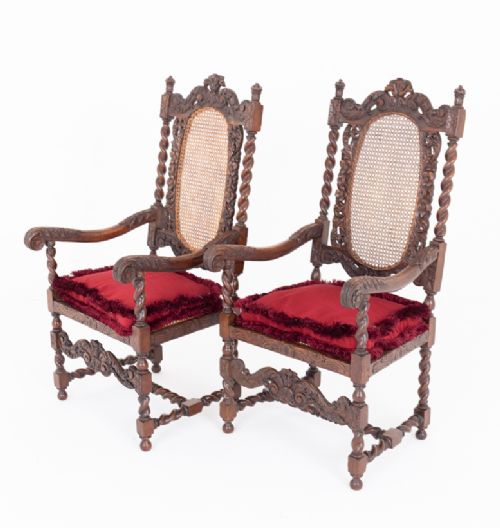
A pair of carved thrones encompasses large-scale seating designed with high backs, substantial armrests, and deep ornamentation intended to project authority and status. Buyers seeking a pair of carved thrones encounter heavy ceremonial forms originating from domestic revival movements and overseas workshops.
The material record shows strong representation from the nineteenth century alongside select eighteenth-century examples, spanning European revival styles and Qing Dynasty forms. Common iterations include heavy oak armchairs, walnut frames, and giltwood seating designed for substantial halls and reception spaces.
Materials and construction methods
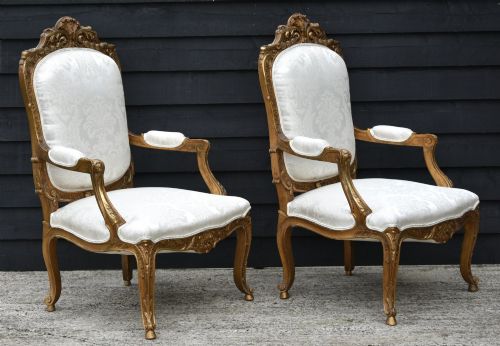
Makers utilised dense timbers such as oak, walnut, teak, and hardwood to support deep relief carving and structural integrity under heavy scale. Giltwood and parcel-gilt finishes appear across European frames, adding metallic lustre to shaped mouldings and figurative motifs.
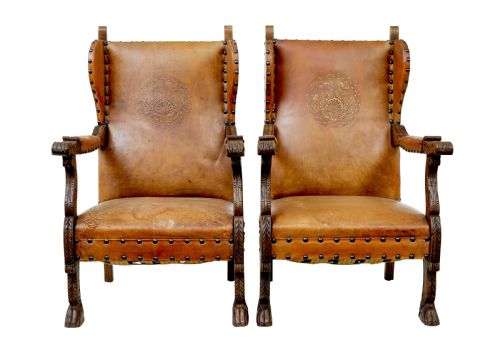
Upholstery methods combine exposed timber structures with embossed leather, velvet, tapestry, and buttoned hides secured to the seat and back panels. Joinery relies on traditional pegged and tenoned framing to bear the weight of high backs and substantial arm supports.
Listings feature oak, walnut, and exotic hardwoods alongside elaborate silk velvet, tapestry, and embossed leather upholstery.
Quality variations in carved seating
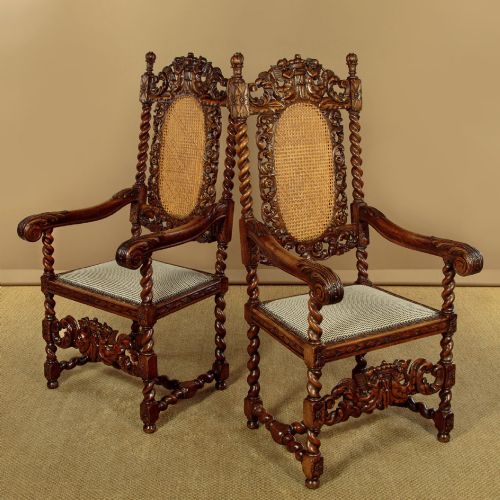
The depth, crispness, and continuity of the hand-carved detail separate standard revival pieces from finer sculptural examples. High-grade items display sharp undercut foliage, figural elements like Green Men or dragons, and balanced symmetry across both chairs.
Timber selection and secondary material choices dictate overall structural integrity, with dense heartwoods and original gilding preserving better than softer secondary woods. The integration of period upholstery materials or appropriate replacement covers influences the unified appearance of the matched pair.
The Pair of Carved Thrones Glossary
- Wainscot chair
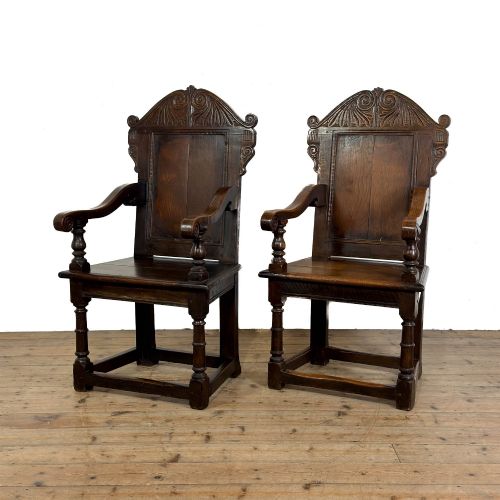
- An early wooden armchair featuring a panelled back and solid wooden seat. These sturdy forms often pre-date upholstered seating and display straightforward carpentry.
- Giltwood
- Timber coated with a thin layer of gold leaf or gilt finish. This decorative treatment highlights carved surfaces on formal seating.
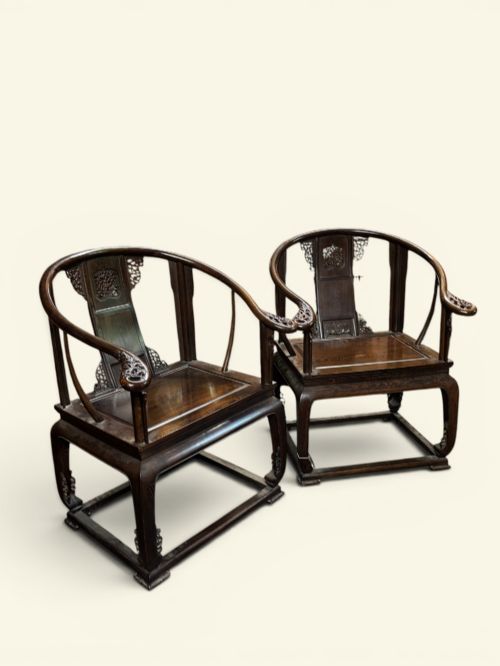
- Horseshoe-back chair
- A traditional Chinese seating form featuring a curved crestrail that sweeps down to form the armrests. This design supports an upright posture and showcases polished hardwood grain.
- Gothic Revival
- An architectural and decorative style drawing on medieval ecclesiastical motifs. Pieces from this movement incorporate tracery, pointed arches, and heavy linenfold panelling.
- Parcel-gilt
- A finish where only specific carved elements or raised details receive gold leaf decoration against a painted or stained timber ground. This technique creates visual contrast across the wooden frame.
Pair of Carved Thrones: Frequently Asked Questions
Where should I place a pair of carved thrones?
These imposing seats suit large reception rooms, hallways, or libraries where their height and scale anchor the surrounding furniture. They function effectively as matching anchor points at either side of a fireplace or focal wall.
Because of their substantial dimensions, they require adequate floor space and clearance to allow the carved details and high backs to remain fully visible.
How do I care for antique leather and velvet upholstery?
Maintain leather surfaces by applying specialist balms periodically to prevent drying and cracking, avoiding direct sunlight. Velvet and tapestry panels benefit from gentle brushing and professional cleaning to preserve the pile.
Keep these materials away from excessive heat sources and damp environments to protect both the fabric and the underlying wooden frame.
How can I tell European revival styles apart?
Gothic Revival pieces display pointed arches, tracery, and solemn ecclesiastical motifs. Renaissance Revival frames incorporate bold scrolls, strapwork, and sculptural figures.
Baroque and Rococo revival items feature dynamic asymmetrical curves, shell carvings, and abundant gilding that distinguish them from stricter geometric Jacobean designs.
Are Chinese hardwood thrones heavy?
Asian hardwoods like hongmu and dense domestic timbers are exceptionally heavy and dense. This natural weight contributes to their structural stability without requiring excessive framing.
Moving these chairs requires care and multiple handlers to prevent strain on the joinery and carved arm supports.