


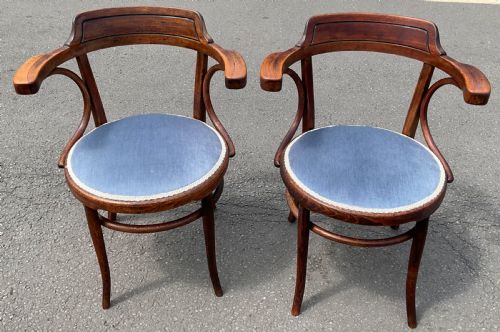

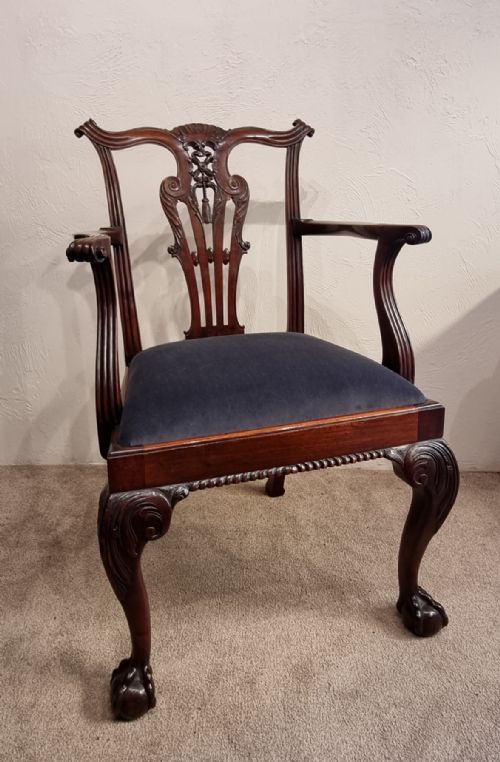

Blue Velvet Accent Armchair
A blue velvet accent armchair brings tactile depth and rich colour to a room, offering a seat that anchors a scheme with historical character.
Blue Velvet Accent Armchair
When you search for a blue velvet accent armchair, you encounter a variety of forms spanning the nineteenth and early twentieth centuries. These seating pieces encompass Victorian tub chairs, nursing chairs, fireside seats, and French-inspired giltwood armchairs.
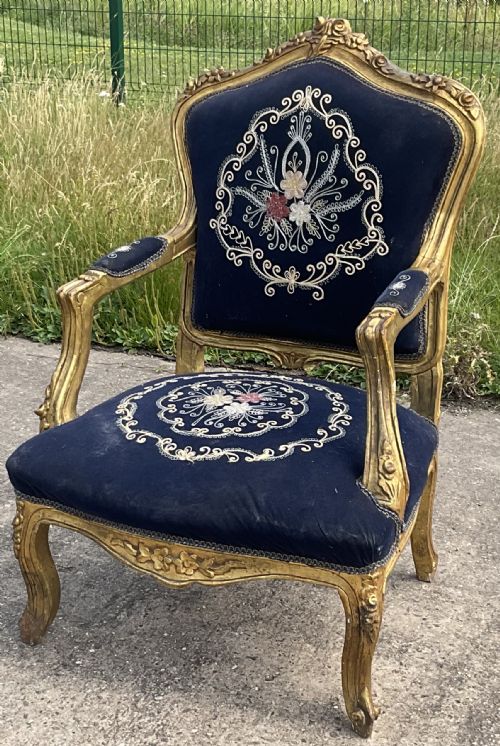
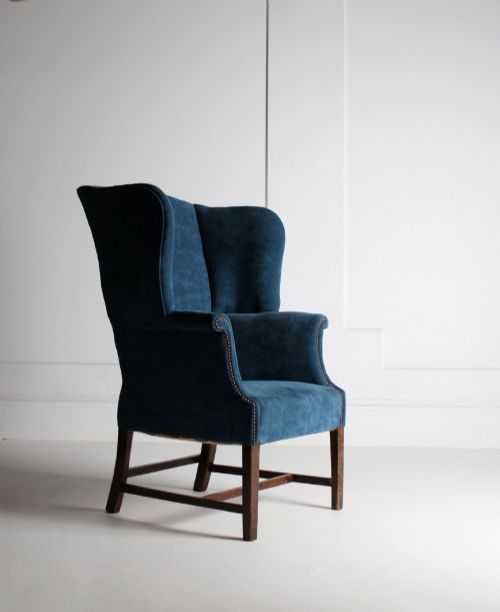
The versions most likely to meet you on this page range from walnut fauteuils in the William and Mary style to Edwardian wingbacks and Art Deco slipper chairs. They combine traditional timber frames with deep pile textile upholstery in various shades of blue.
Origins include country house pieces alongside urban salon seating, reflecting the diverse periods from 1850 through to the 1920s. Each object serves as a functional chair while providing a distinct decorative accent through its wood frame and fabric.
How they were made
The frames of these armchairs rely on solid hardwoods such as mahogany, walnut, oak, beech, and giltwood, frequently shaped by hand carving or steam bending as seen in bentwood examples. Joinery methods depend on the period, incorporating traditional tenon and mortise joints or bentwood framing techniques.
Upholstery utilises velvet fabric stretched over internal padding and secured to the wooden structures. Details such as brass elements, gilt decoration, and contrasting piping complement the primary timber and textile construction.
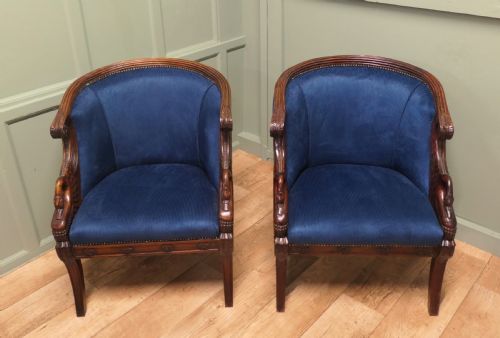
Swans make a sculptural appearance on nineteenth-century tub chairs, keeping watchful guard over the upholstery.
What varies in quality
The standard of carving across the wooden frames distinguishes basic production from superior craftsmanship, with deeply sculpted walnut, mahogany, and giltwood showing greater sculptural ambition. Finer examples display meticulous attention to the junction between the carved woodwork and the upholstered body.
The integrity of the timber frame and the precision of the velvet upholstery application separate standard seating from exceptional library or salon chairs. Superior pieces maintain robust structural foundations paired with high-grade textile finishes that respect the historical style of the period.
Liberty·Trollope and Colls Ltd
The Blue Velvet Accent Armchair Glossary
- Fauteuil
- An open-framed upholstered armchair originating in France, typically featuring exposed wood around the arms and back. These chairs are designed for formal reception rooms.
- Tub chair
- A deep-seated armchair with a rounded back that curves continuously into the arms. This form provides an enclosed, supportive seating experience.
- Nursing chair
- A low-seated Victorian chair originally designed for comfort while nursing infants. They often feature padded backs and low profiles suitable for bedroom placement.
- Giltwood
- Wood that has been coated with a thin layer of gold leaf or gilt paint. This finish was utilised on formal revival chairs to create a reflective, luxurious surface.
- Bentwood
- Wood that has been heated using steam and bent into curved shapes. This technique defines lightweight nineteenth-century seating designs.
Blue Velvet Accent Armchair: Frequently Asked Questions
Where should I place an accent armchair?
These chairs suit corners of living rooms, bedrooms, or studies where they function as standalone reading seats. Their decorative wood frames and coloured upholstery allow them to act as visual focal points.
Ensure the chair sits away from direct sunlight to prevent fading of the blue velvet. Positioning them with adequate clearance lets the silhouette and carved details remain visible.
How do I identify a Victorian chair?
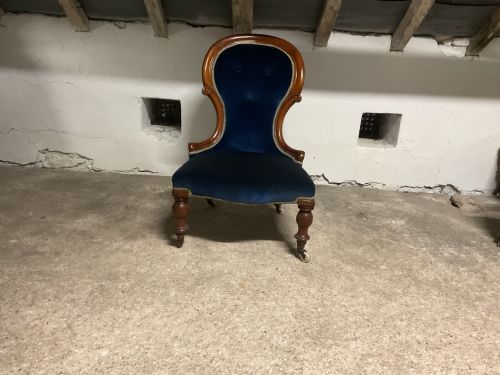
Victorian seating often exhibits heavier timber frames in walnut or mahogany, combined with deep buttoning or curved sprung backs. The presence of styles like Gothic Revival or elaborate carving points to nineteenth-century production.
Examining the underside reveals construction methods and wood types consistent with mid to late nineteenth-century workshop practices. Hardware such as brass castors further supports this dating.
Are these chairs comfortable for daily use?
Most antique armchairs offer supportive sprung seats and padded backs designed for extended sitting. Their ergonomics reflect the domestic habits of the nineteenth and early twentieth centuries.
While robustly built from solid woods, the comfort level depends on the internal padding condition. Many pieces provide sturdy support suited to regular placement in a modern sitting room.