

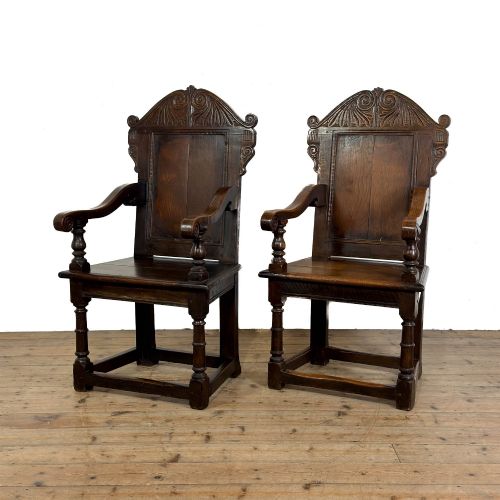
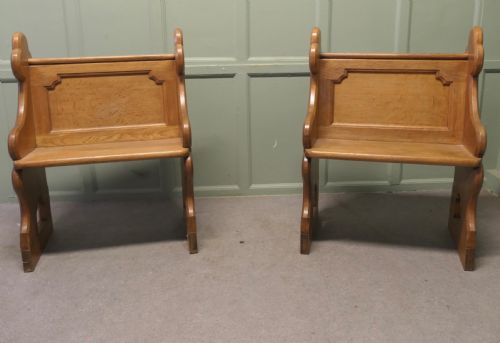
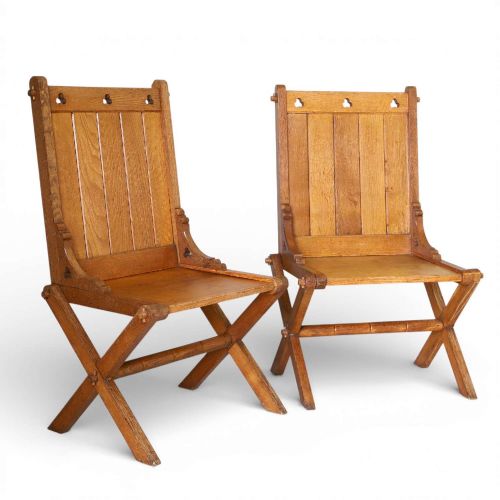
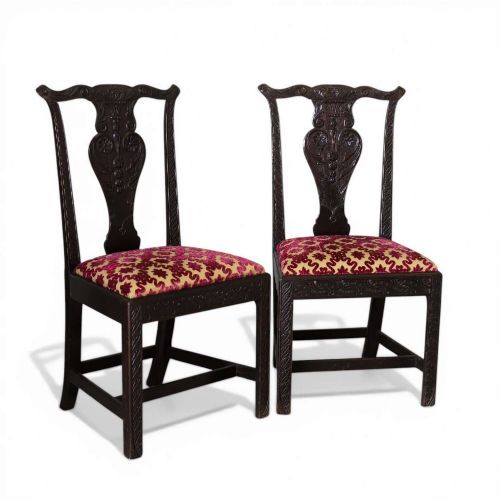
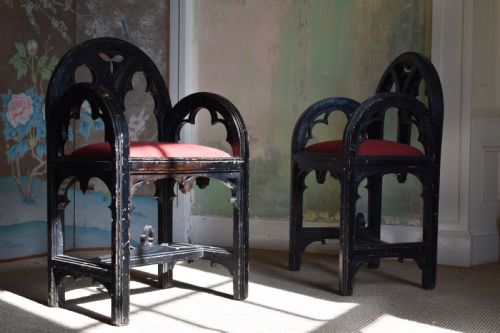
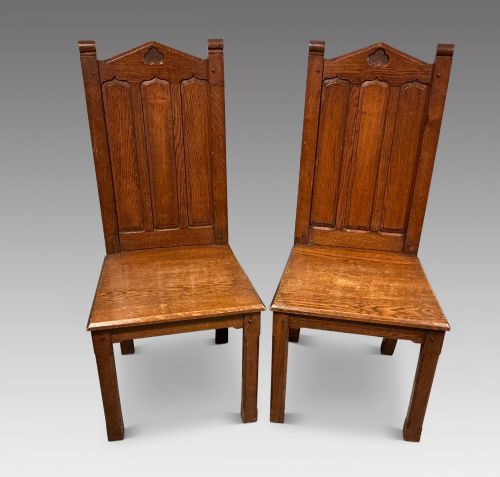

Pair Oak Hall Chairs
Pair oak hall chairs offer robust timber seating with striking upright profiles designed to anchor entranceways.
Form and Period
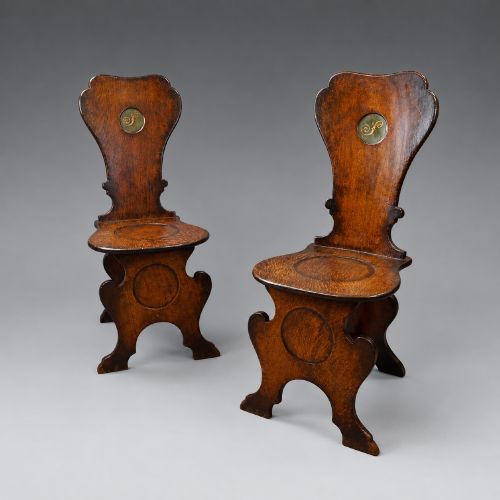
Pair oak hall chairs present upright wooden seating primarily recorded across nineteenth-century Victorian and Gothic Revival periods, alongside seventeenth-century Scottish examples and Regency variants.
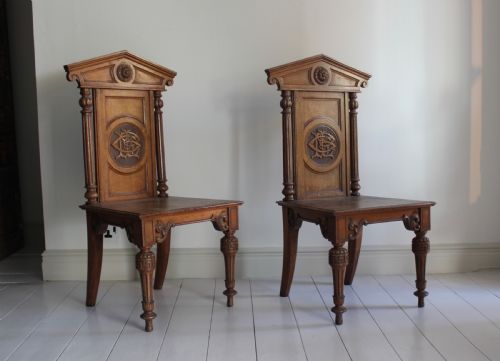
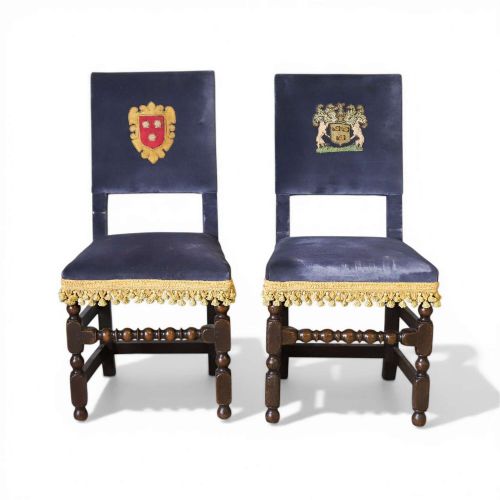
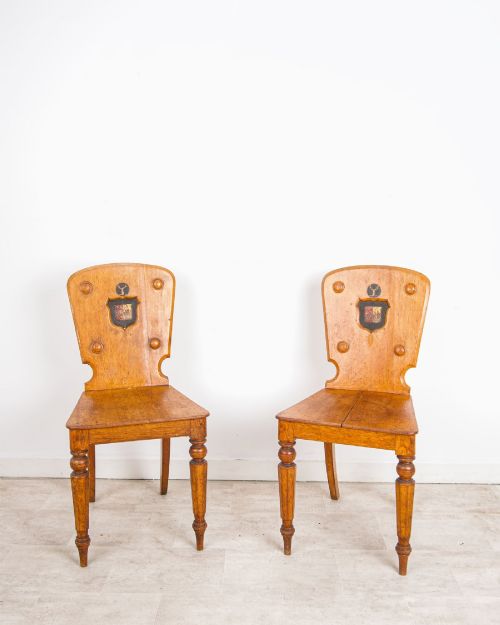
These pieces function mainly as side chairs or armchairs intended for reception spaces, often carrying carved heraldic crests or armorial details.
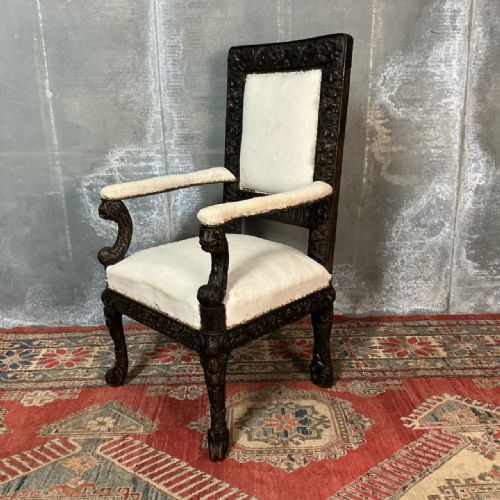
The material focus centres firmly on timber construction, occasionally supplemented by velvet upholstery or metallic fringe.
Materials and Construction
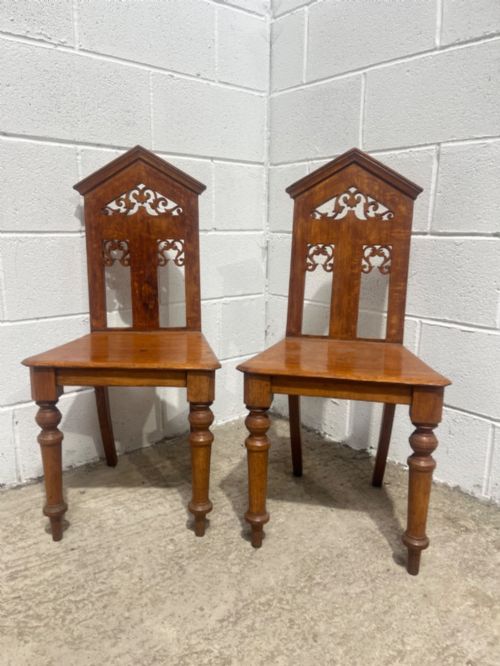
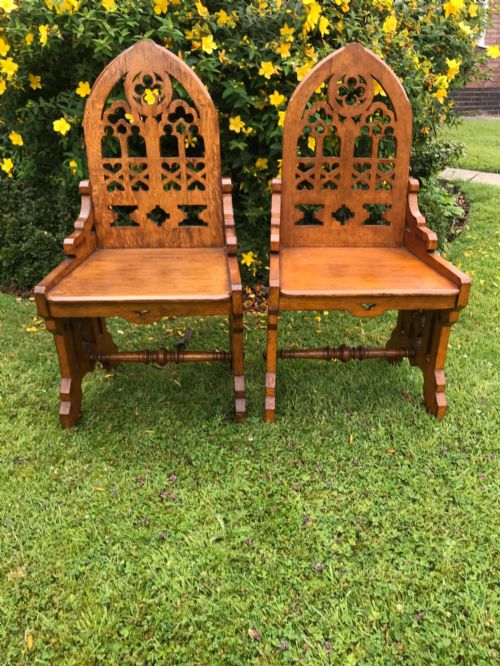
Construction relies heavily on solid oak timber, frequently subjected to carving to achieve Gothic Revival motifs, lion masks, or heraldic crests.
Certain examples integrate textured elements such as velvet upholstery and metallic fringe, while others present scrubbed wood surfaces.
Retail Price Guide 2026
Typical UK retail prices for pair oak hall chairs, calculated from the Sellingantiques database of over a million retail prices indexed since 2003. This retail price guide relies exclusively on Sellingantiques data; no external sources or auction records are used, so the figures do not describe the wider market.
Lion masks peer sternly from nineteenth-century timber frames, guarding hats and coats from passing guests.
Character and Craft
Distinction across the range rests upon the depth and intricacy of wood carving, from plain panels to elaborate armorial crests.
The integrity of the timber and the precision of historical joinery dictate the standing of individual examples.
The Pair Oak Hall Chairs Glossary
- Hall chair
- A rigid wooden seat designed for an entrance hall rather than long lounging. These pieces typically feature high carved backs and solid timber seats.
- Armorial
- Bearing a heraldic coat of arms or family crest. These painted or carved emblems frequently mark seventeenth-century and Regency specimens.
- Gothic Revival
- An architectural and decorative style drawing on medieval forms. Pointed arches and heavy tracery define this aesthetic.
- Sgabello
- A light wooden chair type originating in Italy during the Renaissance. It uses flat boards for legs and a narrow back.
- Scrubbed oak
- Timber surfaces cleaned down to the raw grain. This finish reveals the natural tone of the wood.
Frequently Asked Questions
Where should I place a pair of hall chairs?
These chairs suit entrance halls, corridors, or landings where their upright profiles and decorative backs make a strong visual statement without taking up excessive floor space.
Because they were built for formal reception areas rather than lounging, they work best as accent pieces in rooms with traditional architectural details.
How do I identify a Gothic Revival hall chair?
Gothic Revival examples display architectural motifs such as pointed arches, trefoils, and heavy carved tracery borrowed from medieval stone structures.
This style appears frequently in nineteenth-century pieces alongside lion masks and heraldic crests.
Are these chairs comfortable for daily sitting?
Hall chairs feature rigid wooden seats and upright backs designed for brief periods of waiting rather than extended relaxation.
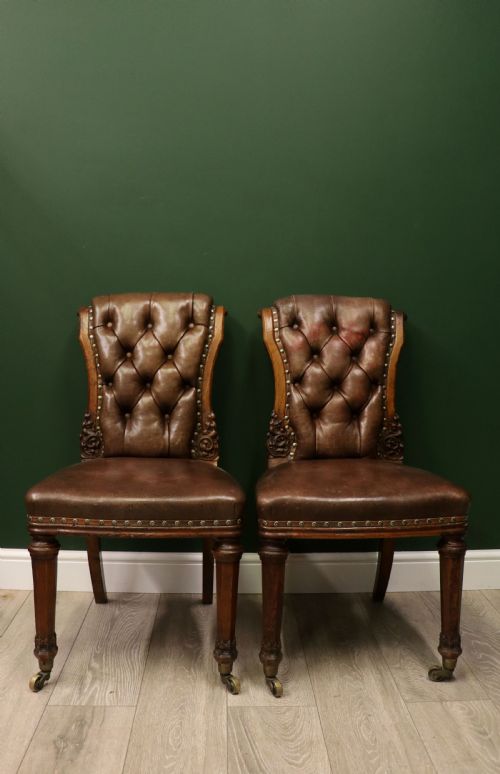
Some variants incorporate velvet upholstery or leather pads to soften the seat, while others rely entirely on carved timber.
What periods do these oak chairs cover?
The records span from seventeenth-century Scottish and vernacular items up through Regency, William IV, and Victorian Gothic Revival periods.
Nineteenth-century interpretations dominate the selection alongside occasional eighteenth-century country house examples.