
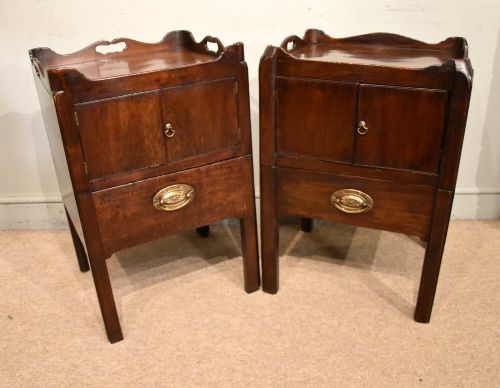
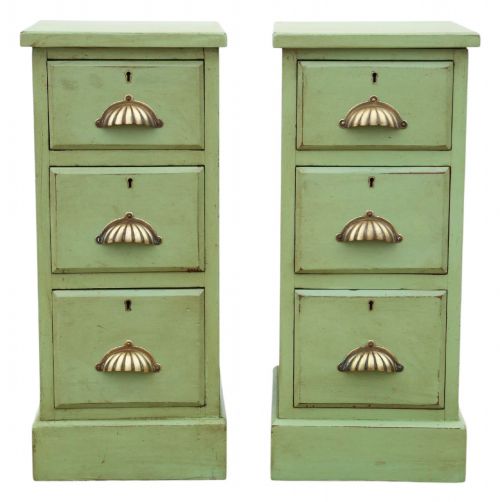
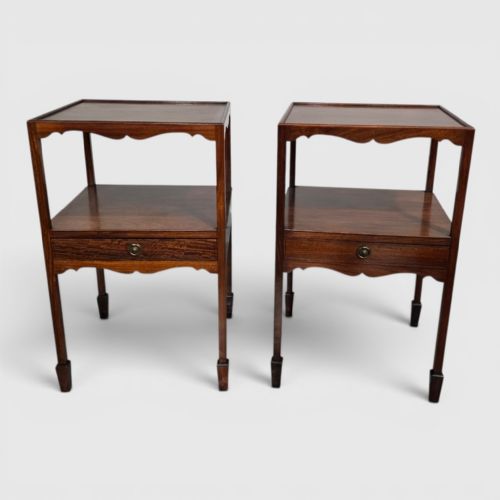
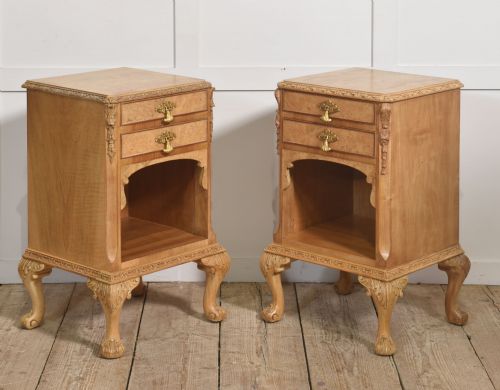


Pair Night Stands
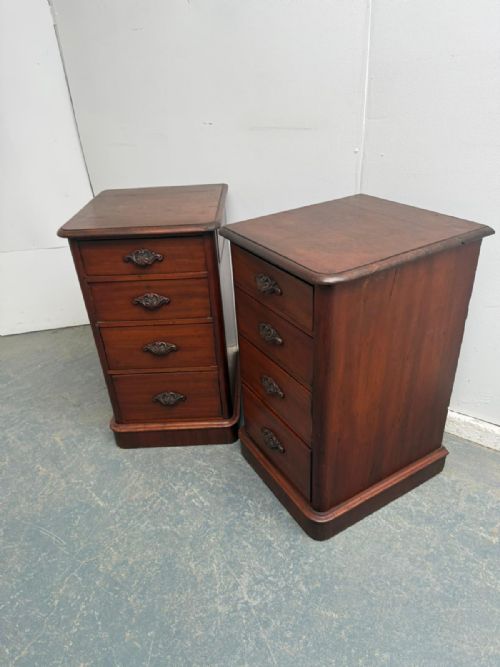
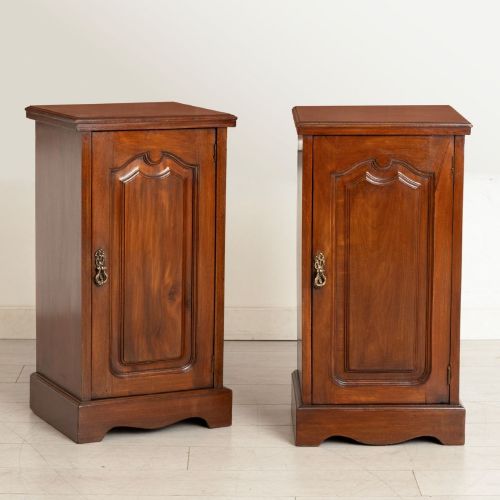
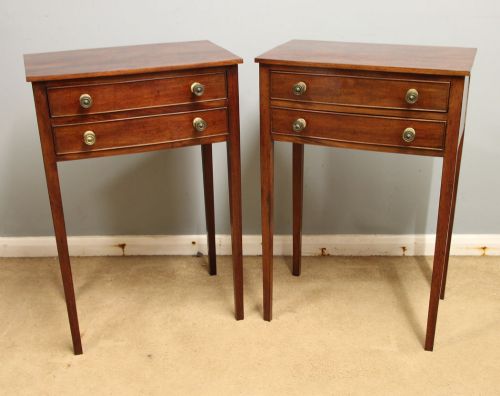
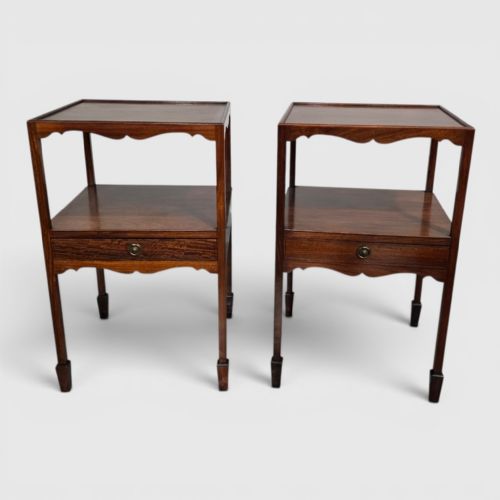
These pair night stands bring symmetry to the bedroom, offering matched bedside tables, cabinets, and chests built to hold evening essentials.
Pair Night Stands
When you search for pair night stands, you encounter a selection of matched bedside tables, cabinets, and chests designed for placement on either side of a bed. The choices range from Georgian and Victorian mahogany pieces to Art Deco walnut designs and painted finishes.
Most items on this page span the nineteenth and twentieth centuries, taking the form of enclosed cupboards, open lamp tables, or multi-drawer chests. Their origins vary from English workshops to French provincial makers and Italian studios.
How they were made
Cabinet makers relied primarily on timbers such as mahogany, walnut, burr walnut, and oak, often highlighting the natural grain through polishing or waxing. Selected examples incorporate contrasting details like brass hardware or marble tops.
Construction methods include traditional joinery, cabinet doors housing interior shelves or drawers, and carved ornamentation reflecting periods from the Georgian era through to Art Deco.
The listings span multiple decades, incorporating Georgian, Victorian, Edwardian, and Art Deco design movements.
What varies in quality
The degree of refinement lies in the selection of timbers, such as figured walnut or dense mahogany, and the crispness of any carved or inlaid details. Matching consistency between the two pieces also defines the standard of a set.
Construction integrity, from the thickness of the timber used for drawer linings to the weight of the marble tops, separates standard utility items from finer decorative pieces.
Gillows
The Pair Night Stands Glossary
- Night stand
- A small bedside table or cabinet designed to hold lamps, books, and night-time essentials. These items appear as open shelves, single-door cupboards, or small chests of drawers.
- Bedside cabinet
- An enclosed piece of bedroom furniture featuring a door or drawers to keep personal items out of sight. They commonly pair with a matching piece to flank a bed.
- Burr walnut
- A prized timber harvested from the growths on walnut trees, displaying intricate, swirling grain patterns. It is frequently utilised on the doors and drawer fronts of Art Deco and Edwardian cabinets.
- Tray-top
- A tabletop featuring a raised gallery edge designed to prevent items from rolling off. This practical detail appears on various nineteenth-century mahogany and walnut tables.
Pair Night Stands: Frequently Asked Questions
What counts as a night stand?
A night stand is a small bedside table, cabinet, or chest intended to sit next to a bed. They provide a surface for lamps and storage for books or personal items.
Historically, these pieces went by various names including bedside lockers, pot stands, and lamp tables. Today, matched pairs serve to balance the layout of a bedroom.
How do I match them to my bed?
Matching night stands to a bed involves considering the timber tone, period style, and physical height of the furniture. Dark mahogany or figured walnut pieces anchor traditional rooms, while lighter painted or satinwood examples suit brighter spaces.
Proportion matters just as much as finish, ensuring the tabletop sits level with or slightly above the top of the mattress for ease of use.
Are these pieces always sold as pairs?
The selection here consists specifically of matched pairs designed to sit symmetrically on either side of a bed. Each set shares identical timber, period characteristics, and construction methods.
Finding matched pairs from earlier centuries remains a key goal for collectors seeking bedroom harmony.
How do I tell Georgian from Victorian pieces?
Georgian bedside pieces tend to display restrained classical proportions, rectilinear forms, and dense mahogany timbers without heavy ornamentation. They reflect eighteenth-century ideals of symmetry and utility.
Victorian items often introduce bolder carving, panelled doors, and varied hardware, reflecting the industrial manufacturing shifts of the nineteenth century.