
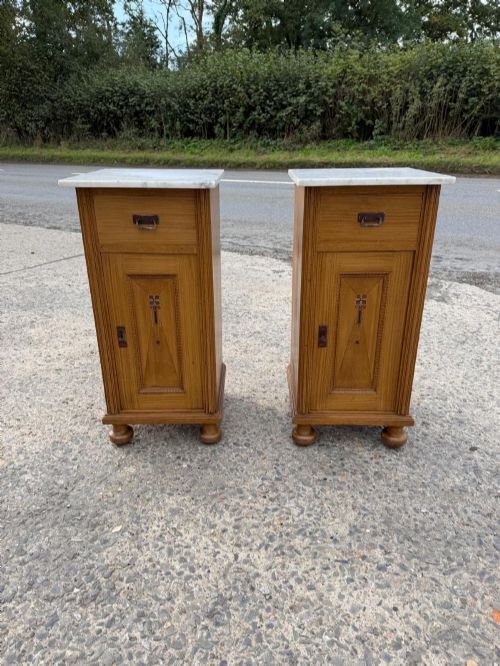
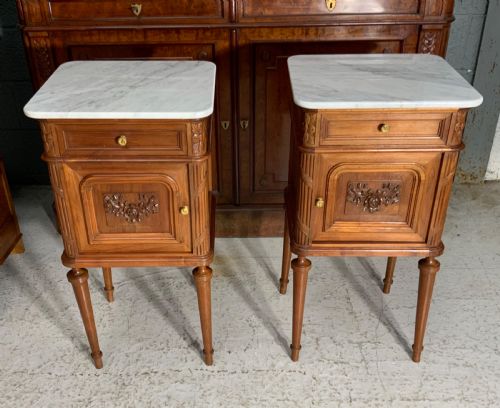
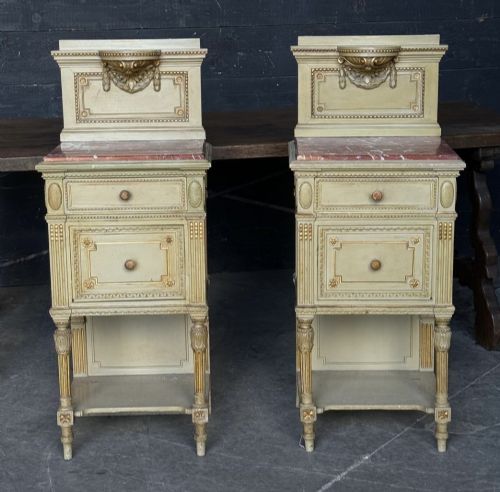
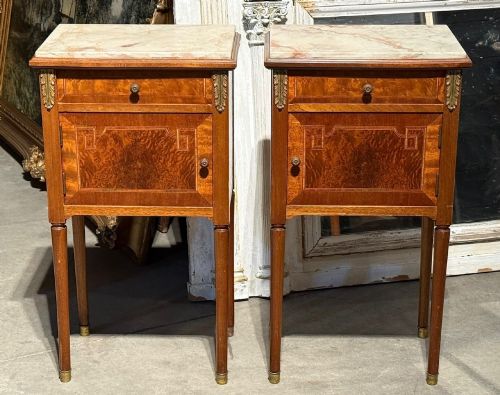
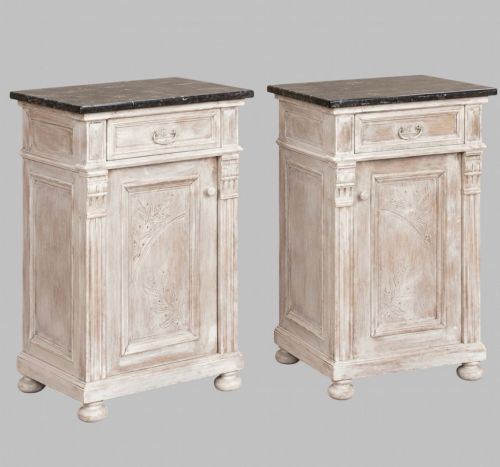
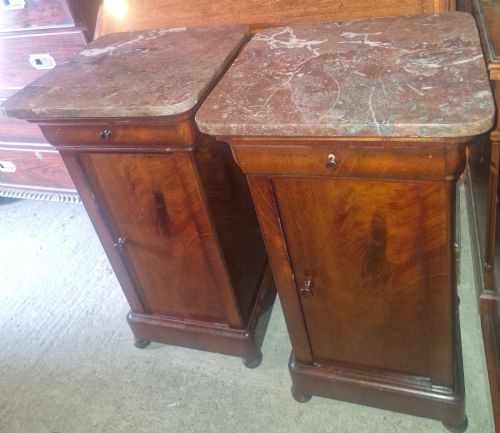
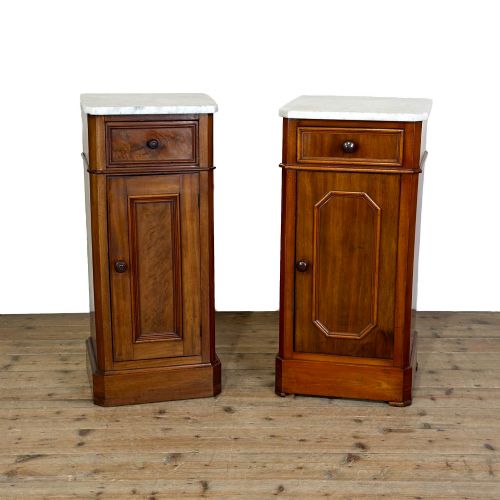
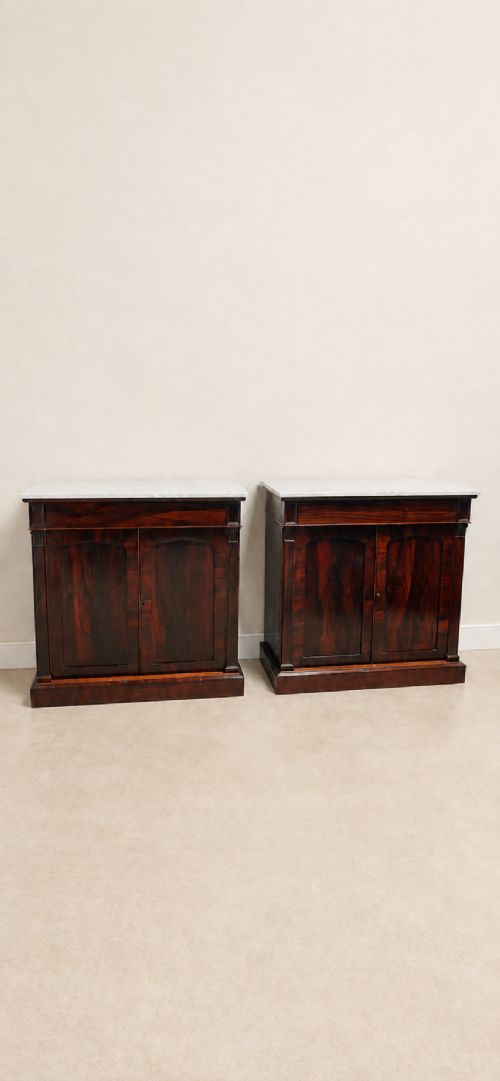
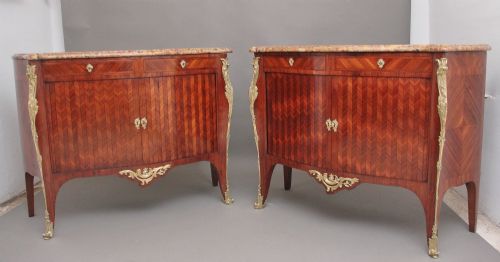
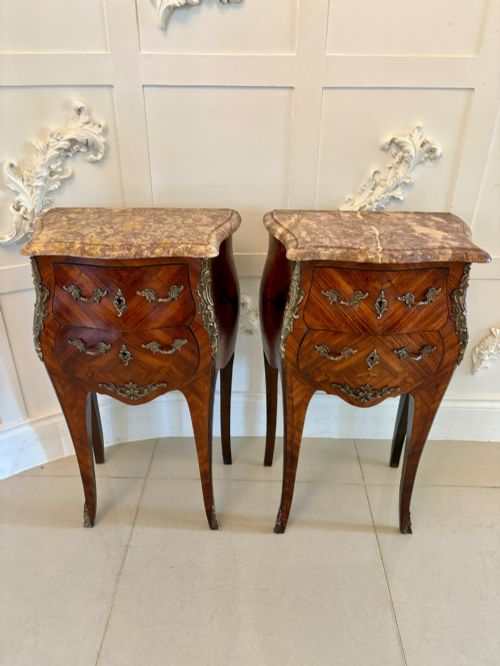
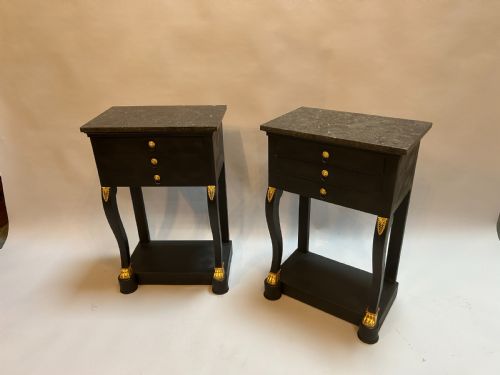
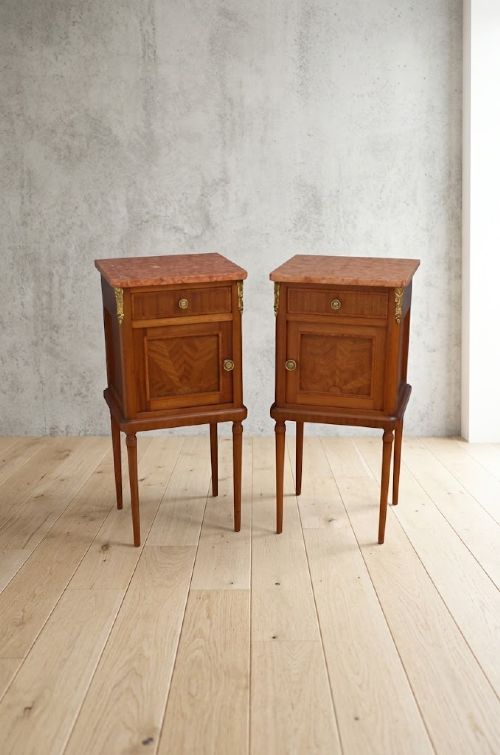
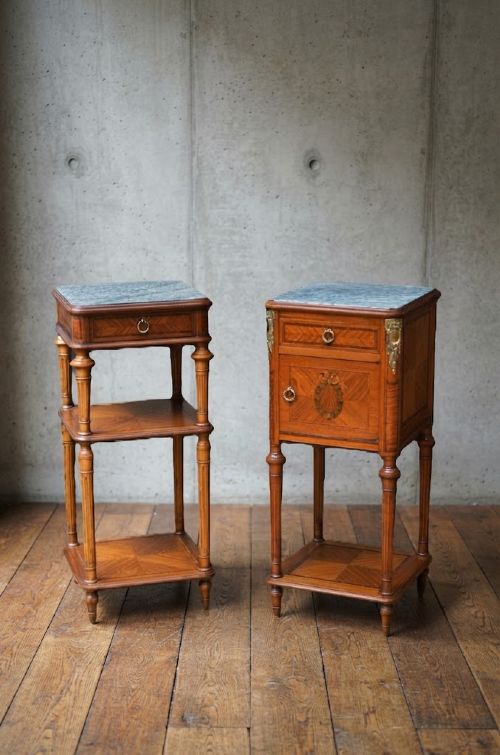
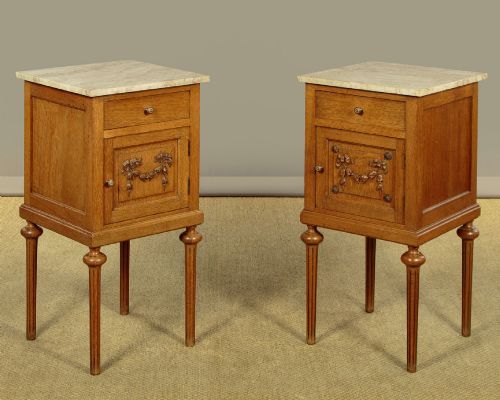
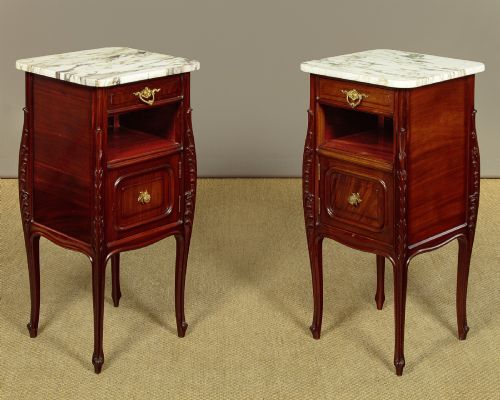
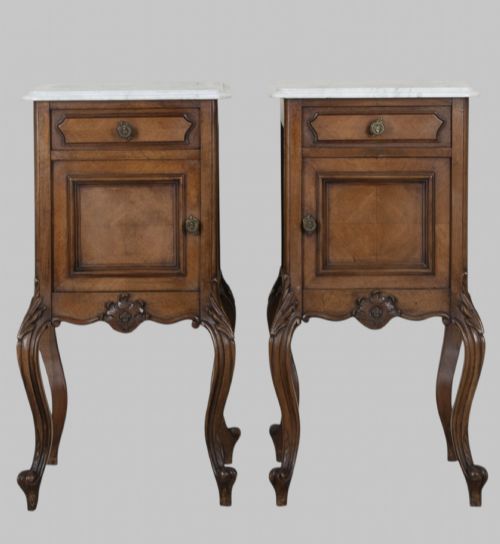
Pair Marble Cabinets
Pair marble cabinets bring symmetry and surface utility to a room, uniting functional storage with polished stone tops.
Pair Marble Cabinets
When you search for pair marble cabinets, you meet matching sets of small storage furniture designed to sit symmetrically in a bedroom or principal chamber. The selection relies heavily on bedside cabinets, lamp tables, and small commodes stemming from the nineteenth and early twentieth centuries.
The regional origins lean toward French workshops producing styles such as Louis XV Revival, Louis XVI, and Art Deco. Alongside these French forms, the listings contain English, Swedish, and Chinese examples ranging from pot stands to drawer pedestals.
Materials span from simple oak and mahogany to elaborate kingwood and walnut, frequently topped with fitted marble slabs. These dual arrangements provide balanced bedside or side storage with durable, cool stone upper surfaces.
How pair marble cabinets were made
Cabinet makers built these pieces using solid timber carcases of mahogany, walnut, oak, rosewood, or satinwood, frequently applying decorative veneers like kingwood, amboyna, and burr fruitwood over the structural timber. Marquetry inlay and brass or bronze ormolu mounts were added to elevate the visual detail of French and English designs.
Heavy marble slabs were cut, shaped, and polished to fit precisely onto the upper surface of each cabinet, providing a moisture-resistant and decorative top. Metal elements such as brass stringing, gilt bronze mounts, and handles were cast or beaten and applied to drawers and corners.
Listings feature periods from the nineteenth century through the 1930s, including Victorian, Regency, and Art Deco eras.
What varies in quality
The standard of execution rests in the intricacy of the timber work, from plain solid oak to complex marquetry inlay and Vernis Martin painted finishes on exotic veneers like kingwood. Finer workshops invested greater skill in the precision of the joinery and the weight of the cast ormolu mounts.
The selection and thickness of the marble top also distinguish the grade of the piece, alongside whether the two cabinets form a true handed pair designed to mirror each other across a bed or space.
Louis Constantin Le Gaigneur·E. Kahn
The Pair Marble Cabinets Glossary
- Ormolu
- Gilt bronze mounts applied to furniture for decoration. This technique was widely utilised in French cabinet making during the nineteenth century.
- Marquetry
- Fitted pieces of wood veneer assembled to create pictorial patterns on the surface. Cabinet makers used contrasting timbers to build floral or geometric designs.
- Commode
- A low chest of drawers or cabinet. These pieces often feature marble tops and decorative mounts.
- Vernis Martin
- A type of simulated Japanese lacquer developed in France. It provides a glossy, decorative finish to panels on display cabinets and commodes.
- Chevet
- A French bedside table or cabinet. These small pieces provide enclosed storage beside a bed.
Pair Marble Cabinets: Frequently Asked Questions
What are pair marble cabinets used for?
These matched sets function primarily as bedside tables or small side cupboards, holding lamps and nighttime essentials.
The stone top provides a durable, wipe-clean surface that resists water marks from glasses or bedside water jugs.
How do I style them in a modern room?
Place them symmetrically on either side of a bed or frame a sofa to create visual balance in a room.
The natural grain of walnut, mahogany, or kingwood combined with stone pairs easily with both neutral and dark interior walls.
Are they all French in origin?
Many examples originate from French cabinet makers working in Louis XV or Art Deco styles, but the selection also includes English, Swedish, and Chinese pieces.
Craftsmen across Europe and beyond utilised local timbers combined with imported marble to construct these matching pairs.
What does a handed pair mean?
A handed pair consists of two cabinets built as mirror images of each other, designed specifically to flank a bed or doorway.
This specific construction ensures that door hinges or decorative motifs face in the correct direction on the left and right sides.