
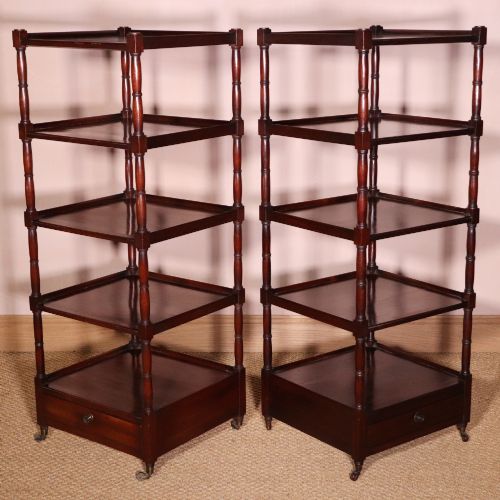
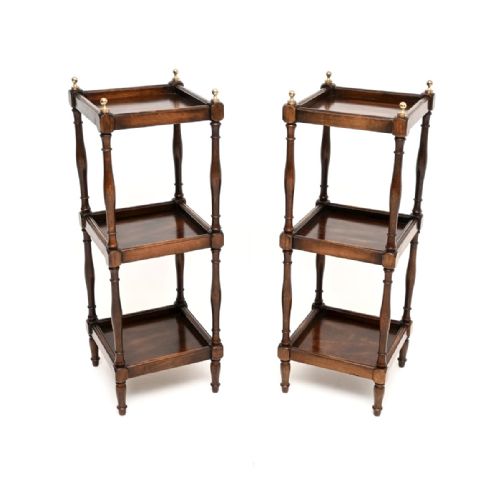
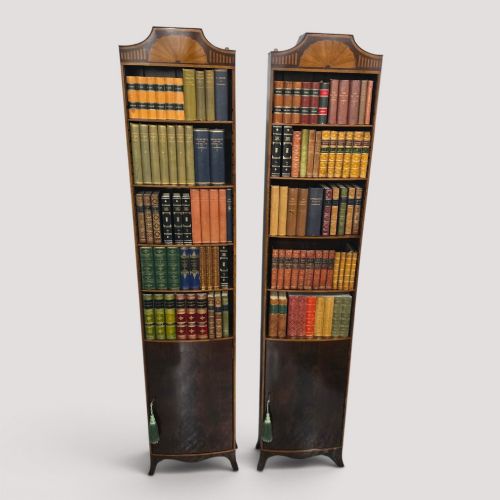
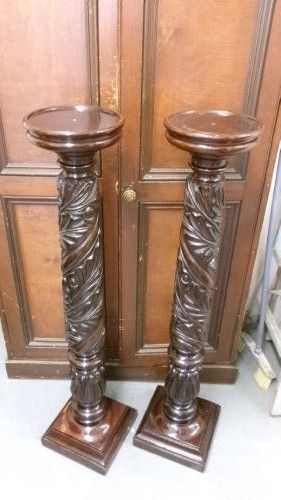



Pair Mahogany Display Stands
These pair mahogany display stands elevate treasured objects, bringing proportion and rich timber tone to an interior.
Pair Mahogany Display Stands
When searching for pair mahogany display stands, buyers encounter matched sets designed to hold lamps, plants, ceramics, or books at a height. These pieces emerge chiefly in Victorian, Edwardian, and twentieth-century workshops, drawing on Georgian, Regency, and Neoclassical styles.
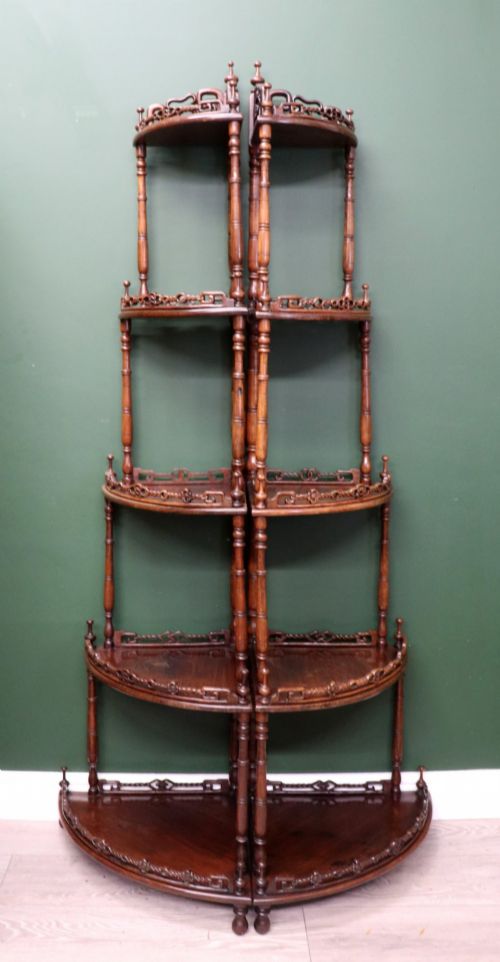
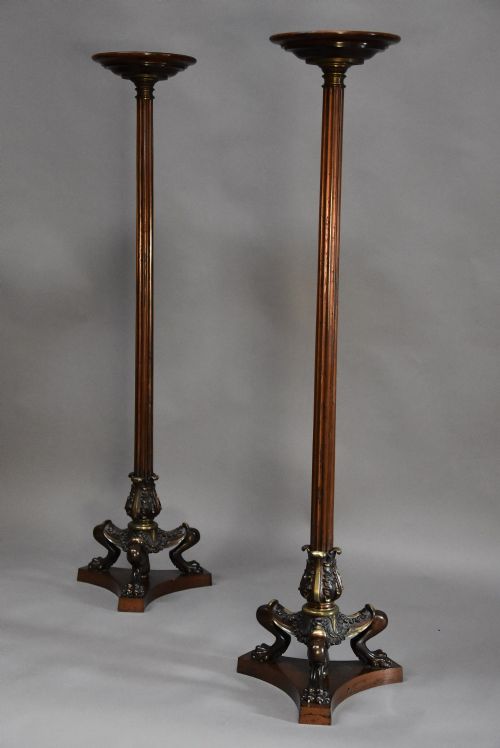
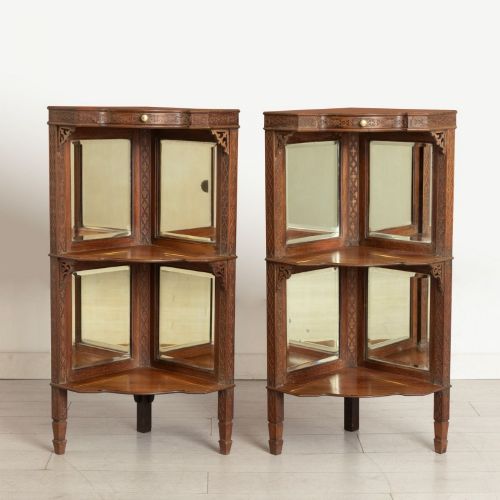
The forms span tall torcheres and plant stands, column pedestals, urn stands, corner whatnots, and glazed display cabinets. Solid mahogany and hardwood constructions dominate, often enhanced with satinwood inlay, brass mounts, or marble tops.
Victorian examples provide robust carved columns and heavy pedestals, while Edwardian versions tend to display lighter inlaid mahogany frames. Buyers meet everything from simple open stands to glazed library bookcases and hexagonal pedestal cabinets.
How they were made
Cabinetmakers constructed these stands primarily using solid mahogany and hardwood, selected for strength and deep grain figures. Workshops employed traditional joinery techniques, turning columns on lathes and hand-carving decorative details such as fluting or foliate motifs.
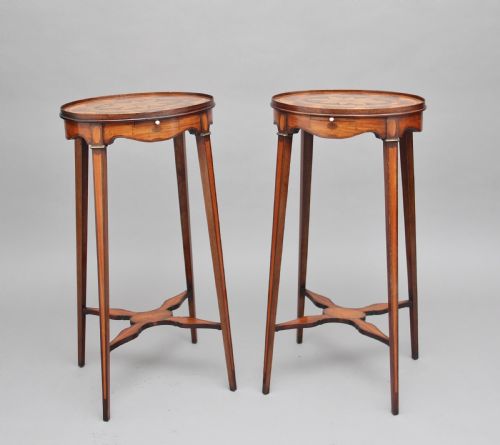
Many Edwardian and Sheraton revival pieces incorporate satinwood stringing and delicate marquetry inlay into the mahogany surfaces. Where brass, bronze, mirror glass, and marble appear, they are integrated as galleries, mounts, or display tops to support the functional design of the stands.
The listings span from the early nineteenth century through the Edwardian era, featuring materials such as mahogany, brass, bronze, and marble.
What varies in quality
The standard of a pair rests upon the choice of timber and the precision of the cabinetmaker's hand. Superior examples display rich, consistent grain patterns in the mahogany, crispness in carved details, and symmetry across both pieces in the set.
Attention to secondary details separates finer stands from simpler production. Integrated satinwood inlay, well-fitted brass mounts, and solid structural integrity dictate the standing of a piece within the range of available inventory.
Edwards & Roberts·George Smith·Thomas Hope·C Hindley & Sons
The Pair Mahogany Display Stands Glossary
- Torchere
- A tall, slender stand designed to support a light or decorative object. These pieces frequently feature carved columns or tripod bases dating from the nineteenth century.
- Pedestal
- A standalone architectural column or plinth used to elevate busts, urns, or sculptures. They appear in solid mahogany, marble-topped variants, and carved wood forms.
- Whatnot
- A set of open tiered shelves used for displaying ornaments or books. Victorian examples often take corner configurations to maximise interior space.
- Marquetry
- Decorative patterns formed by fitting together thin veneers of various coloured woods. This technique appears frequently on Sheraton revival and Edwardian pieces.
Pair Mahogany Display Stands: Frequently Asked Questions
What were pair mahogany display stands used for?
These matched pieces served to elevate decorative objects, urns, lamps, and plants within formal reception rooms and country house interiors. Their paired nature provided visual symmetry on either side of a fireplace, doorway, or window.
Over successive periods, makers adapted their proportions to suit changing domestic fashions, accommodating everything from heavy bronze sculptures to delicate porcelain figures.
How do I style them in a modern room?
Place matched torcheres or pedestals in empty corners to introduce height and vertical lines to a room. They work effectively when topped with contemporary lighting, bronze figures, or large ceramic vessels.
The deep tones of the mahogany contrast well against neutral walls, while the paired format allows you to anchor a specific view or architectural feature.
How do I distinguish Victorian from Edwardian stands?
Victorian stands typically exhibit heavier proportions, darker solid mahogany timbers, and substantial carved details like rope-twist columns or robust tripod bases. They convey a sense of architectural weight and utility.
Edwardian pieces, particularly those in the Sheraton revival style, are noticeably lighter in scale. They frequently incorporate satinwood stringing, delicate taper legs, and refined inlay work.
Are these stands always found as exact pairs?
The inventory includes both genuine matched pairs made together in the workshop and assembled pairs that share identical period, timber, and proportion. Cabinetmakers originally produced many stands in sets to satisfy interior design demands for symmetry.
Examining the grain, wear patterns, and construction methods helps confirm whether two pieces originated from the same set.