

Pair Mahogany Dining Chairs
Pair mahogany dining chairs unite matching proportion and dense timber, serving practical dining and formal seating since the eighteenth century.
Pair Mahogany Dining Chairs
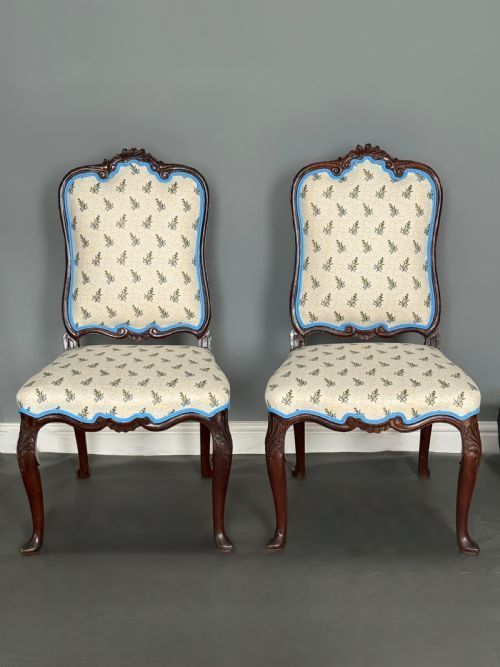
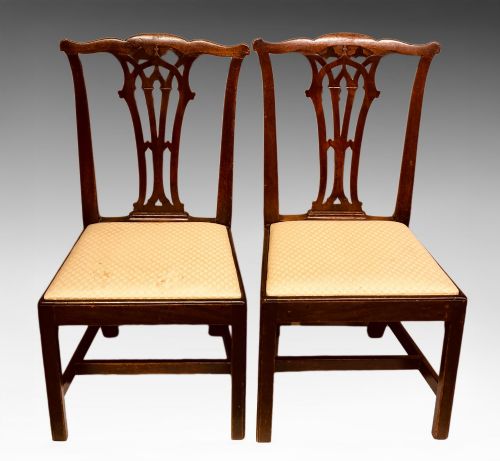
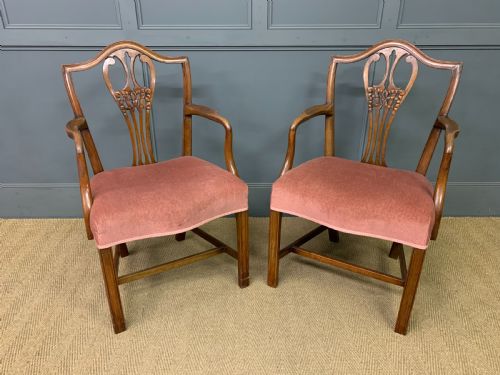
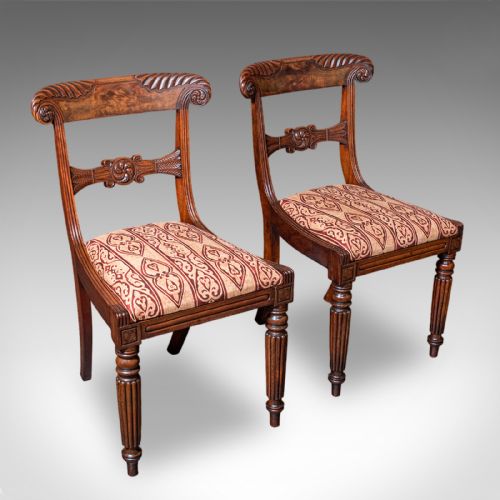
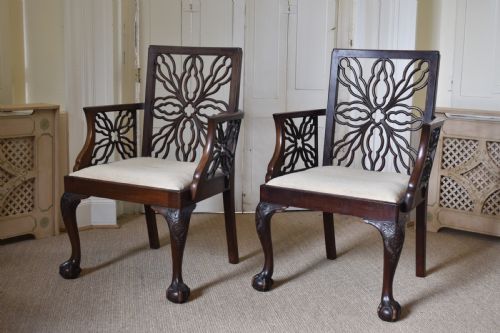
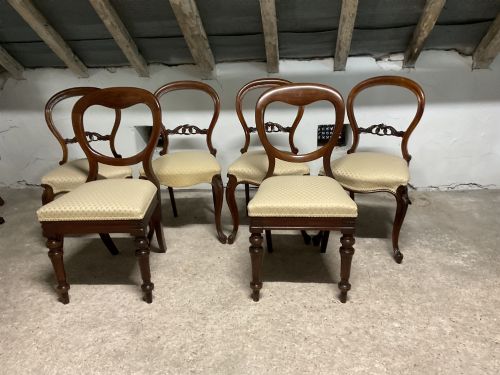
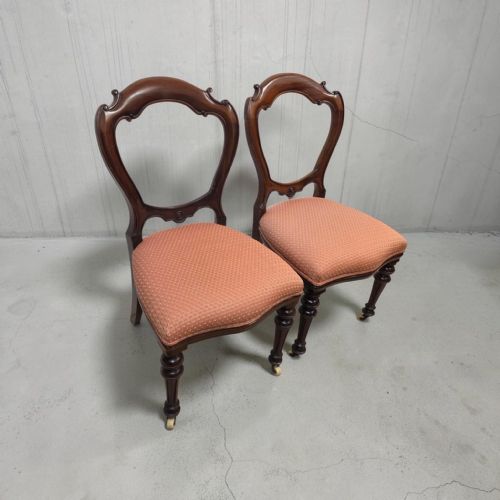
When searching for pair mahogany dining chairs, buyers encounter matching seating designed to flank a dining table or sit neatly against a parlour wall. The selection spans robust Georgian proportion, fluid Regency curves, and later Victorian or Edwardian revivals.
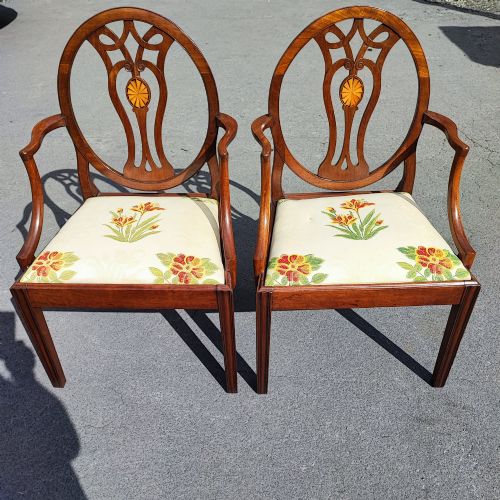
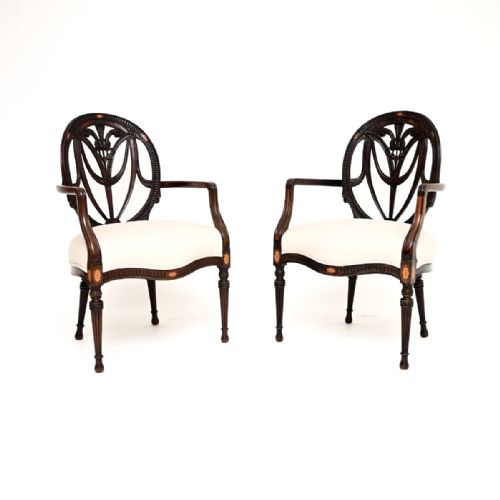
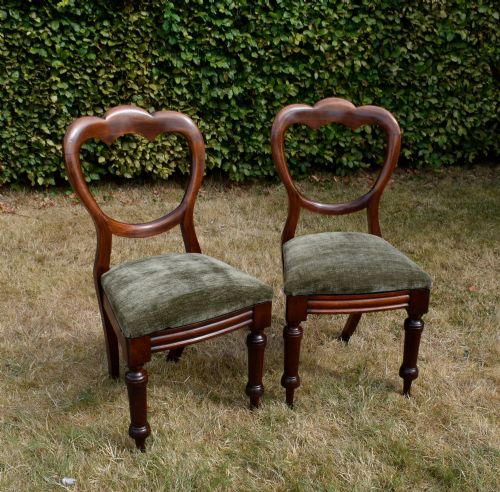
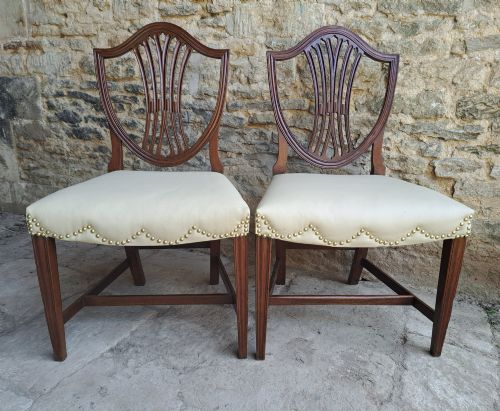
Most examples found here divide into side chairs without arms and carver armchairs intended for the head of the table. Formats stretch from plain ladder-back and balloon-back timber frames to elaborate Chippendale and Hepplewhite shield backs.
How They Were Made
Makers relied primarily on dense Cuban and solid tropical mahogany, selected for deep colour and structural strength. Secondary framing timbers were often chosen for internal stability, while decorative surfaces integrated intricate marquetry and fine brass inlay.
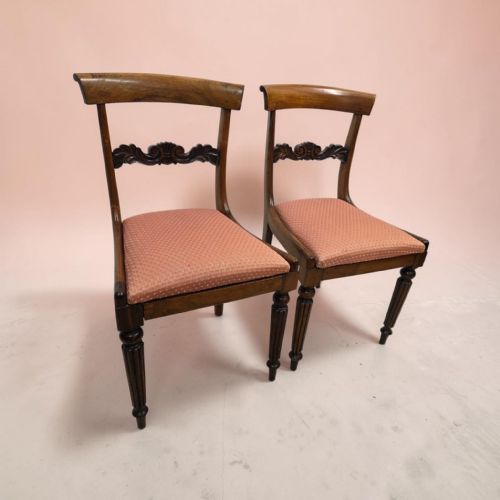
Joinery depended on tight mortise and tenon construction, allowing slender chair backs to endure centuries of daily sitting. Carved details such as claw-and-ball feet, ribbon backs, and reeded legs were shaped by hand using specialised gouges and chisels.
Upholstery utilised traditional stuffing materials secured over webbing and canvas, finished with leather, velvet, or woven fabric held by brass tacks.
Listings feature mahogany, rosewood, and walnut timbers alongside upholstery in leather, velvet, and traditional fabric.
What Varies in Quality
The degree of hand-carving defines the upper tier of production, distinguishing crisp, deep relief work from shallow mechanical moulding. Timber selection also dictates value, with heavily figured grain and rich natural patination commanding greater appreciation.
Structural integrity through original framing joints separates enduring examples from compromised pieces requiring extensive intervention. Subtle refinements in proportion, such as tapered legs and well-raked backrests, indicate the hand of a skilled cabinet maker rather than volume production.
Gillows·Gill and Reigate·Thomas Chippendale
The Pair Mahogany Dining Chairs Glossary
- Carver
- An armchair with wooden armrests designed to match a set of dining side chairs. These typically sat at the head and foot of the dining table.
- Balloon back
- A rounded, oval-shaped chair back resembling a hot air balloon, highly popular during the Victorian period. This profile provided comfortable lumbar support through curved timber construction.
- Bar back
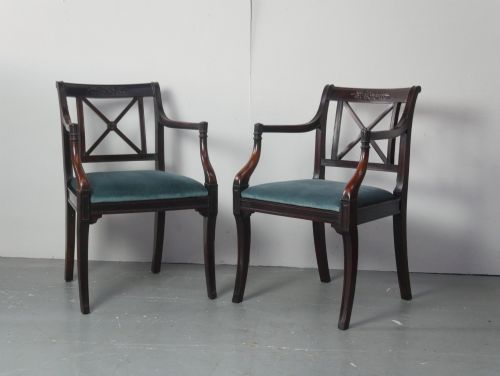
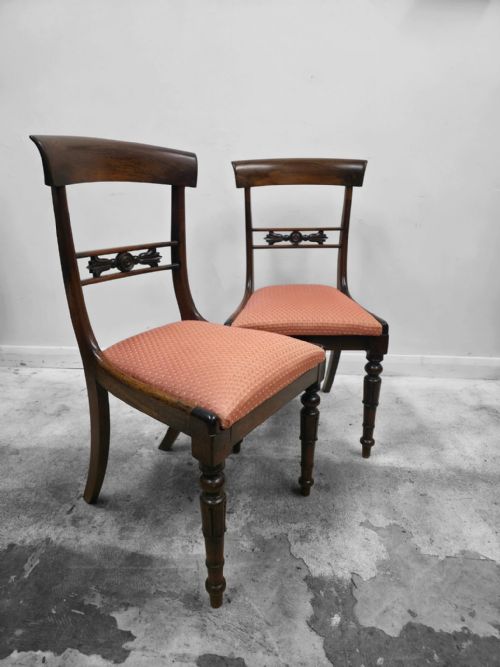
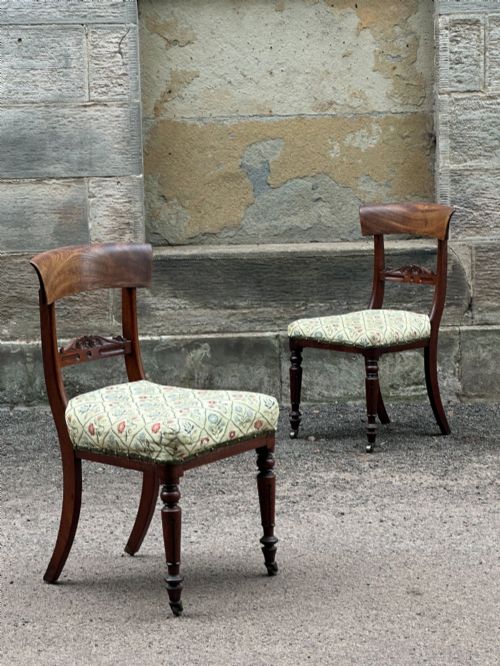
- A horizontal cross rail spanning the uprights of a chair back, frequent in Regency designs. It often featured central carved tablets or brass inlay.
- Marquetry
- Decorative patterns formed by fitting contrasting veneers into a prepared wooden surface. Craftsmen used various tinted woods to create floral or geometric motifs.
- Spade foot
- A square-tapered foot resembling the blade of a spade, common on late eighteenth-century furniture. It lightened the visual weight of straight chair legs.
Pair Mahogany Dining Chairs: Frequently Asked Questions
How do I identify a true pair?
True pairs share identical timber grain patterns, matching dimensions, and consistent tool marks left by the maker. Subtle variations in hand-carved details often confirm they were produced alongside each other in the same workshop.
Matching frames also show uniform wear and identical construction methods beneath the upholstery. Later mismatched additions usually reveal slight discrepancies in height or wood coloration upon close inspection.
Were carvers and side chairs sold together?
Original dining suites frequently paired a set of single side chairs with a pair of matching armchairs for the hosts. This arrangement provided balanced seating around the dining table while maintaining a unified aesthetic.
Armchairs were built slightly wider to accommodate formal clothing while matching the backrest design of the surrounding side chairs.
How do I care for antique mahogany?
Protect antique timber from direct sunlight and sudden temperature shifts to prevent the wood from drying out or splitting. Gentle dusting with a dry, soft cloth maintains the natural wax finish without building up residue.
Avoid placing chairs near modern heat sources or damp environments. Regular inspections of the joinery help catch loose joints before structural damage occurs.
What defines Regency style chairs?
Regency chairs draw inspiration from classical Greek and Roman forms, featuring saber legs, curved back rails, and reeded framing. The style emerged in the early nineteenth century with a focus on clean lines and neoclassical motifs.
Makers frequently incorporated brass inlay, dark mahogany timber, and Trafalgar styling to project an air of restrained elegance.