
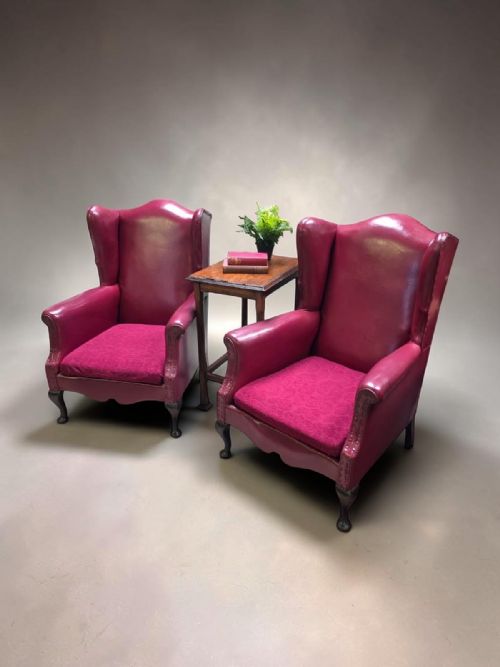


Pair Leather Wing Chairs
Pair leather wing chairs bring immediate gravity to a room, offering deep seats, protective side wings and the tactile warmth of aged hide.
Pair Leather Wing Chairs
When searching for pair leather wing chairs, buyers encounter matching sets of high-backed seating designed to block draughts and cradle the sitter. These traditional armchairs appear across several distinct historical periods, stretching from the Victorian era through the Edwardian period and into the nineteen-twenties and nineteen-thirties.
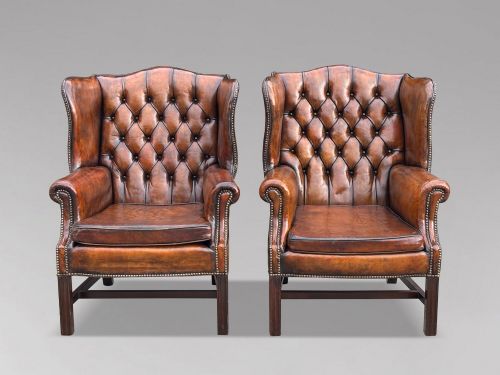
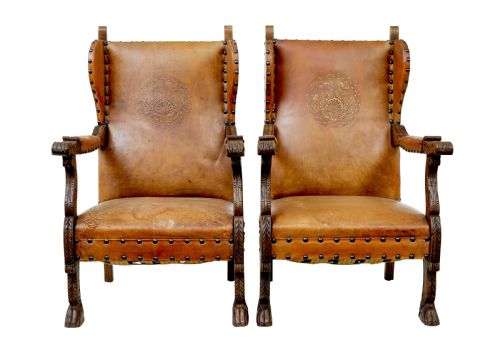
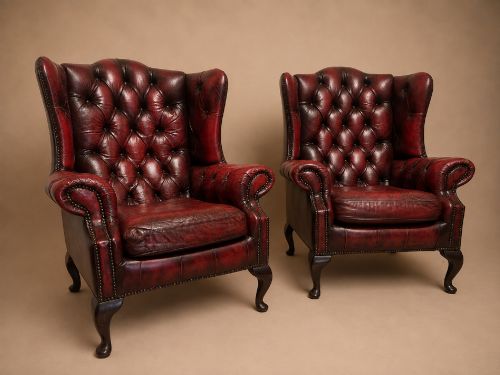
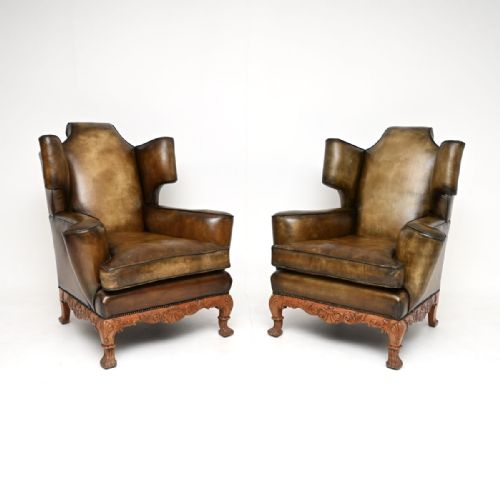
The selection on this page relies heavily on revival aesthetics, drawing inspiration from earlier George the First, George the Third and Queen Anne designs. Common variations include classic Chesterfield styling, prominent wing backs, and occasional decorative elements such as lion carvings or embossed detailing.
Most examples function as substantial reading or fireside chairs, frequently upholstered in brown or oxblood leather. Buyers find both standard armchair formats and larger gentleman's proportions suited to traditional domestic interiors.
How they were made
Traditional construction relies on sturdy internal timber frames built from hardwoods like oak, mahogany and walnut. These foundational skeletons provide the structural resilience required to support heavy upholstery and daily use over generations.
Hides are stretched across the frame and secured with brass elements, sometimes accompanied by detailed embossing or deep buttoning. The choice of leather ranges from rich brown tones to deep oxblood, developing a natural patina through handling.
The listings span the Victorian era, Edwardian period, and the nineteen-twenties and thirties, utilising oak, mahogany, walnut, brass and leather.
What varies in quality
The distinction between ordinary and exceptional examples rests in the sculptural ambition of the woodwork and the depth of the hide. Pieces featuring hand-carved details like lions display greater artisan involvement than plain frameworks.
Leather quality dictates the tactile character of the chair, with thicker skins retaining suppleness and showing more satisfying wear. Proportions also vary, with grander revival pieces offering more commanding scale than simpler domestic variants.
The Pair Leather Wing Chairs Glossary
- Wing back
- An armchair design featuring projecting side panels attached to the arms or back. These wings originally served to trap body heat and protect occupants from household draughts.
- Chesterfield
- A deep-buttoned upholstered seating style traditionally finished in leather. It is characterised by arms and back of the same height.
- Revival
- A design movement that reinterprets historical aesthetics from earlier centuries. Examples include George the First and Queen Anne revivals executed in later periods.
- Embossed leather
- Hide stamped with raised patterns or decorative motifs using metal dies. This technique adds textural interest to the visible surface of the upholstery.
Pair Leather Wing Chairs: Frequently Asked Questions
How do I date a pair of leather wing chairs?
Dating relies on examining the timber species used in the hidden frame, the tanning methods of the leather, and stylistic clues from revival periods.
Construction techniques evolve over time, moving from hand-sawn hardwoods in nineteenth-century examples to later twentieth-century manufacturing standards.
Are these chairs comfortable for daily sitting?
Most pairs are built with generous proportions and deep cushioning intended for extended reading or relaxing by a fireplace.
The high backs and protective wings also provide considerable ergonomic support for the head and shoulders.
What maintenance does antique leather need?
Antique hide benefits from occasional application of suitable balms to prevent drying and cracking.
Keeping the chairs away from direct heat sources and strong sunlight preserves the natural colour and integrity of the material.
Do these chairs fit modern interior styles?
Their strong silhouette allows them to anchor contemporary spaces by providing a heavy textural contrast to minimalist furniture.
Rich brown and oxblood tones work particularly well alongside neutral walls and natural wooden flooring.