





Pair Iron Plant Stands
Pair iron plant stands are robust architectural supports for greenery, built to anchor a Victorian conservatory or garden path with heavy metal permanence.
Pair Iron Plant Stands
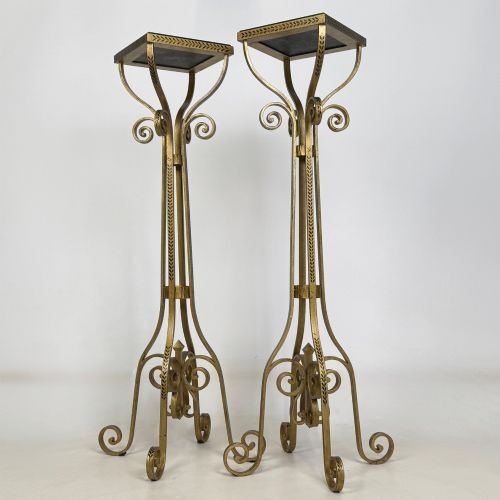
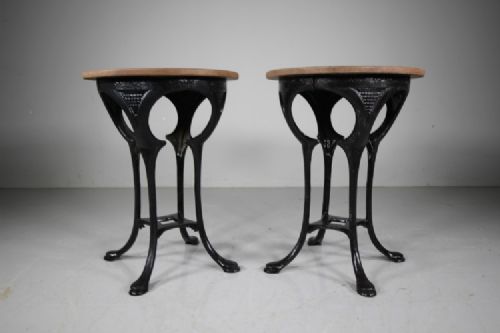
When you search for pair iron plant stands, you encounter matching sets of heavy metal display pieces designed to elevate garden urns, jardinieres and interior flora. These survivors date from the nineteenth century into the Edwardian era, spanning Victorian, Arts and Crafts, and Art Nouveau aesthetics.
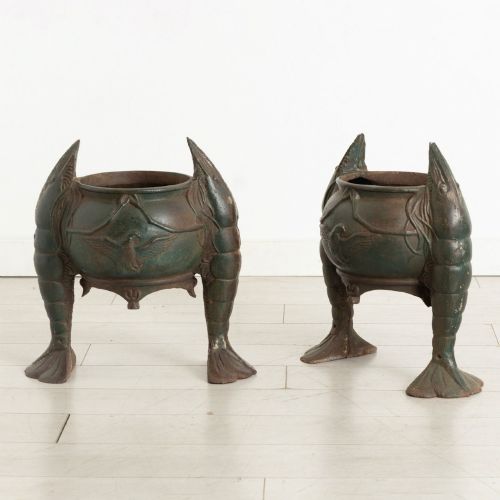
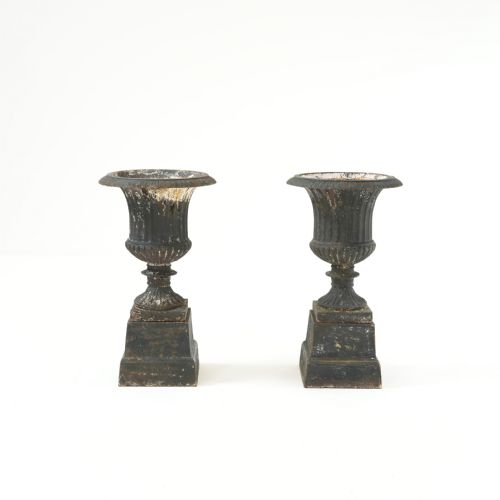
The forms you are most likely to meet on this page range from classical column planters and campana urns on plinths to side tables, portico tables, and novelty shrimp-shaped vessels. They serve as structural pedestals intended to bring height and symmetry to domestic conservatories and formal gardens.
Materials and construction
Makers utilised durable cast iron and resilient wrought iron as the foundational metals, shaping sturdy columns, scrolling framework and decorative plant holders. These metal structures frequently incorporated contrasting insets or decorative surfaces of marble, wood, stone, copper, and hardwood.
Techniques combined heavy casting for sculptural urns and columns with forged wrought iron elements for linear stands. Gilding was occasionally applied to highlight decorative cast surfaces, while stone and statuary marble tops provided stable, weather-resistant landing surfaces for botanical displays.
Judging the work
Quality in these matching sets rests upon the crispness of the iron casting and the structural integrity of the paired pieces. Finer examples display sharply defined ornamentation, whether in classical neoclassical relief or organic Art Nouveau curves, rather than blurred or pitted metalwork.
The integration of mixed media also dictates distinction, where fitted statuary marble tops or combined copper and wrought iron elements elevate a utilitarian support into a decorative piece of furniture. Matching symmetry between the two items remains essential for a cohesive display.
Archibald Knox
The Pair Iron Plant Stands Glossary
- Cast iron
- Iron poured into a mould to create rigid, highly detailed decorative forms. It provides the heavy foundation for nineteenth-century garden urns and structural plant stands.
- Wrought iron
- Iron beaten and heated by hand into specific shapes rather than poured. This technique yields fibrous, durable frameworks often seen in Arts and Crafts holders.
- Campana urn
- A bell-shaped vessel with a flaring rim and a footed base. These classic forms appear frequently as top elements on nineteenth-century plant stands.
- Jardinere
- An ornamental pot or stand specifically made for holding flowers or plants. They form a primary category of display furniture in Victorian interiors and conservatories.
- Statuary marble
- A fine white marble historically used for classical sculpture and architectural details. It provides a smooth, contrasting top surface for heavy iron portico tables.
Pair Iron Plant Stands: Frequently Asked Questions
What periods do these stands cover?
The available pieces primarily span the nineteenth century and the Edwardian era, encompassing Victorian and early twentieth-century manufacturing dates.
Craftsmen produced these iron supports across distinct design movements, ranging from severe neoclassical forms to flowing Art Nouveau and Arts and Crafts styles.
Were these stands meant for outdoors?
Many examples served in Victorian conservatories or formal gardens, utilising weather-resistant cast iron to withstand moisture and changing temperatures.
Other lighter or marble-topped variants functioned strictly as interior side tables and plant pedestals within domestic drawing rooms.
What materials accompany the iron?
Maker combinations frequently paired cast or wrought iron with statuary marble tops, stone bases, and contrasting copper elements. Wood and hardwood surfaces also appear on interior display tables.
These mixed-media constructions allowed heavy metal frames to support delicate botanical arrangements while maintaining domestic elegance.