


Pair Glass Salt Cellars
These pair glass salt cellars bring brilliant colour and tactile weight to a dining table, offering miniature stages for salt served during formal meals.
Pair Glass Salt Cellars
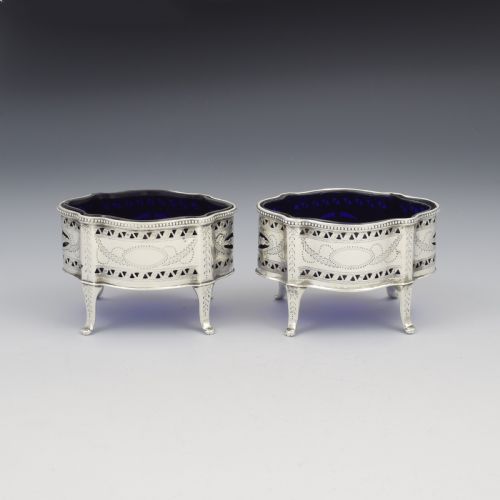
When searching for pair glass salt cellars, buyers encounter matching vessels designed to hold loose salt on the dining table alongside meals. The selection spans Georgian, Victorian, and Edwardian periods, appearing alongside later Art Deco examples and Georgian Revival styles.
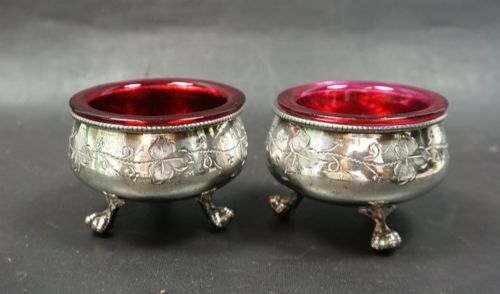
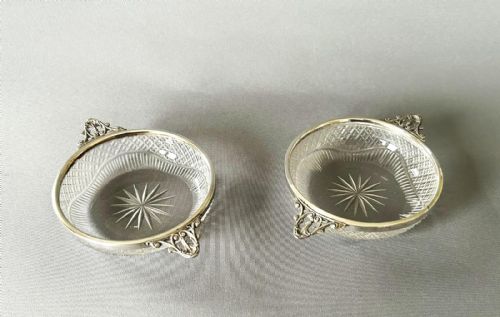
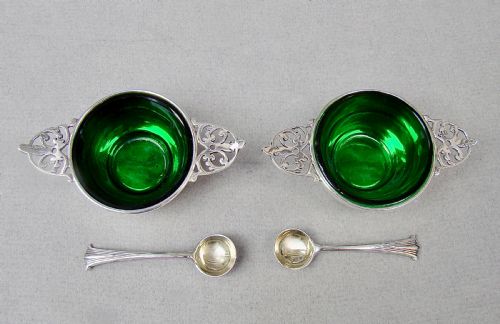
Most examples found in this range consist of transparent cut glass or distinct coloured glass liners paired with silver wirework, sterling silver frames, or silver plated mountings. Formats range from boat shaped table salts and open salt tubs to quaich novelty salts and small cut glass bowls.
Origin points encompass English and Irish pieces, alongside Norwegian silver and enamel works from nineteen thirty. Alongside traditional tableware, related forms occasionally include trinket dishes and salt and pepper shakers matching the primary salt cellars.
Markers of distinction
Quality rests upon the clarity and depth of the glass cutting, where crisp facets and heavy lead crystal elevate a piece above simpler pressed glass alternatives. The precision of the metal mounts, whether pierced silver wirework or solid sterling silver frames, dictates the refinement of the ensemble.
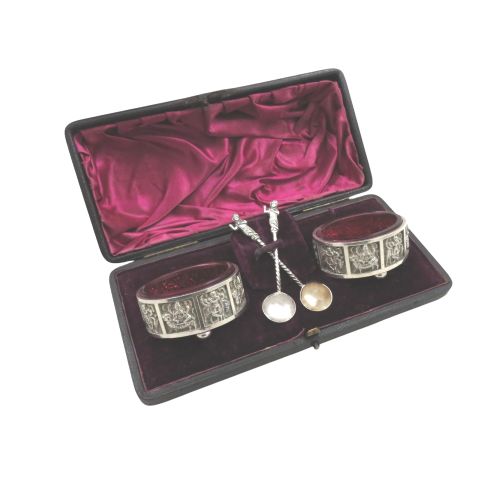
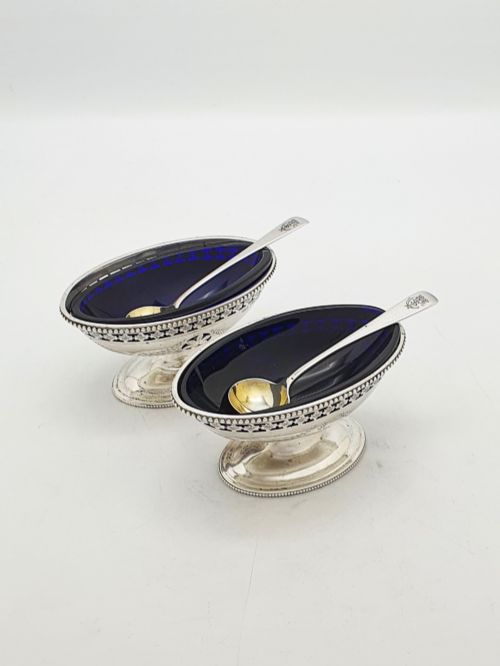
Completeness defines desirability, particularly the presence of original blue or cobalt glass liners paired with their matching silver spoons inside fitted presentation cases.
Victorian silversmiths occasionally miniaturised Scottish drinking vessels into tiny silver quaichs just to hold salt.
Josiah Williams And Co
The Pair Glass Salt Cellars Glossary
- Cobalt glass
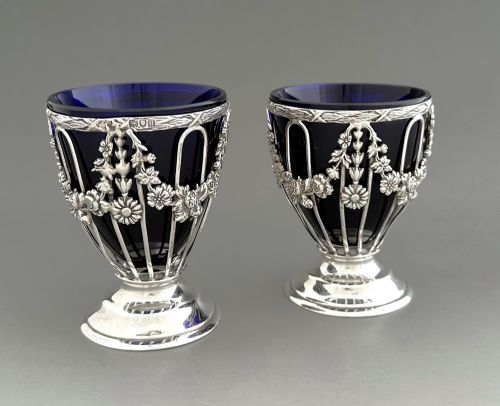
- Deep blue glass frequently utilised for liners in open salt cellars to provide a striking contrast against silver frames.
- Cranberry glass
- Rich red glass produced by adding gold chloride to the molten batch, popular in Victorian tableware.
- Open salt
- A small vessel designed to hold loose salt on the dining table, used with a miniature spoon before the invention of the spring loaded shaker.
- Quaich
- A traditional Scottish two handled drinking vessel, occasionally scaled down in silver as a novelty salt cellar.
- Wirework
- Openwork metal construction formed from soldered silver wires, creating delicate frames for glass liners.
Pair Glass Salt Cellars: Frequently Asked Questions
How were salt cellars used?
Diners used salt cellars to hold loose salt at the table before individual shakers became common. A tiny spoon or pinched fingers served to transfer salt onto the edge of a plate.
Wealthier households displayed elaborate silver and glass pairs to signal status during formal dining courses.
Are original glass liners important?
Original coloured glass liners are essential for authenticity and value. Replacements often fit poorly or exhibit slightly different hues compared to the metal frames.
Cobalt and cranberry liners were specifically blown to match the contours of Victorian and Georgian silver mounts.
How do I date these salt cellars?
Dating relies upon hallmarks on the silver mounts, stylistic cues like Georgian boat shapes, or Victorian pierced serpentine designs. Cut glass patterns and the presence of original cases also point toward specific decades.
Georgian and Regency pieces tend toward heavier geometric cutting, while Edwardian examples often feature lighter wirework frames.
Can I use them today?
These salt cellars function well for serving sea salt or spices during dinner parties. Careful hand washing protects the older glass and silver surfaces from harsh dishwasher detergents.
They also serve effectively on dressing tables as trinket dishes for small jewellery items.