


Pair French Ceiling Lights
These pair french ceiling lights bring matched symmetry and decorative ambition to a room, spanning grand brass frames and delicate glass shades.
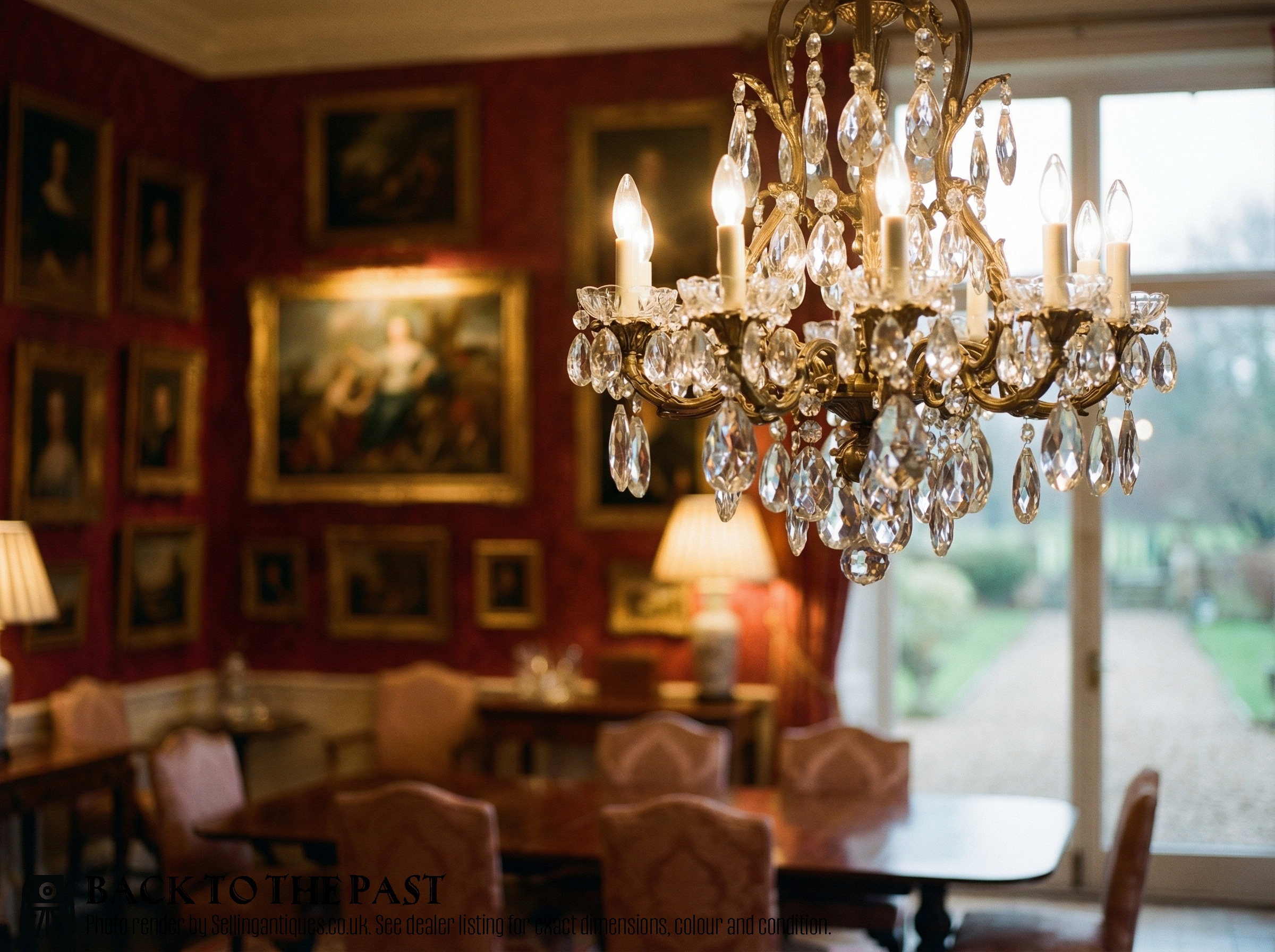
Pair French Ceiling Lights
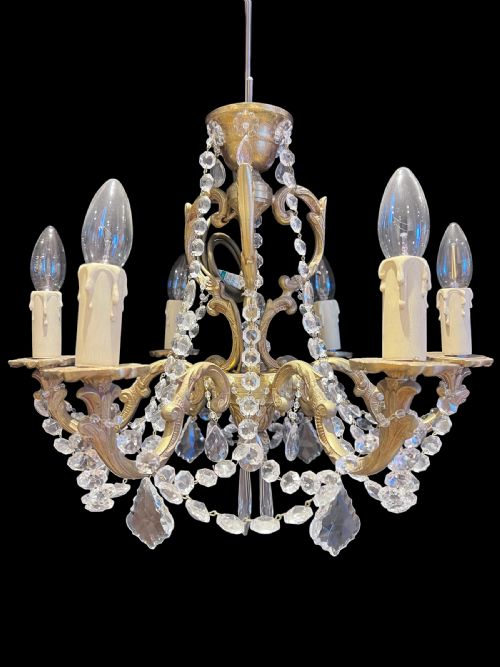
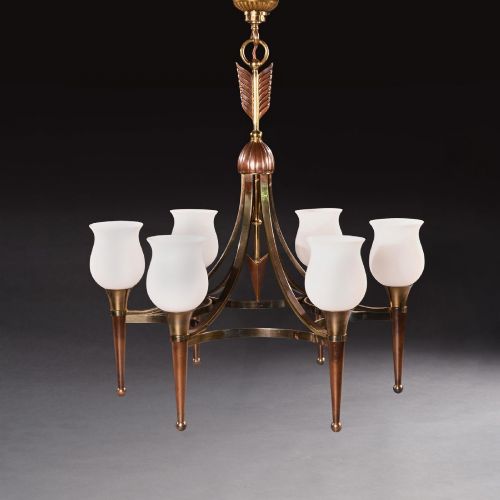
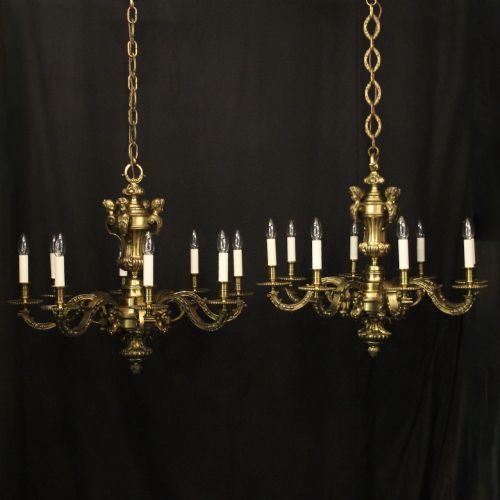
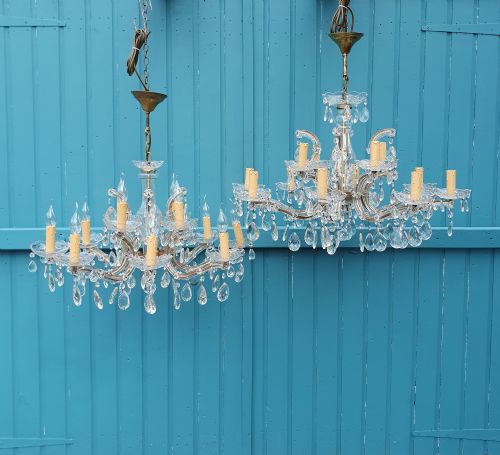
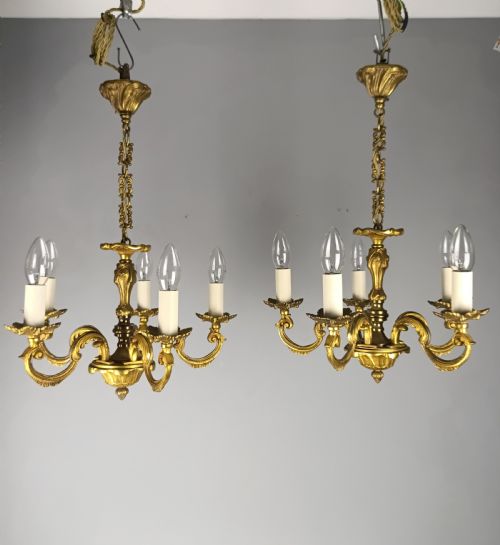
When you search for pair french ceiling lights, you encounter matching sets of illumination fixtures designed to hang symmetrically from upper rooms. These items take the form of multi-arm chandeliers, convex lanterns, hall lights, and flush dish shades originating from continental workshops.
The selections span distinct historical periods from the nineteenth century through the Edwardian era and into mid-century modern designs. Common stylistic threads include Louis Revival, French Empire, Florentine, and neoclassical forms that prioritise ornate metalwork and reflective glass components.
You are most likely to meet twentieth-century examples featuring brass, bronze, and crystal configurations designed for domestic reception rooms and grand hallways. These fixtures provide balanced overhead lighting while serving as prominent decorative ornaments within a space.
How they were made
The construction relies heavily upon cast brass, bronze, and gilded metal frameworks that support intricate arrangements of cut crystal and glass. Artisans shaped these structural mounts through traditional metal casting and gilding techniques, creating robust armatures capable of sustaining numerous light points.
Glass elements range from moulded opaline dishes and frilly pendant shades to precisely cut crystal drops and beaded waterfalls. These translucent components were individually formed and hand-hung to maximise the reflection and dispersion of light across the room.
What varies in quality
The refinement of the casting and chasing on bronze and gilt brass elements distinguishes standard production from exceptional examples. Superior pieces display crisp botanical or classical motifs with carefully hand-finished surface details.
The purity and cut of the crystal components also drive the distinction between tiers, where genuine hand-cut glass yields sharper refraction than pressed alternatives. Furthermore, the integrity of the original matched components determines the overall coherence and desirability of the set.
Maison Jansen·Schneider
The Pair French Ceiling Lights Glossary
- Ormolu
- A technique of applying finely ground high-carat gold to a bronze object using a mercury amalgamation process. This finish provides a warm, durable lustre characteristic of high-end classical lighting.
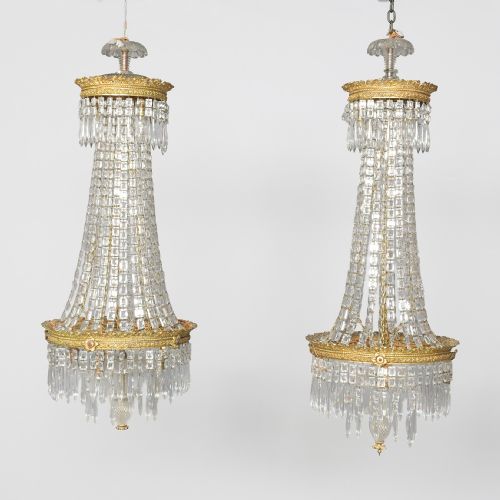
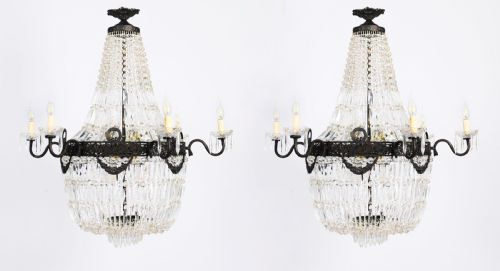
- Tent and waterfall
- A chandelier configuration featuring an upper tent of strung crystal beads cascading down to a wider circular band. This arrangement creates a dense curtain of sparkling glass.
- Opaline
- A type of semi-opaque glass developed in France, often tinted in soft pastel shades. It diffuses light gently without harsh glare, frequently utilised in dish and bowl light shades.
- Birdcage chandelier
- An open metal framework resembling an avian enclosure that houses internal light clusters and cascading crystal drops. This open skeletal style allows maximum light distribution.
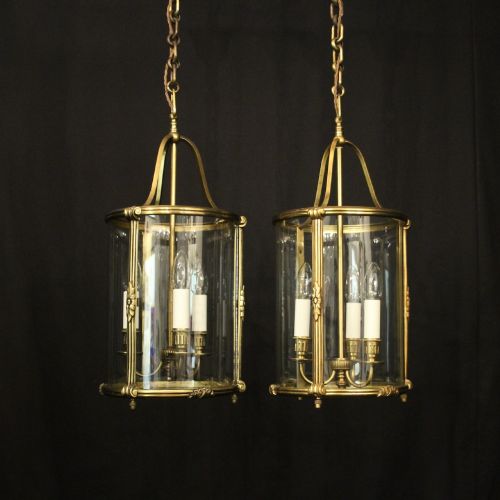
- Hall lantern
- An enclosed ceiling fixture designed specifically for narrow entranceways and corridors. These units typically feature glass panes secured within a decorative bronze or brass cage.
Pair French Ceiling Lights: Frequently Asked Questions
How do I hang a heavy pair of antique chandeliers?
Hanging heavy brass and crystal fixtures requires securing the weight directly into ceiling joists using rated steel fixings. Professional electrical installation ensures the internal wiring safely supports multiple bulb circuits.
Because these pieces often feature delicate crystal drops, it is best to attach the main frame first and hang individual glass elements afterward to prevent accidental breakage during the mounting process.
Where should pair french ceiling lights be placed?
Matched sets perform exceptionally well in long hallways, symmetrical reception rooms, or above large dining tables where balance is paramount. Placing them in tandem creates a unified visual rhythm across extended architectural spaces.
Ensure adequate ceiling height is available, particularly for multi-tier crystal designs and lantern configurations that extend downward into the room.
How do I clean antique glass and brass?
Regular maintenance involves gentle dusting with a soft microfibre cloth to prevent the accumulation of grime on metal surfaces and crystal facets. Avoid harsh chemical cleaners that can strip original gilt or bronze patination.
For thorough cleaning, delicate crystal drops can be carefully removed, washed in warm soapy water, dried completely, and rehung in their exact positions.
Are these lights compatible with modern wiring?
Many vintage and antique fixtures have been successfully rewired to meet contemporary electrical standards while preserving their external historical appearance. It remains essential to have a qualified electrician inspect the internal lamp holders and earth connections prior to use.
Using low-heat LED bulbs helps protect antique silk cords and old socket housings from thermal degradation over prolonged periods of illumination.