
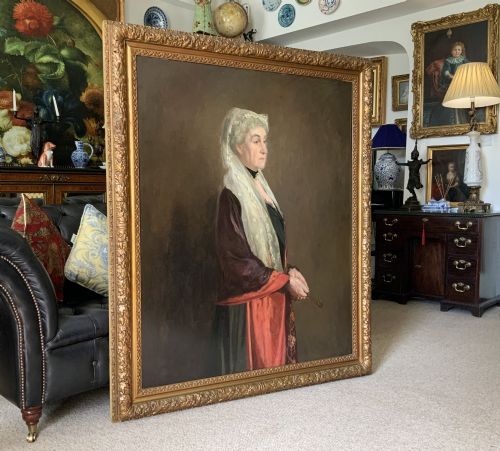

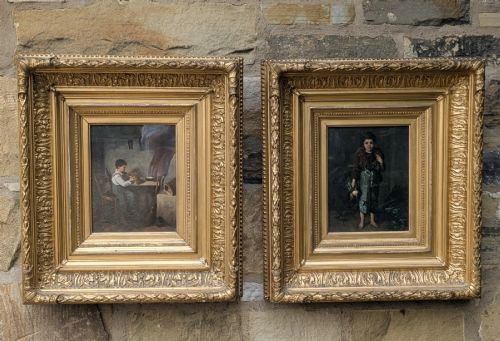
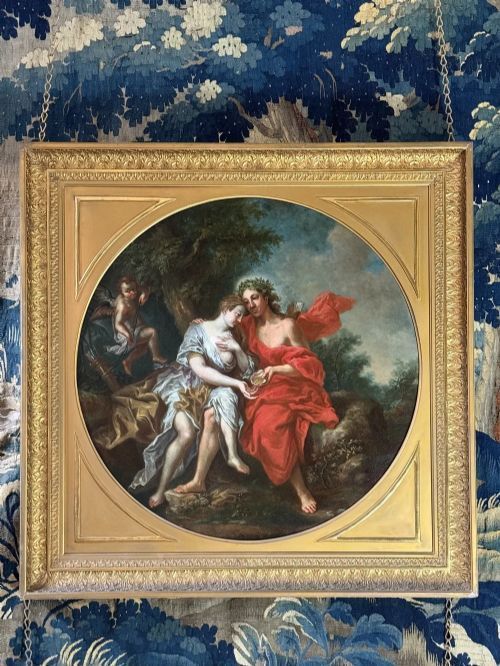
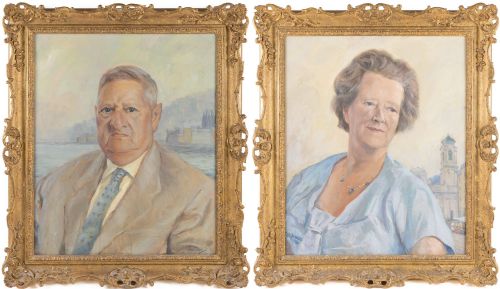
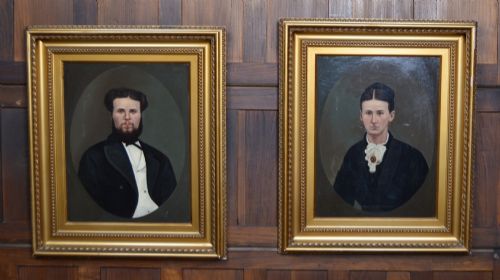
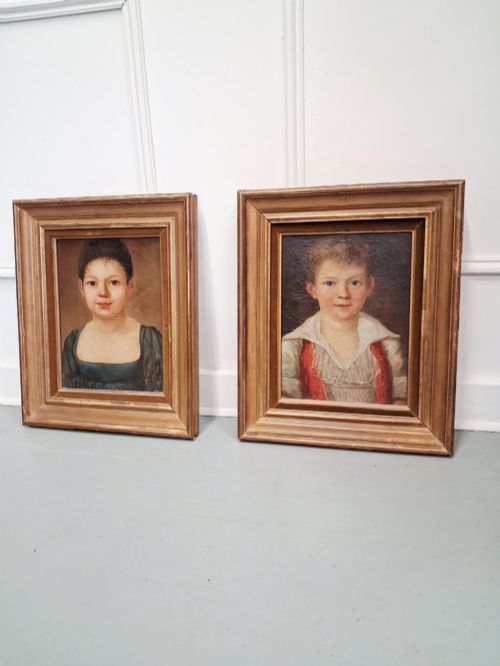
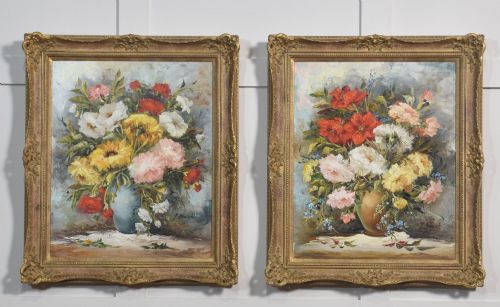
Pair Framed Oil Canvases
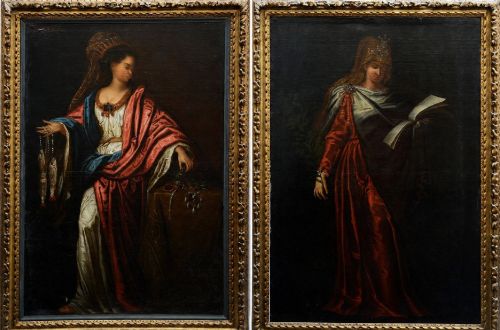
Pair framed oil canvases deliver matched symmetry and depth, bringing centuries of portraiture, landscape, and still life directly to a wall.
Pair Framed Oil Canvases
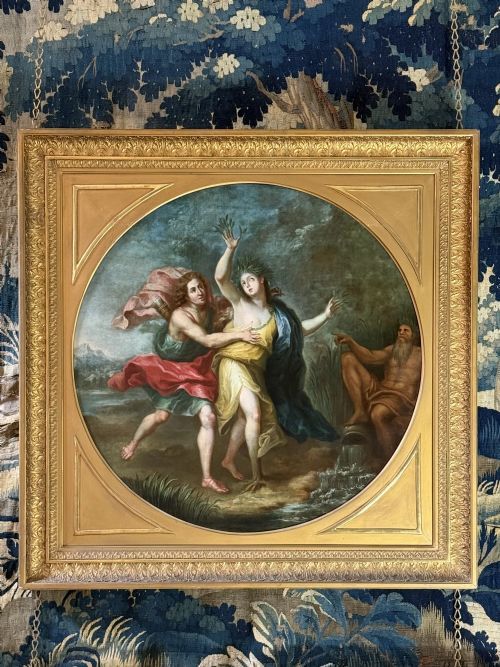
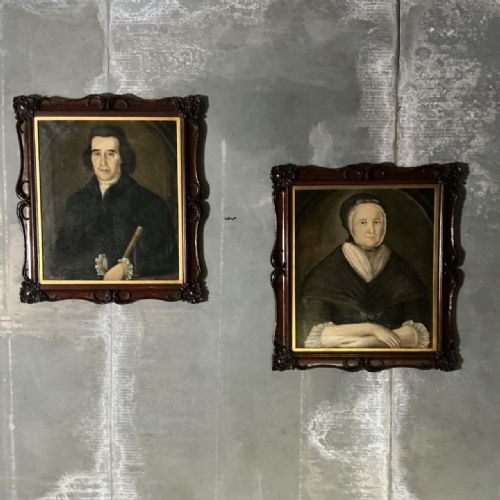
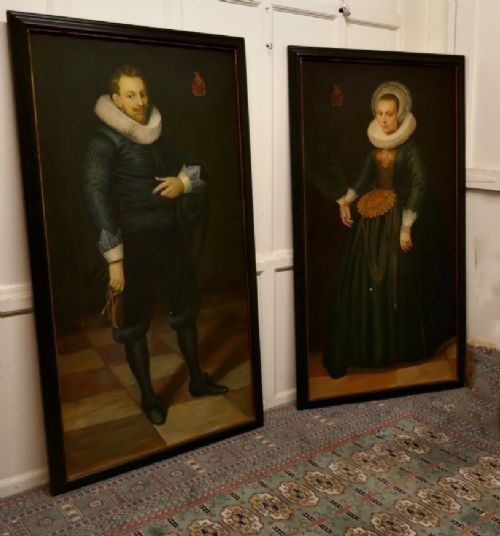
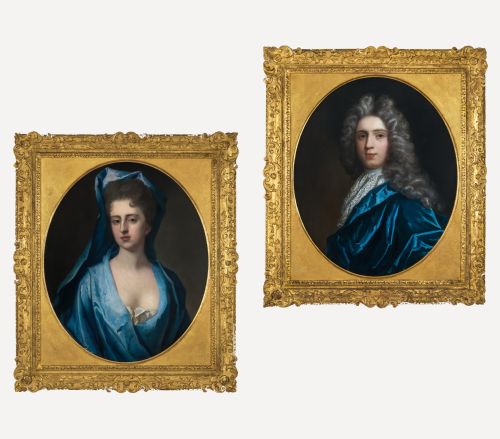
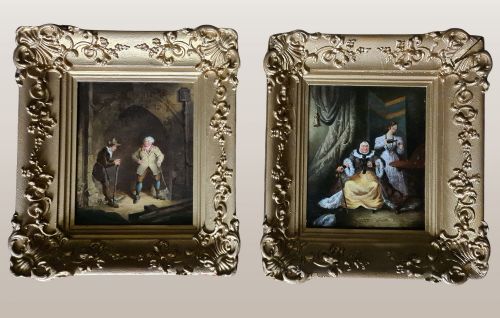
Pair framed oil canvases comprise two complementary artworks created in tandem, sharing a subject matter, artist, or period to achieve visual balance when hung together. These matched sets span centuries of production, appearing in classical, rustic, and formal interior traditions.
The selections available here range from seventeenth-century Dutch compositions and eighteenth-century classical mythology to Victorian maritime scenes, rural landscapes, and intimate child portraits. Buyers frequently encounter nineteenth-century works housed in their original surrounds, alongside formal portrait pairs depicting gentlemen and ladies.
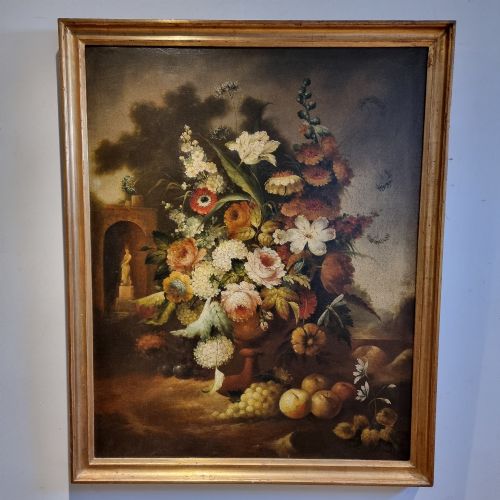
Subjects encompass historical militia, farm animals, highland scenes, floral still lifes, and architectural ruins such as the Sibyls of Cumae and Delphi. Each pairing operates as a singular decorative statement, designed historically to anchor opposite sides of a fireplace or architectural feature.
Materials and Construction
These works rely on oil paint applied to woven canvas supports, utilising the rich pigment load and slow drying time characteristic of traditional fine art practices. Canvas is stretched over wooden frames, providing a flexible yet stable ground for painterly brushwork and fine glazing techniques.
Housing these canvases involves heavy timber construction, predominantly featuring wood, gesso, and elaborate gilding to create giltwood or swept frames. The combination of oil on canvas within a protective, ornate border ensures both structural preservation and decorative cohesion for the matched pair.
Listings feature periods spanning from the seventeenth century through the Edwardian era, utilising oil on canvas stretched over wood and housed in giltwood.
Quality Variations
The distinction between tiers of work rests upon the sophistication of the brushwork, anatomical accuracy in portraits, and the atmospheric depth achieved in landscapes and seascapes. Master artists command superior handling of light, shadow, and texture, whereas lesser studio productions display rigid execution and formulaic composition.
The integrity and originality of the surrounding frames significantly influence the standing of a pair, as period-correct giltwood and gesso housings maintain historical harmony. Matched sets where both canvases and frames remain entirely undisturbed preserve a higher degree of authenticity than those subjected to later re-framing or heavy restoration.
Charles-Antoine Coypel·Michael Dahl·Thomas Murray·Robert Cleminson·Johann Friedrich Voltz·Theodore Jensen·Abraham Hulk I·Gustave De Bréanski
The Pair Framed Oil Canvases Glossary
- Gesso
- A plaster-like mixture used as a base coat on wooden frames before gilding or painting. It provides a smooth surface for intricate mouldings and relief work.
- Provenance
- The documented history or chain of ownership of an artwork. Tracing this record helps verify the origin and authenticity of older pieces.
- Trompe L'oeil
- An art technique involving extremely realistic imagery that creates an optical illusion of three dimensions. Such paintings often depict playful cherubs or objects rendered with startling fidelity.
- Still Life
- A painting featuring inanimate subject matter, typically commonplace objects such as flowers, fruit, or game. These works showcase the artist's ability to render light and texture closely.
Pair Framed Oil Canvases: Frequently Asked Questions
Why were pair framed oil canvases painted?
Artists produced these works as matching sets to satisfy interior design conventions of wealthy households, where symmetry was paramount in grand rooms.
Hanging two related pieces on opposite walls or flanking a central architectural element created visual balance and told a richer narrative through paired subjects.
How do I care for old oil paintings?
Protect these works by keeping them away from direct sunlight, extreme temperature fluctuations, and high humidity, which can warp canvas and crack paint.
Dust the surface and the surrounding frame gently with a soft, dry brush, avoiding any liquid cleaners or chemical agents.
How can I tell the period of a canvas?
Dating relies on examining the weave of the canvas, the composition style, the clothing styles of portrait subjects, and the construction methods of the frame.
Earlier centuries often utilise hand-woven linen supports and heavy timber stretchers constructed with traditional joinery rather than modern fasteners.
Can separated pairs be reunited?
Reuniting separated canvases is exceptionally difficult because records tracking individual movements over centuries are rarely complete or accessible.
Collectors therefore focus on acquiring matched sets that have survived intact together since their original creation.