



Pair Framed Fine Art
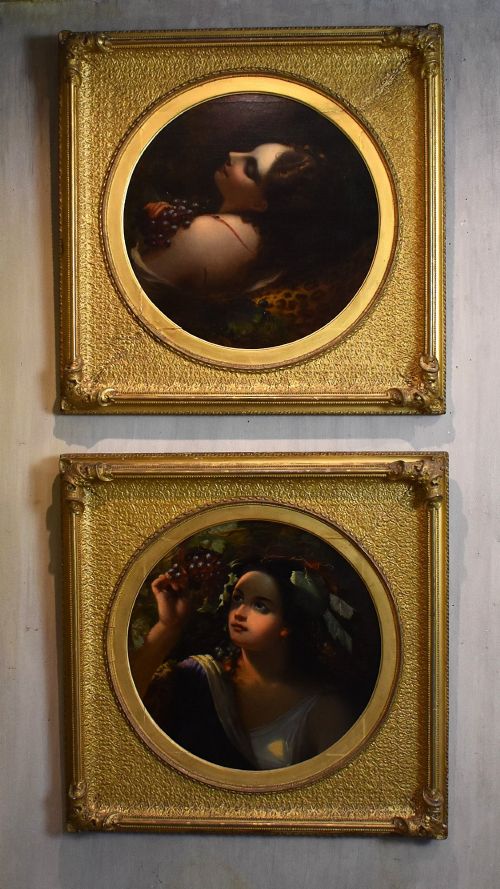
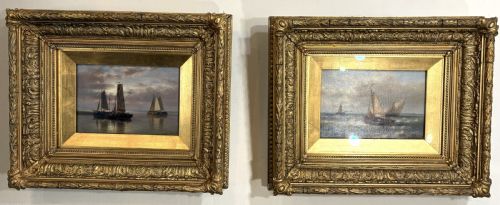
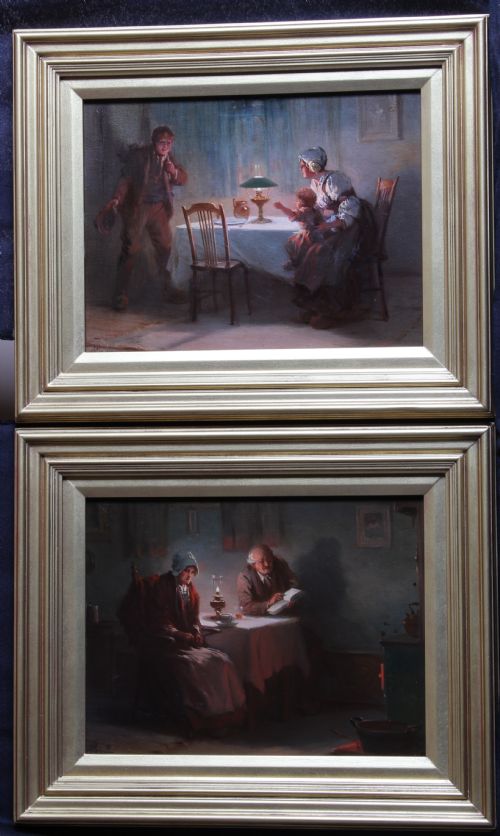
Pair framed fine art brings together matched compositions of oil on canvas, watercolours, and portrait miniatures housed in period wooden and gilt frames.
Pair Framed Fine Art
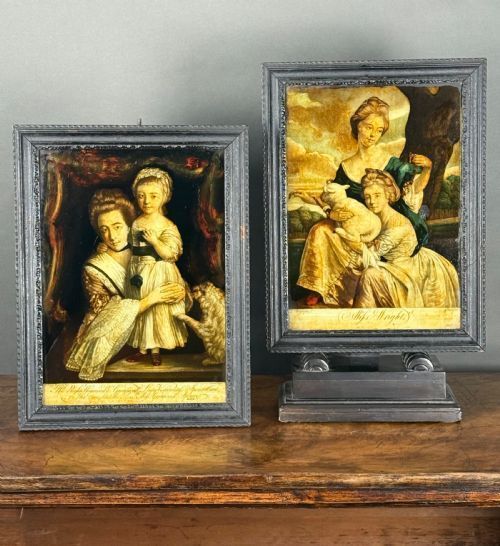
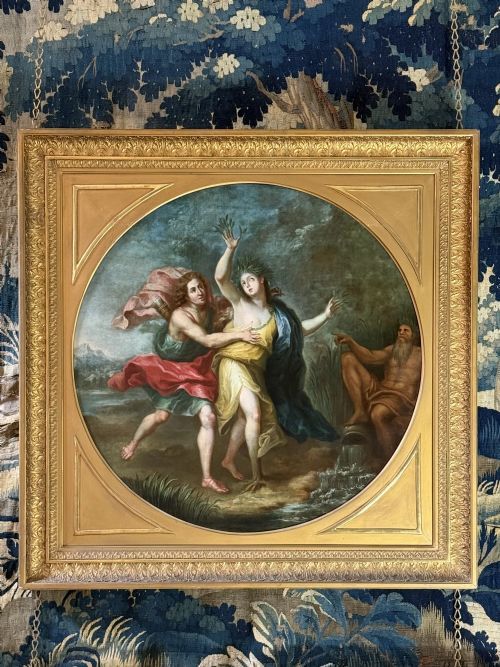
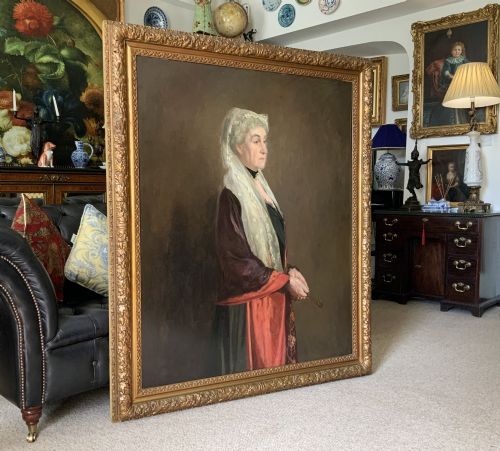
These works comprise two complementary visual pieces created to hang side by side, most frequently taking the form of oil paintings, watercolours, or reverse glass mezzotints. The selection spans the eighteenth century, the nineteenth century, and the Edwardian era, encompassing portraits, landscapes, and still lifes.
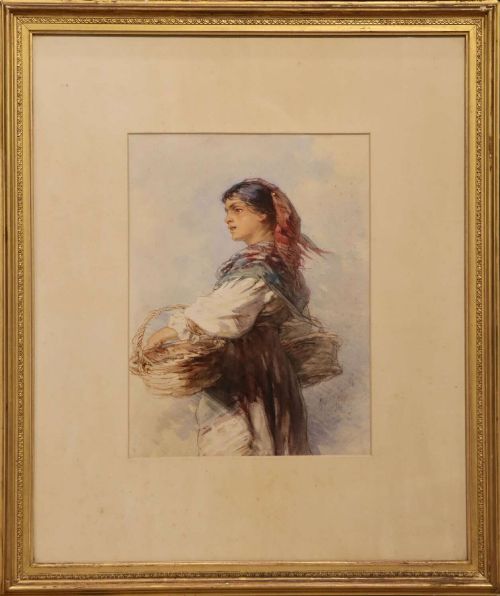
Buyers encounter matching pairs depicting subjects such as husband and wife portraits, Italian peasant figures, and contrasting pastoral scenes. The frames are integral to the grouping, with giltwood and period wooden mouldings unifying the dual compositions.
Originating from English, Dutch, Scottish, and French schools, these pieces reflect academic traditions where balance and symmetry dictated domestic wall display.
Materials and construction
The physical support for the paintings relies primarily on canvas or wood panels, prepared with grounds to receive oil paint or watercolours. Frames utilise carved wood finished with gold leaf or gilt, securing the paper, canvas, or porcelain plaques within.
Techniques range from detailed brushwork in portrait miniatures and reverse glass mezzotints to heavier impasto in nineteenth-century landscapes and genre scenes. Pigments are applied by hand, accompanied by signed inscriptions or attribution markers where recorded.
Materials span canvas, paper, wood, and porcelain plaques, housed in giltwood and carved wooden frames from the eighteenth and nineteenth centuries.
Assessing quality and preservation
Distinction across the range rests on the harmony between the two pieces, the fidelity of the artist's hand, and the original pairing of the frames. Superior examples maintain balanced colour palettes and crisp detail across both surfaces without heavy restoration.
The condition of the supporting medium, whether canvas tension or paper preservation, influences the integrity of the work. Gilt frames retaining their original leaf and crisp moulding contribute significantly to the finished presentation.
Guido Bach·Charles Antoine Coypel·James Sharples·Theodore Jensen·Abraham Hulk I·Evelyn Chester·Pieter Cornelis Dommersen·Robert Buchan Nisbet·Nora Cundell·Jan Evert Morel·Karl Herrle·Samuel Sidley·Francois Boucher·Alfred Vickers Senior·Nicolaes Maes·Joseph Emmanuel Weiser·Walter Meegan·George Augustus Williams·John Holland Snr
The Pair Framed Fine Art Glossary
- Giltwood
- Wood carved and coated with gold leaf or thin metal foil to create a bright, reflective surface. This finish is typical of formal nineteenth-century picture frames.
- Oil on Canvas
- Pigment suspended in a drying oil medium applied to a stretched woven fabric support. This technique provides durability and allows for rich tonal depth.
- Portrait Miniature
- A small, highly detailed painting capturing a likeness, often executed on specialised materials during the eighteenth century.
- Reverse Glass Mezzotint
- An image transferred to glass and hand-coloured from the reverse side before framing. This specialised technique creates a luminous visual effect.
- Watercolour
- Pigments bound in a water-soluble vehicle applied to paper. This medium relies on the white of the paper to show through translucent washes.
Pair Framed Fine Art: Frequently Asked Questions
What subjects are common in these pairs?
Matched sets frequently feature portraits of husbands and wives, companion landscapes, or paired still lifes of flowers and food.
Artists often painted these works concurrently to ensure proportional balance and thematic unity when displayed together on a wall.
How do I hang a matched pair?
Pairs look best hung at eye level with a consistent gap between the frames to maintain visual symmetry.
Ensuring both pieces share identical lighting prevents one canvas from casting shadows over the other.
Are the frames original to the paintings?
Many listings feature period giltwood or wooden frames that date alongside the canvas or watercolour.
Matching frames indicate that the pieces have likely remained together since their initial creation and framing.
How are different centuries distinguished?
Eighteenth-century works often display classical proportions and subject matter, whereas nineteenth-century pieces embrace more varied textures and atmospheric landscapes.
Examining the canvas preparation, stretcher frames, and framing styles helps confirm the specific period.