
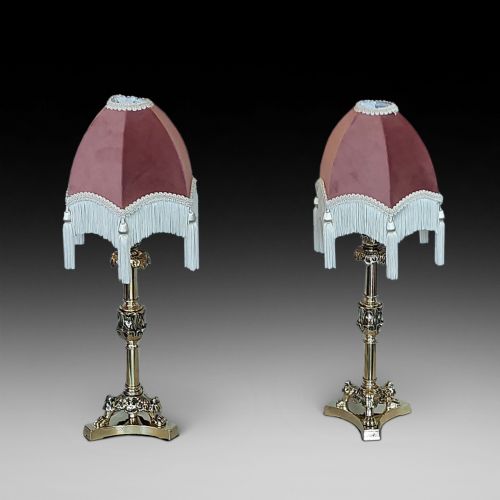


Pair Candlestick Desk Lamps
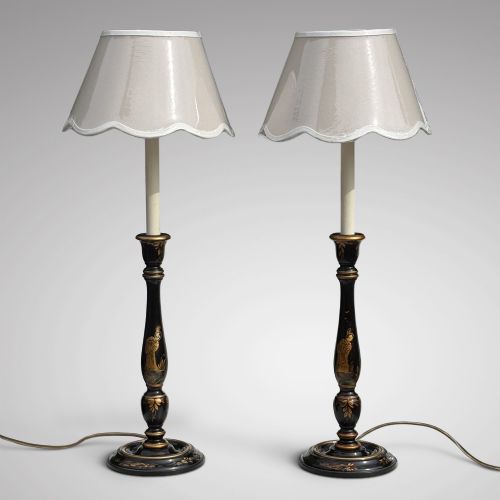
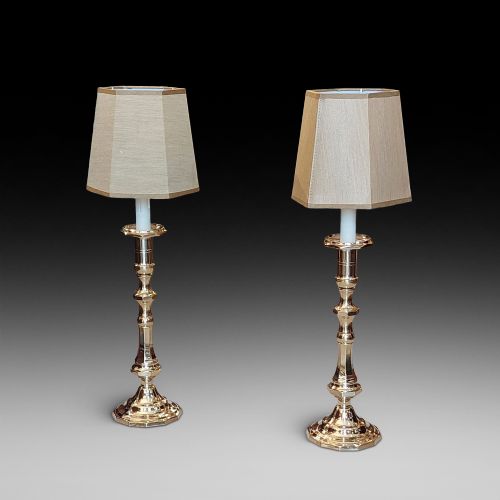
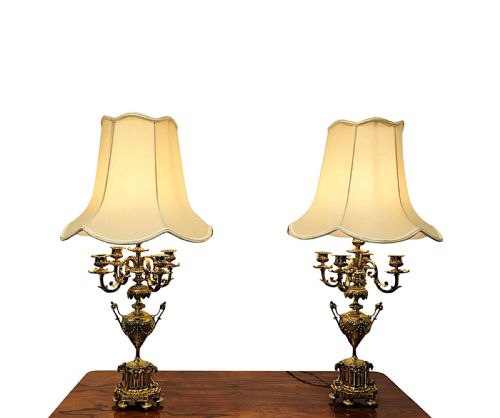
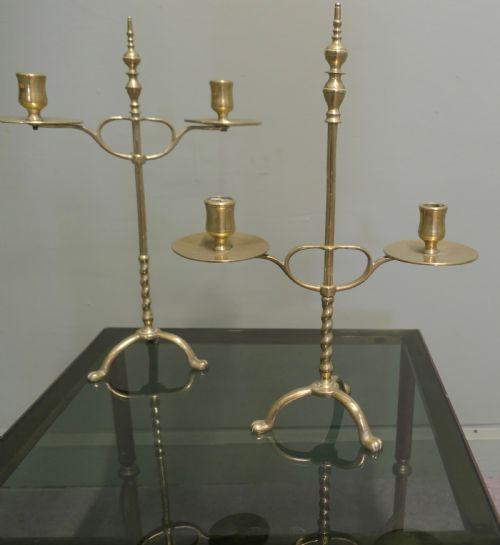
These pair candlestick desk lamps bring period illumination and tactile brass, bronze, or ormolu presence to a workspace.
Pair Candlestick Desk Lamps
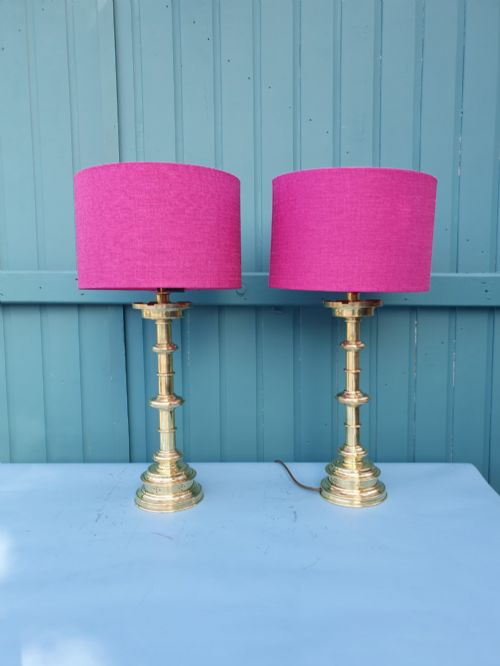
When you search for pair candlestick desk lamps, you uncover lighting adaptations created from earlier illumination devices, most frequently table lamps, candlesticks, and candleholders originating from the nineteenth century and the Edwardian or Regency eras. Brass and bronze dominate the forms you meet here, often styled in Victorian, Neoclassical, or French Empire traditions.
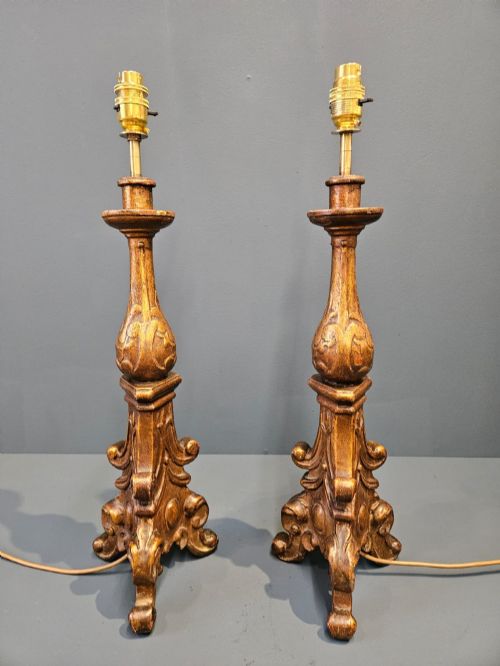
Many examples began life as oil lamps, altar candlesticks, or pillar sticks before conversion to electricity, retaining their original proportions and structural weight. You will also encounter turned timber, mahogany, and giltwood columns alongside heavy cast metal bases adapted for modern desk use.
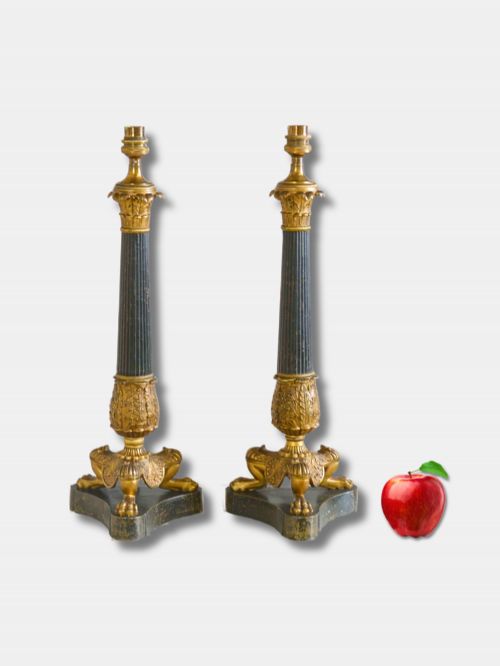
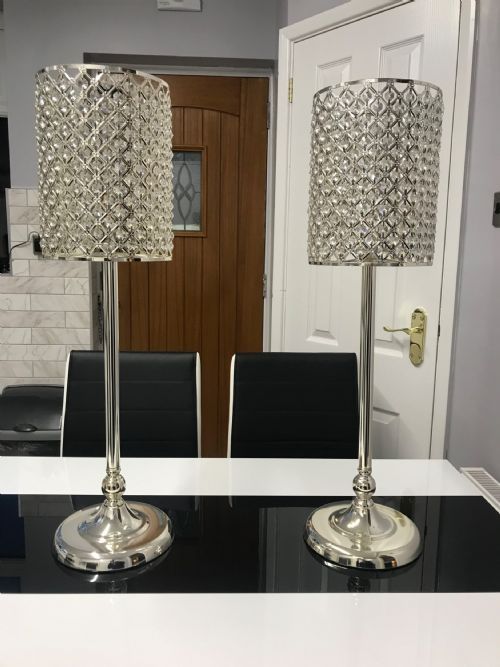
The selection ranges from student lights and adjustable brass configurations to elaborate ormolu column lamps fitted with lions paw feet. These pieces combine utilitarian desk lighting with the decorative vocabulary of earlier centuries, spanning simple turned brass to ornate gilt bronze and silver plate.
Materials and construction
Makers utilised cast, turned, and repoussé brass alongside bronze, patinated bronze, and ormolu, shaping heavy metals to support elevated wiring and fabric shades. Joinery and assembly rely on threaded spindles, heavy bases, and securely seated metal columns to ensure stability on a desk surface.
Gilding, silver plating, and lacquer finishes were applied to bronze and brass surfaces to achieve varied surface reflection, whilst wood examples incorporate carved mahogany and gilded timber. Conversions from oil or candle use frequently involve discreet internal channel wiring routed through the original central stems.
Select late nineteenth-century candlelamps are modelled precisely as basket-guard cavalry dress swords.
Quality differences
The distinction between ordinary and superior examples lies in the crispness of the casting detail, the weight of the metal, and the integrity of the original proportions before electrification. Finer pieces display deeply chased ormolu, clean turning on brass and bronze shafts, and substantial weight that anchors the lamp firmly.
Hand-finished surface treatments such as mercurial gilt, patinated bronze, and detailed repoussé work elevate an object above standard commercial production. The subtlety of the conversion work - how cleanly wiring is integrated without compromising the structural silhouette - marks the superior desk lamp.
The Pair Candlestick Desk Lamps Glossary
- Ormolu
- Finely ground high-carat gold mercury-gilded onto a bronze base. This technique creates a rich, durable golden surface seen on French Empire and Regency pieces.
- Repoussé
- Metalwork hammered or pressed from the reverse side to create a raised design in relief. It gives texture and depth to brass lamp bases and stems.
- Corinthian column
- A classical architectural column style featuring elaborate acanthus leaf capitals. These form the structural shafts of formal nineteenth-century desk lamps.
- Patinated bronze
- Metal darkened or aged through chemical or natural oxidation. This process highlights sculptural contours on cast bronze and brass figures.
Pair Candlestick Desk Lamps: Frequently Asked Questions
Are these lamps safe for daily desk use?
Most antique candlestick lamps have been rewired for modern electrical standards during their conversion process. It is advisable to have a qualified electrician inspect older internal wiring before regular use.
Solid brass and bronze constructions provide a stable base, making them robust enough for daily illumination when fitted with appropriate modern bulbs and heat-resistant fittings.
How do I identify a converted candlestick?
Look for a central aperture or channel where a burner or candle socket once sat, now adapted to house electrical flex and lamp holders. The weight and base will typically reflect earlier domestic or ecclesiastical candle use.
Many retain original drip pans, bobêches, or screw threads that reveal their transition from flame to filament over the course of the nineteenth and twentieth centuries.
What periods are most common for these lamps?
The majority of pieces originate from the nineteenth century, encompassing Victorian mass production alongside Regency and Edwardian revivals. You will also find pieces dated to around nineteen-twenty.
Stylistic markers such as Gothic Revival arches, Neoclassical columns, and French Empire ormolu help pinpoint the era of the original metalwork.
How do I clean brass and bronze bases?
Dust gently with a dry, soft microfibre cloth to prevent the accumulation of grime in recessed cast details. Avoid harsh chemical polishes that can strip original patination or damage historic gilding.
Preserving the natural surface age maintains the character and visual depth of older metalwork, particularly on patinated bronze and silver-plated surfaces.