
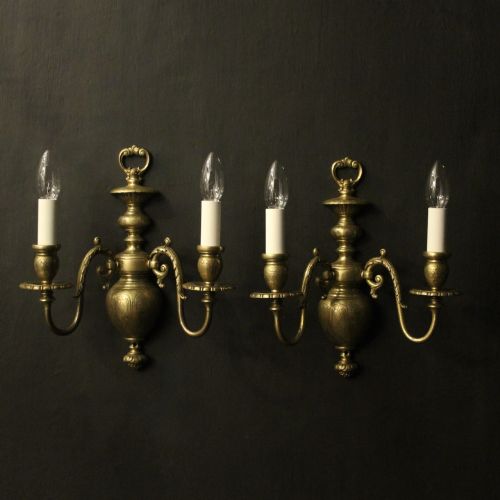
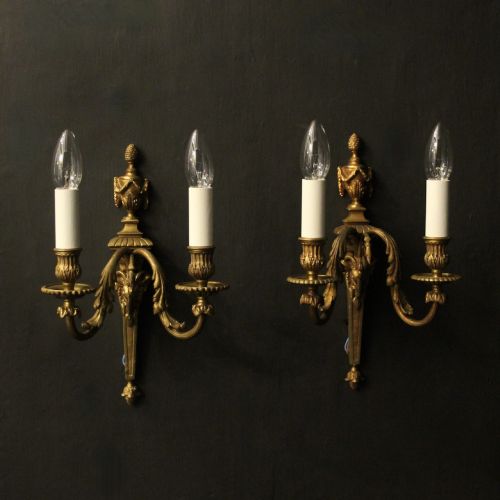
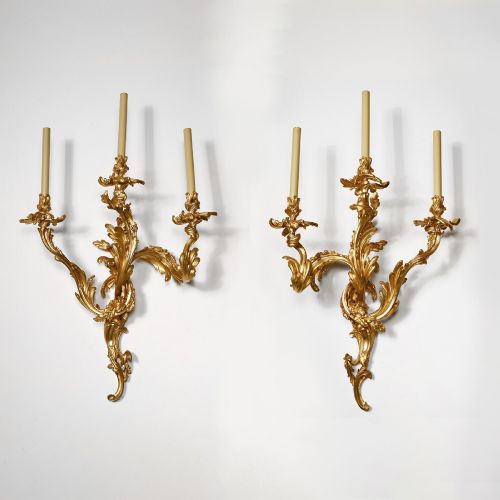
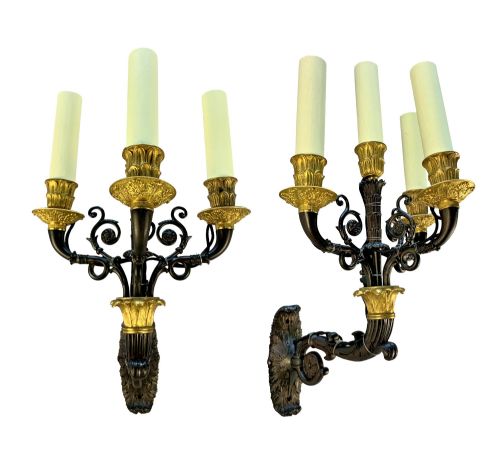

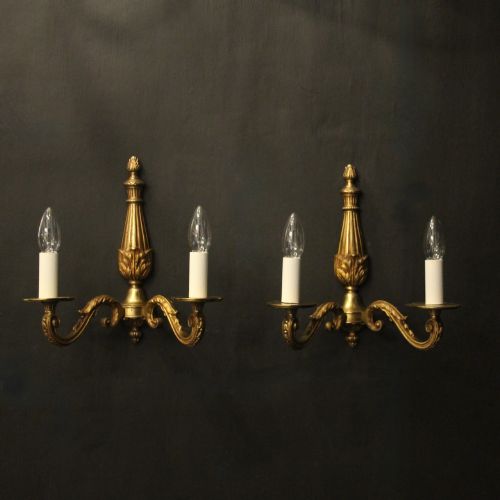
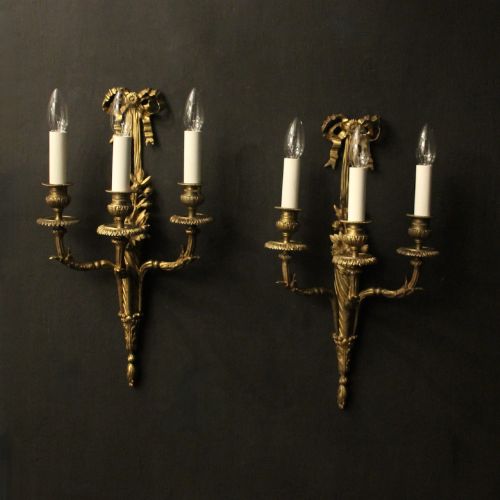
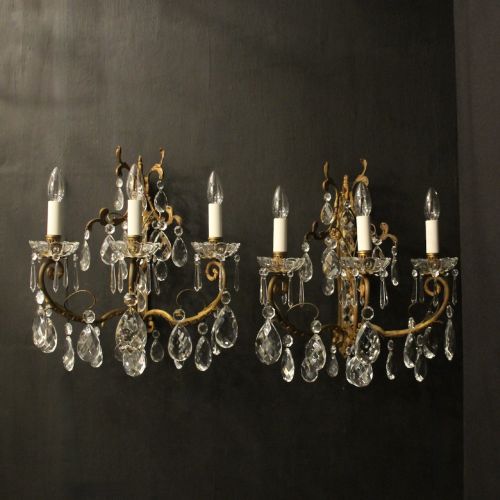
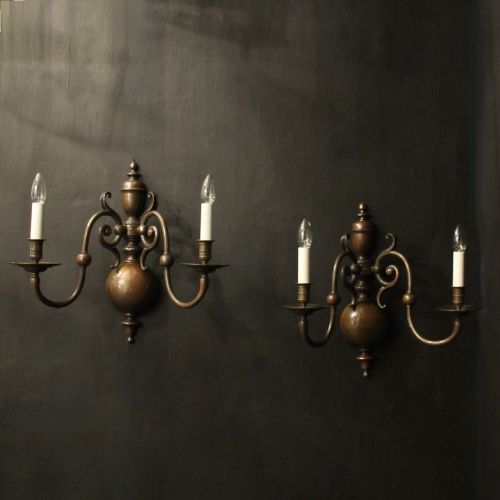
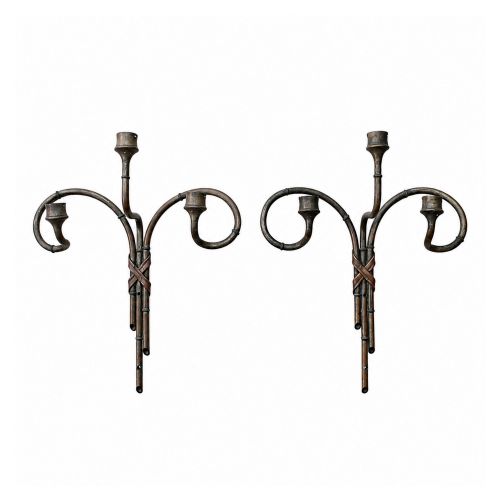
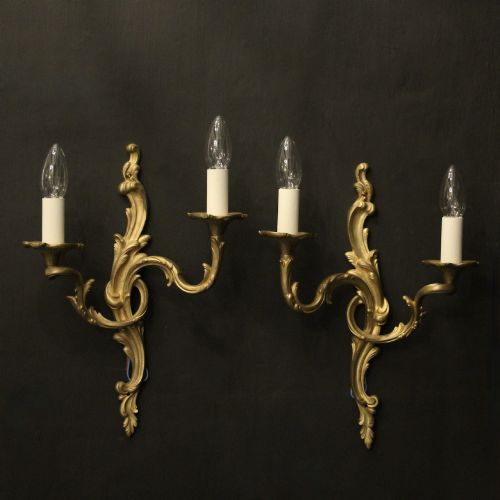
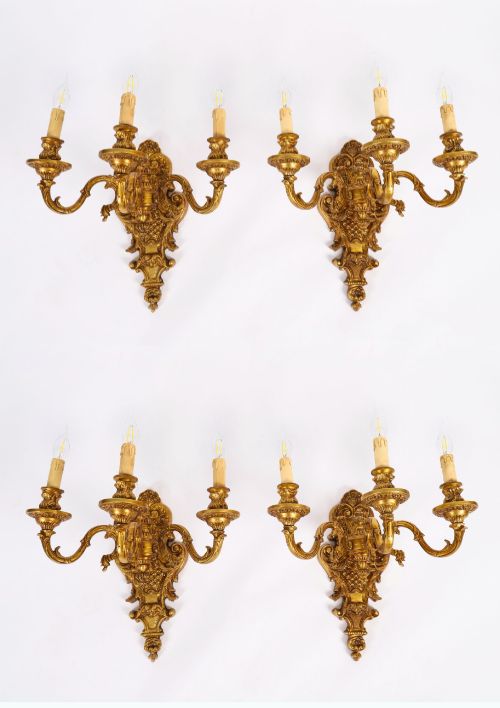
Pair Bronze Wall Sconces
When sourcing pair bronze wall sconces, collectors find French Rococo and Neoclassical lighting that brings period depth and warm illumination to an interior.
Pair Bronze Wall Sconces
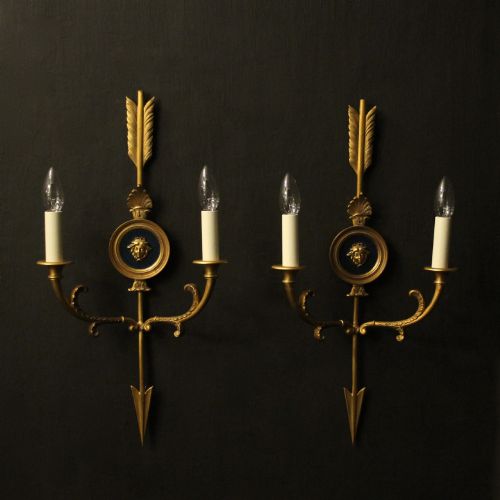
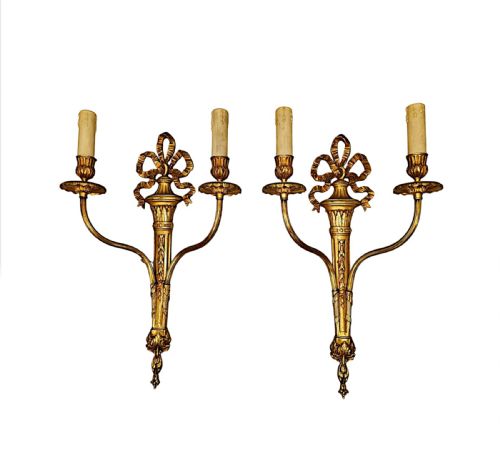
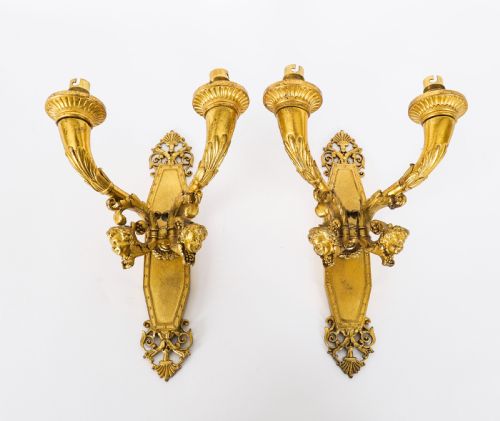
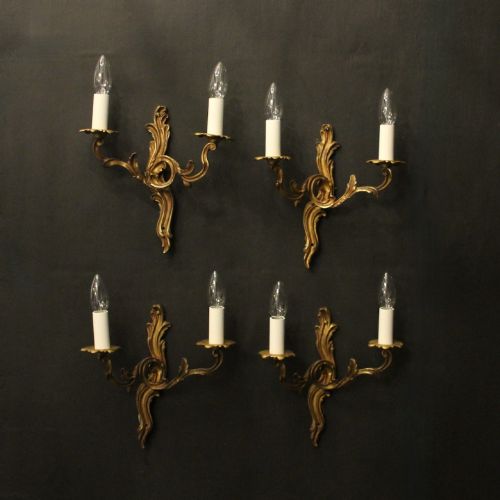
Pair bronze wall sconces comprise matching dual or multi-armed wall fixtures designed to hold candles or electric bulbs, predominantly originating from French and English workshops across the nineteenth and early twentieth centuries. These pieces function as decorative architectural hardware that frames mirrors, fireplaces, or panels while projecting ambient light through curved arms and detailed backplates.
The selections on this page lean heavily into French output, spanning from eighteenth-century revivals like Louis XIV and Louis XVI styles to twentieth-century interpretations featuring crystal, porcelain flowers, and bamboo motifs. Buyers encounter both twin-arm and triple-arm configurations, alongside larger appliques and half lanterns suited to varied wall spaces.
Originating largely from the eighteen-hundreds up through the nineteen-thirties, these wall lights reflect shifting interior tastes from heavy, ornate casting to lighter, gilded forms. Most examples encountered here display traditional casting methods adapted over decades of residential use.
How they were made
The physical construction of these fixtures relies on metal casting, utilising bronze, brass, and related copper alloys shaped into detailed arms, backplates, and candle nozzles. Artisans employed sand-casting or lost-wax techniques to achieve intricate scrollwork, cherub figures, and acanthus leaves before assembling the structural components.
Surface finishing defined the visual character of the metal, employing genuine fire gilding to create rich ormolu surfaces, alongside applied gold leaf, silvering, or patinated dark bronze. Many pieces integrate secondary materials such as cut glass crystals, porcelain flowers, or mirrored glass backplates to catch and multiply the flickering light.
Listings feature materials spanning gilt bronze, ormolu, solid brass, silvered bronze, and crystal across nineteenth and twentieth-century French and English origins.
What varies in quality
Gilding quality further separates the tier of a pair, with historic mercury-gilded ormolu displaying a warm, deep luminescence that holds up under close inspection. Superior examples also maintain structural integrity across their jointed arms and heavy backplates without looseness or awkward repairs.
Casier
The Pair Bronze Wall Sconces Glossary
- Ormolu
- Gilt bronze produced by applying a finely ground mercury-gold amalgam to a bronze object and heating it until the mercury vaporised, leaving a durable golden coating. This technique creates a distinctive, deep lustre seen on many period French fixtures.
- Applique
- A wall-mounted light fitting designed to hold candles or electric lamps close to the surface. The term is frequently used interchangeably with wall sconce in continental designs.
- Rococo Revival
- A nineteenth-century design movement inspired by the asymmetrical curves, scrolls, and naturalistic motifs of the eighteenth-century French Rococo period. Pieces in this style often feature elaborate leaf and floral casting.
- Louis XVI Style
- A neoclassical design aesthetic characterised by straight lines, symmetry, classical architectural motifs, ribbons, and urns. It emerged as a reaction against the preceding curvy Rococo forms.
- Candelabra
- A branched lighting fixture designed to hold multiple candles simultaneously. In wall-mounted formats, these feature two, three, or more arms branching from a central backplate.
Pair Bronze Wall Sconces: Frequently Asked Questions
How do I wire antique wall sconces?
Most period wall lights require professional rewiring to meet modern electrical safety standards before installation on household circuits. Restorers typically thread modern wiring through the existing hollow arms to preserve the external bronze or brass structure.
Qualified electricians can mount the heavy backplates securely to standard wall junction boxes, ensuring the weight of the bronze and any crystal drops is adequately supported.
Are these sconces meant for candles or electricity?
While historic pairs were originally built exclusively for wax candles, many surviving examples have been converted to electricity over the course of their long lives. A buyer will find listings retaining their original candle drip pans alongside those fitted with electrical sockets and faux candle sleeves.
Conversion methods vary, but conservators generally aim to keep the original metalwork intact while adapting the internal components for modern bulbs.
How do I distinguish Louis XIV from Louis XVI styles?
Louis XIV revival pieces display heavy, robust proportions, bold scrolls, and grand symmetrical massing that project a sense of royal weight. The ornamentation is typically dense and imposing, reflecting seventeenth-century architectural grandeur.
In contrast, Louis XVI style pieces introduce lighter neoclassical restraint, featuring straight vertical lines, ribbons, urns, and delicate floral swags derived from classical antiquity.
How should I clean antique gilt bronze?
Maintenance requires only gentle dusting with a soft, dry brush to prevent the accumulation of grime within the intricate cast crevices. Moisture and harsh commercial metal cleaners will strip away historic patination and damage fragile mercury gilding.
If a deeper clean is necessary, a professional conservator should assess the surface to protect the integrity of the original gold finish.