


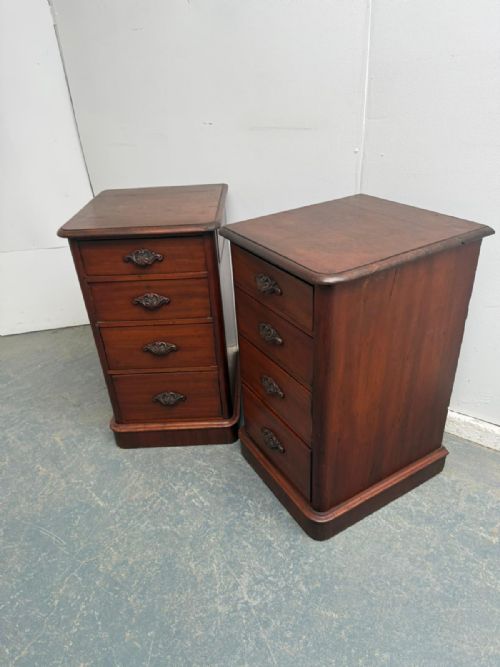
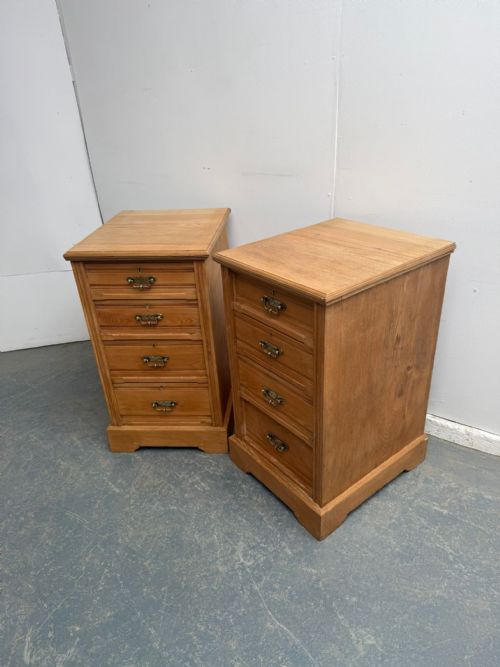
Pair Bedside Nightstands
A pair bedside nightstands setup brings symmetry and practical surface space to a bedroom, drawing on decades of period craftsmanship from the Victorian era to Art Deco designs.
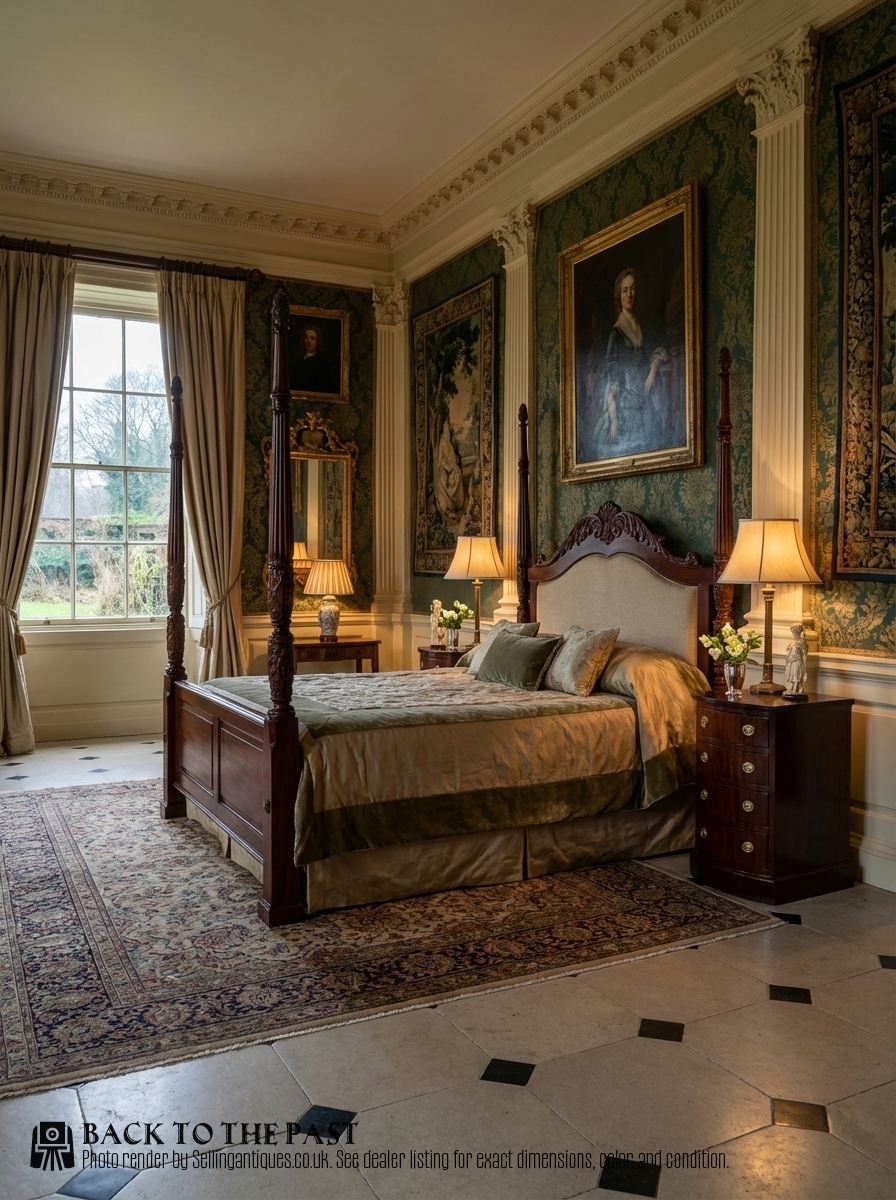
Pair Bedside Nightstands
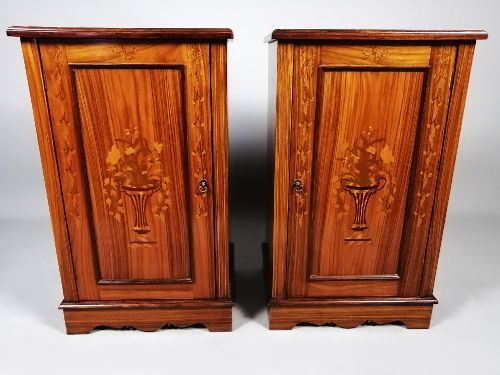
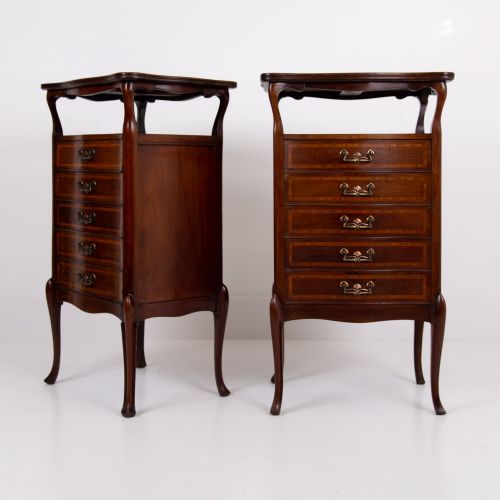
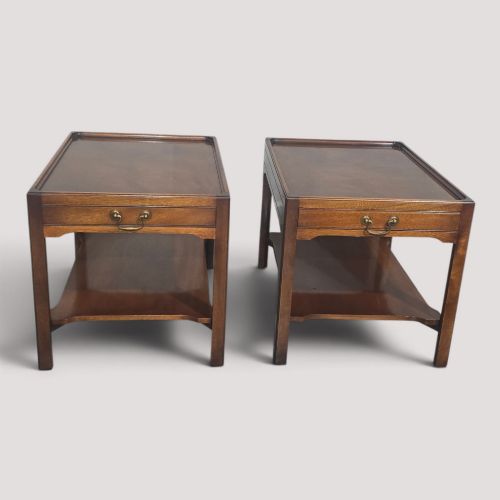
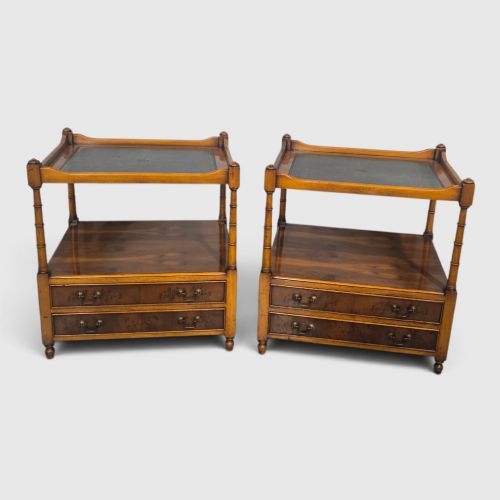
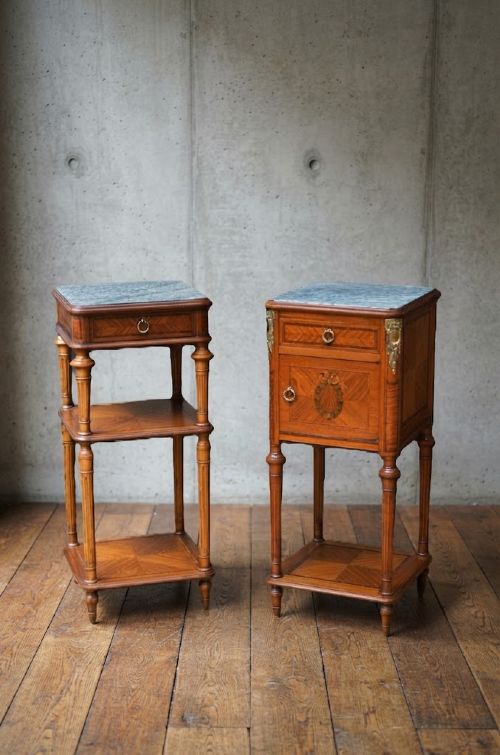
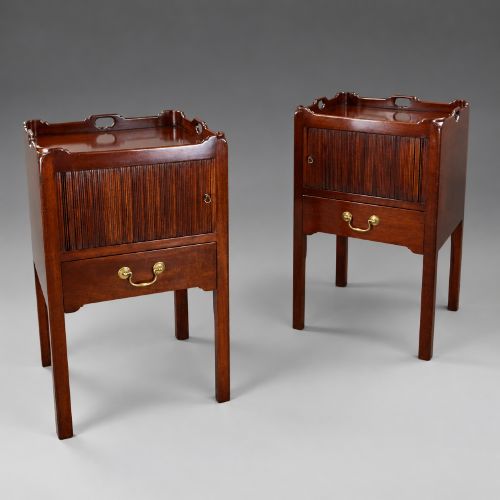
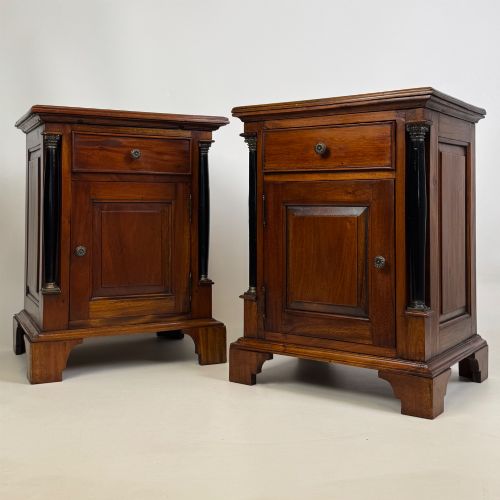
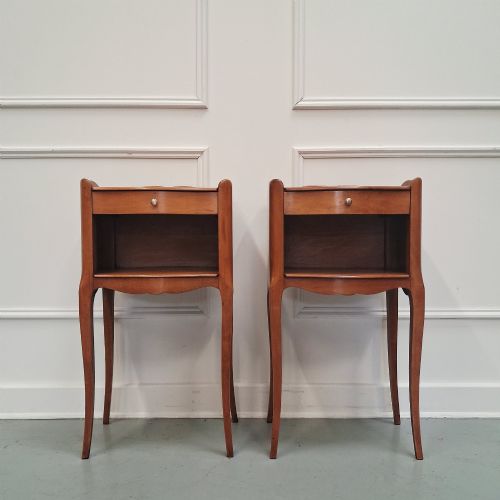
When searching for a pair bedside nightstands, buyers encounter matched sets of small cabinetry designed to sit beside a bed. The selection includes everything from Victorian mahogany chests to streamlined Art Deco walnut cupboards.
Most examples originate from the nineteenth and early twentieth centuries, spanning Victorian, Edwardian, and 1930s periods. Forms range from simple lamp tables to multi-drawer bedside chests and marble-topped cabinets.
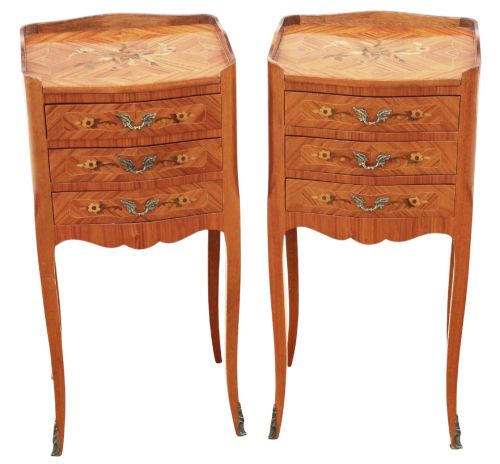
Makers often produced these items in pairs to flank larger beds, utilising woods like mahogany, walnut, and satinwood. Buyers find both English traditional pieces and continental styles such as French marquetry and Italian walnut designs.
Materials and construction
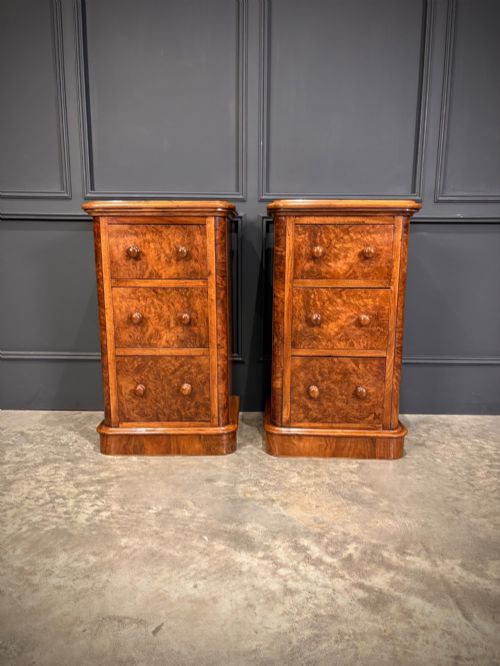
Cabinet makers relied heavily on dense hardwoods like mahogany and walnut, frequently applying fine wood veneers and burr walnut to create figured surfaces. Drawer construction often employed traditional dovetailing alongside solid secondary timbers.
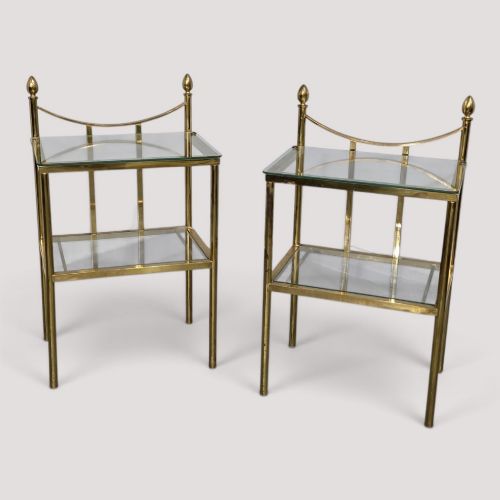
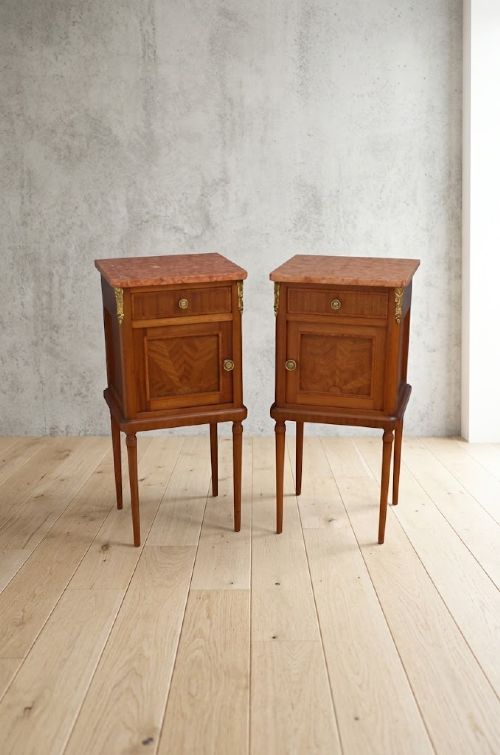
Marble tops appeared frequently on late nineteenth-century and continental bedside cabinets to provide a durable, wipe-clean surface. Brass hardware, glass inserts, and intricate marquetry or parquetry inlays added decorative detail to both English and French pieces.
Current listings feature Victorian mahogany bedside chests alongside 1930s Art Deco walnut cabinets and Edwardian satinwood pieces.
Factors of quality
The standard of a pair bedside nightstands rests on the selection of timber figures, such as flame mahogany or burr walnut, matched evenly across both items. Superior examples display precise inlay work, tight joinery, and original marble or wooden tops.
Proportion and matching define the upper tier of these pieces, ensuring both cabinets mirror each other precisely in grain pattern and height. Maker attribution and retained original hardware further elevate the standing of individual pairs.
Warings Liverpool
The Pair Bedside Nightstands Glossary
- Marquetry
- Decorative veneer work arranged in pictorial or geometric patterns using various coloured woods. This technique frequently appears on French and continental tables.
- Burr walnut
- Timber taken from a tree growth, producing intricate, swirling grain patterns. Cabinet makers prized this wood for high-end Victorian and Art Deco nightstands.
- Serpentine
- A gently curved front shape undulating inward and outward. It denotes advanced furniture shaping techniques.
- Parquetry
- Geometric mosaic woodwork forming patterns like squares or triangles. It provides a durable and decorative surface on cabinet tops.
- Satinwood
- A durable, yellowish wood with a lustrous sheen used for fine Edwardian and Victorian furniture. It often forms contrasting borders or primary surfaces.
Pair Bedside Nightstands: Frequently Asked Questions
How do I match nightstands with a bed?
Selecting a pair bedside nightstands involves considering the wood tone and primary period of your existing furniture. Mahogany and walnut pieces from the Victorian or Edwardian eras blend easily with traditional bedroom schemes.
For a more modern or eclectic look, Art Deco burr walnut cabinets provide striking geometric lines and rich grain patterns. Ensuring the height aligns comfortably with the top of your mattress is essential for daily use.
Were nightstands originally made in pairs?
Many bedside cabinets and chests were manufactured as matched pairs to flank double beds in nineteenth and twentieth-century homes. Makers ensured the wood grain and proportions mirrored each other across both pieces.
Finding a true matching pair remains a priority for collectors seeking symmetry in bedroom interior design. Surviving sets demonstrate consistent wear and identical construction methods.
What is the difference between a bedside chest and a cabinet?
Bedside chests generally feature a stack of usable drawers for enclosed storage. Cabinets typically open with a single door revealing an internal storage space or shelf.
Both forms served the same functional purpose in historical bedrooms but offered different internal configurations for personal items. Lamp tables and open-area nightstands provide alternative open surfaces.
How do I care for antique wood nightstands?
Maintaining these pieces requires gentle dusting with a dry cloth and avoiding placement near direct heat sources or strong sunlight. Wax finishes benefit from occasional application of quality beeswax to nourish the timber.
Marble tops on Victorian or Edwardian cabinets need simple wiping with a damp cloth to prevent staining. Protecting surfaces from moisture rings using coasters preserves the original polish.