

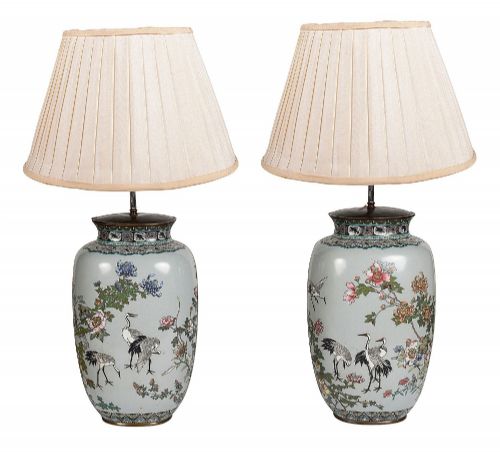
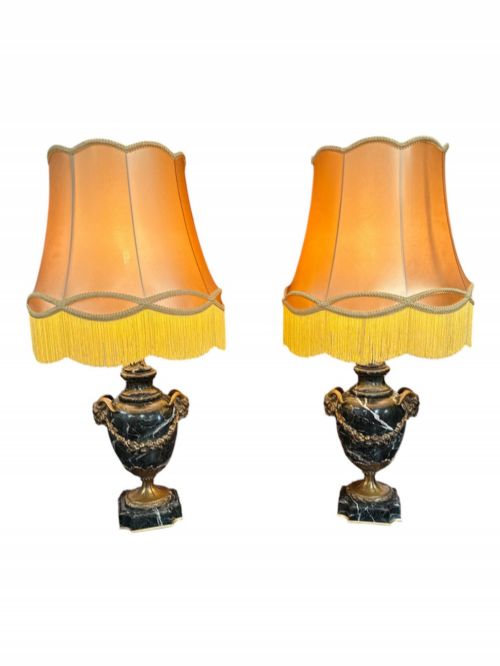
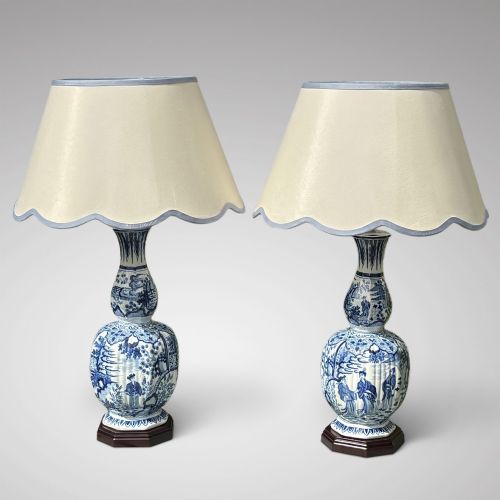
Pair 19th Century Lamps
Pair 19th century lamps bring period illumination and symmetrical balance to an interior through diverse materials like porcelain, brass, and carved wood.
Pair 19th Century Lamps
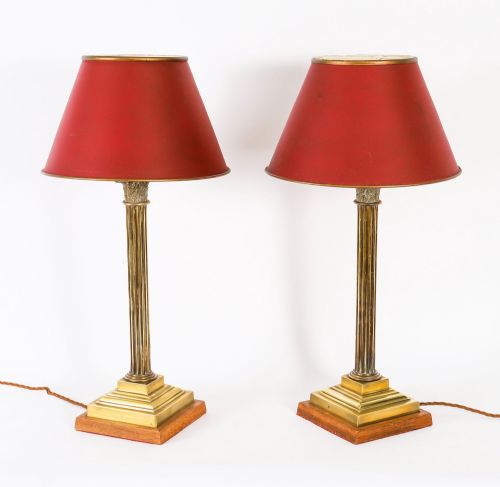
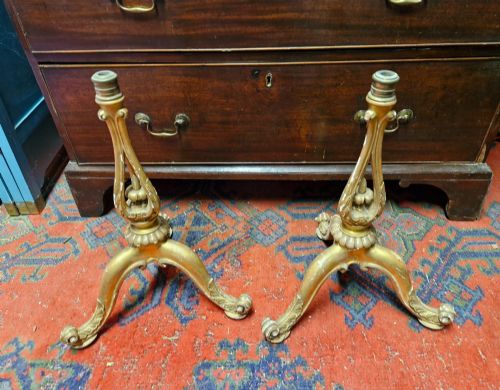
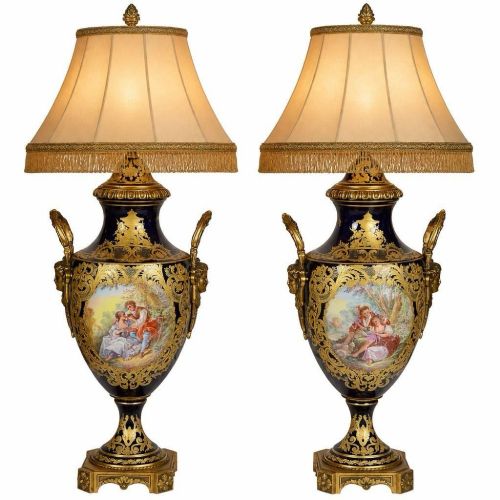
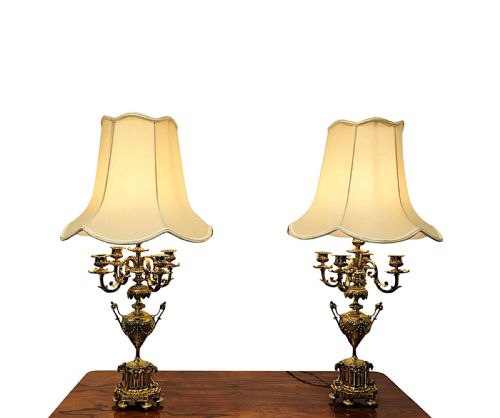
A pair 19th century lamps selection encompasses varied forms created during the Victorian and Regency eras, spanning from converted altar candlesticks to large porcelain vases.
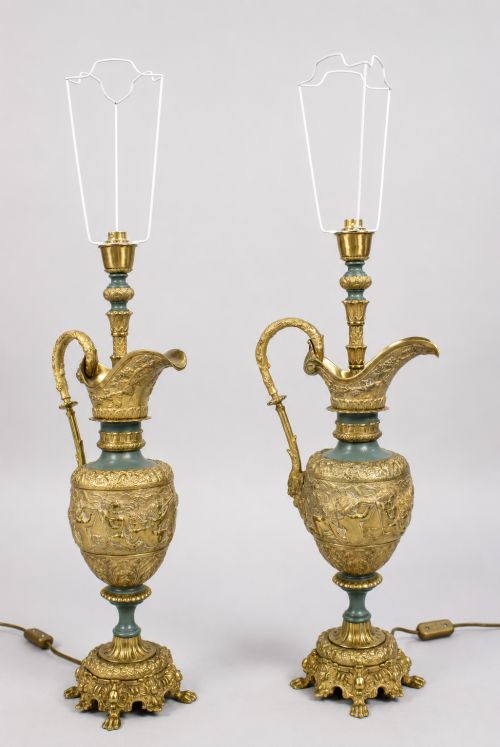
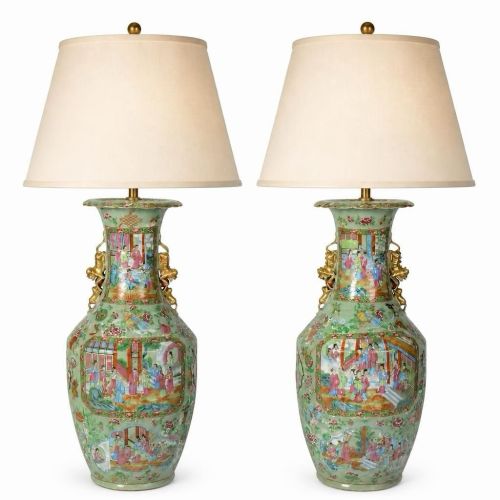
Many examples originate from French workshops or Asian export kilns, frequently taking the form of urns, columns, or ewers adapted for electric or oil lighting.
Buyers encounter matching pairs that combine historical utility with decorative presence, utilising bases made of marble, bronze, or turned hardwoods.
How They Were Made
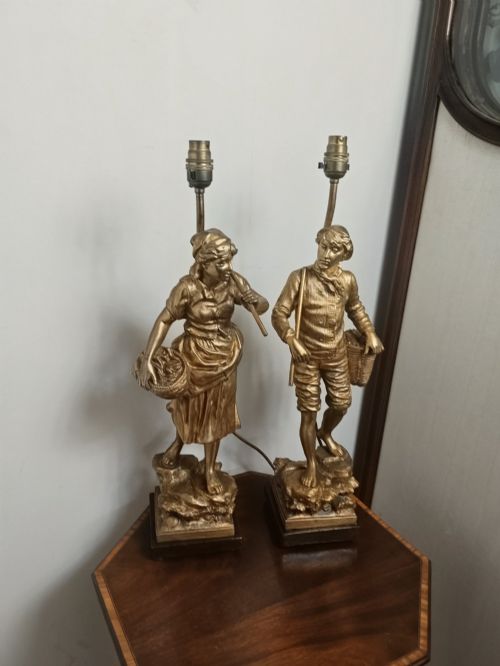
Maker techniques involve casting metals such as brass, bronze, and ormolu, alongside the shaping of natural stones like rouge marble and onyx.
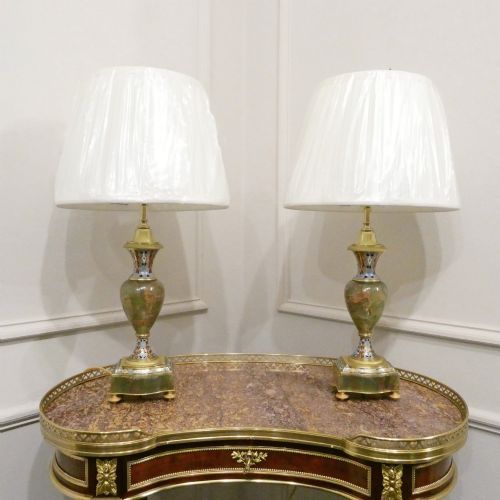
Ceramic bodies utilise porcelain traditions including Cloisonné, Famille Rose, Delft blue and white, and Pâte-sur-Pâte, often paired with metal mounts.
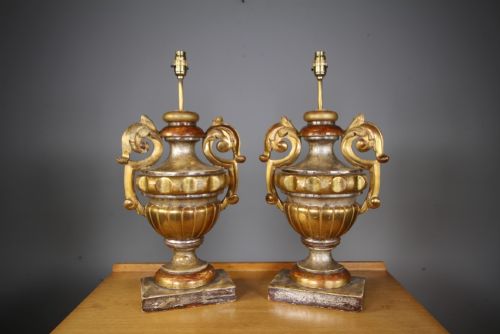
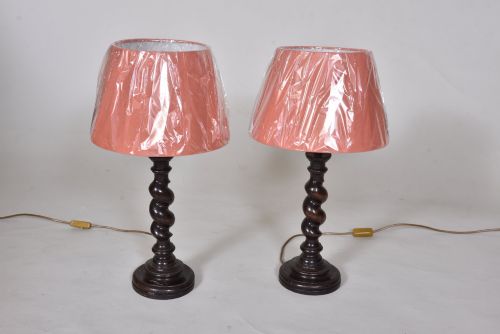
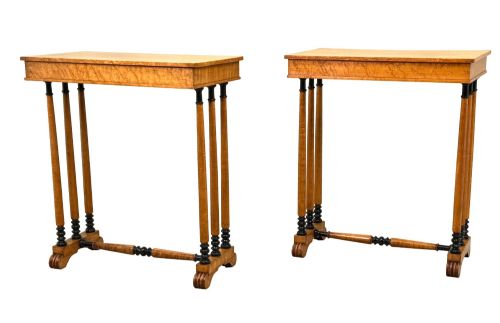
Woodworking methods appear in carved pine, birch, mahogany, and birdseye maple, frequently augmented by gilding or fabric shades.
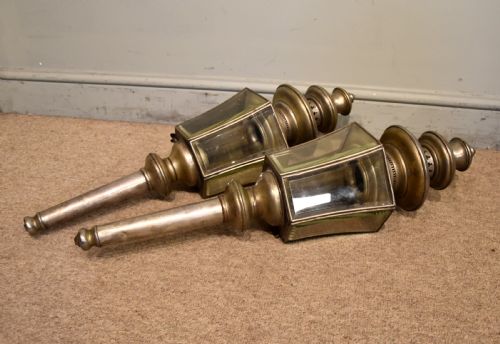
Cherub oil lamps and spirit barrels bearing coaching scenes demonstrate Victorian whimsy.
What Varies in Quality
The standard of execution depends on the precision of metal chasing, the crispness of carved details in wood or stone, and the fidelity of ceramic hand-painting.
Original mounts and matching components demonstrate greater historical integrity than later adaptations, particularly where ormolu or gilt bronze fittings integrate with the body.
Provenance and specific stylistic attribution elevate certain pieces, distinguishing standard production items from finely signed or documented studio works.
E Rousseau·Liberty and Co·Samson·Meissen
The Pair 19th Century Lamps Glossary
- Ormolu
- Gilded bronze used extensively for decorative mounts on furniture and porcelain vessels during the eighteenth and nineteenth centuries.
- Cloisonné
- An enamel technique where metal wire forms compartments on a vase surface to hold coloured paste before firing.
- Champlevé
- Enamel work where troughs are hollowed out of a metal base and filled with vitreous paste.
- Pâte-sur-Pâte
- A ceramic decorating method building up layers of liquid clay paste on a contrasting coloured body to create low relief designs.
- Ewer
- A large jug with a wide spout, frequently adapted in nineteenth-century lighting designs.
Pair 19th Century Lamps: Frequently Asked Questions
Were these always electric lamps?
Most pieces began life as candlesticks, oil lamps, vases, or ewers before conversion to electricity at a later date.
Original wiring is uncommon, and many examples retain evidence of their earlier function as containers or candle holders.
How do I identify French styles?
French lighting frequently employs ormolu mounts, rouge or white marble, and Sevres style porcelain bodies.
Craftsmanship in these items often reflects Neoclassical or Louis XVI revival aesthetics popular across the nineteenth century.
What are Chinese export lamps?
These pieces utilise nineteenth-century porcelain vessels such as Famille Rose vases or ginger jars fitted as lamp bases.
Such conversions typically feature custom metal mounts designed to secure electrical fittings safely to the ceramic top.
How do I clean bronze mounts?
Maintenance requires gentle dusting with a soft brush to protect gilt surfaces and patinated bronze areas.
Harsh chemical polishes should be avoided to preserve the original finish and historical metal ageing.