



Painted Writing Bureau Drawers
These painted writing bureau drawers bring charming colour and practical workspace into a room.
Painted Writing Bureau Drawers
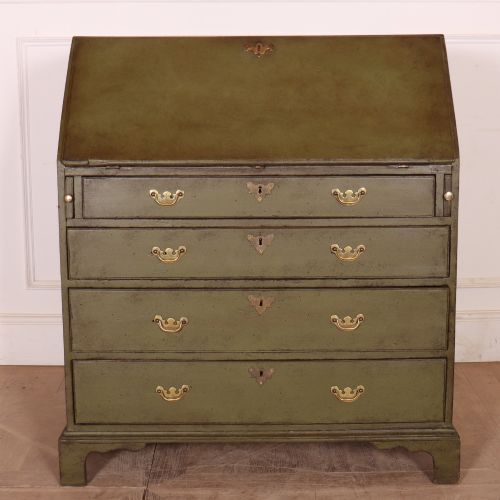
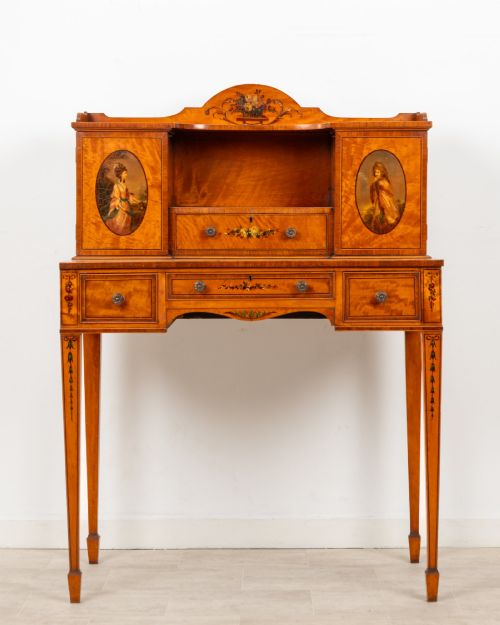
When you search for painted writing bureau drawers, you encounter a practical fusion of storage and fall-front writing surfaces. These pieces range from compact Edwardian satinwood desks to substantial eighteenth-century Georgian secretaire tallboys.
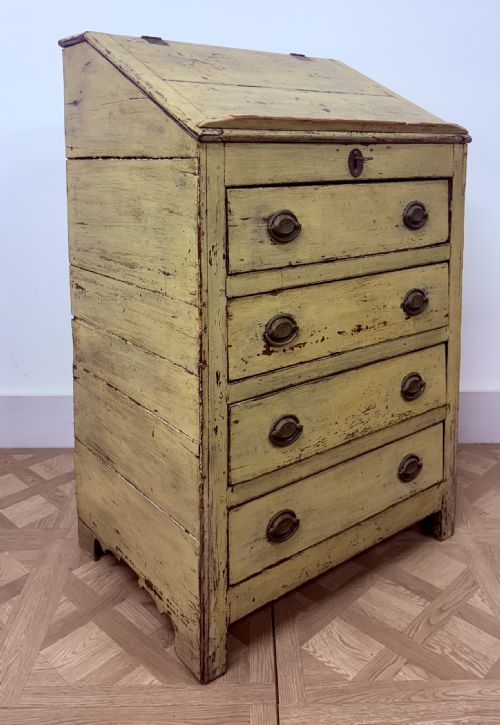
The selections available here lean heavily towards eighteenth-century English and continental pieces alongside Edwardian satinwood creations. You will find items combining chests of drawers with internal writing slopes, writing desks, and bureau bookcases.
Provincial English examples and French Vernis Martin cabinets demonstrate the variety of forms within this category. Each piece provides a dedicated surface for correspondence while concealing your stationery behind drawers and fitted pigeonholes.
How They Were Made
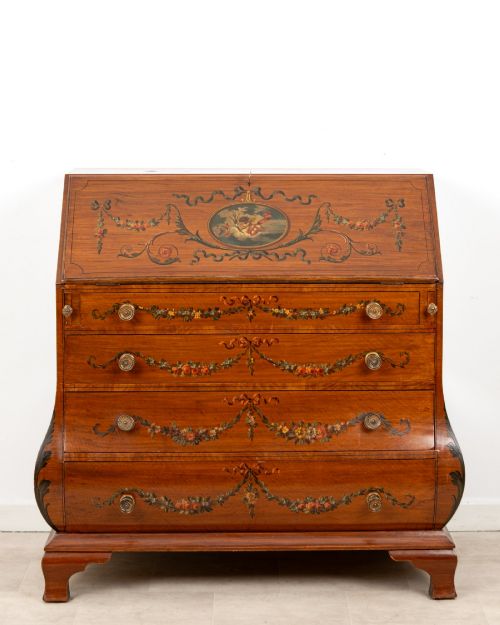
Cabinet makers utilised foundational timbers such as pine, satinwood, and various solid woods to construct these robust carcasses. Skilled artisans then applied detailed paint finishes, often incorporating floral motifs or intricate chinoiserie scenes directly onto the timber.
Functional elements such as brass handles, leather inserts, and marble tops were integrated alongside secret drawers and drop-front writing slopes. The surfaces received hand-painted decoration that defined the distinct aesthetic of the Georgian and Edwardian eras.
Painted Writing Bureau Drawers Retail Price Guide 2026
Typical asking prices for painted writing bureau drawers among the pieces listed under this phrase on Sellingantiques today, from the lower quarter to the upper quarter. They describe what is for sale here now, not the wider market.
Several pieces conceal tiny secret drawers, offering a hidden compartment for your most private correspondence.
What Varies in Quality
The refinement of the painted surface work distinguishes standard examples from exceptional pieces. Finely executed floral details and complex chinoiserie ornamentation demonstrate superior hand-decoration by skilled practitioners.
The Painted Writing Bureau Drawers Glossary
- Bureau
- A writing cabinet featuring a sloping lid that folds down to create a desk surface. It typically encloses a series of small drawers and pigeonholes.
- Secretaire
- A piece of furniture containing a built-in writing drawer or compartment with a drop-down front. This design conceals writing surfaces while maintaining the exterior appearance of a standard chest or cabinet.
- Satinwood
- A durable, lustrous wood native to Ceylon and the West Indies, known for its yellow colour and satin-like sheen. Edwardian makers utilised this timber extensively for fine desks and writing cabinets.
- Vernis Martin
- A type of decorative lacquer developed in eighteenth-century France to imitate Asian lacquer. Furniture makers applied this translucent varnish over painted surfaces to achieve a rich, polished finish.
Painted Writing Bureau Drawers: Frequently Asked Questions
What is a bureau bookcase?
A bureau bookcase combines a fall-front writing desk at the base with enclosed shelving or cabinet doors above. This dual-purpose form offers both concealed workspace and prominent display or storage space.
Such pieces date across the eighteenth and nineteenth centuries, serving as major focal points in traditional rooms.
How do I use a bureau daily?
You lower the sloping front panel to reveal an internal arrangement of small drawers and pigeonholes for writing materials. The folded lid provides a sturdy flat surface for correspondence.
When finished, you simply lift the fall-front to secure your papers out of sight.
Where should I place a painted desk?
These painted writing surfaces suit sitting rooms, bedrooms, or studies where natural light illuminates the decorative details. Positioning them away from direct sunlight protects the painted finish from fading.
Ensure adequate clearance around the piece for lowering the writing slope comfortably.
How do I distinguish Edwardian from Georgian pieces?
Edwardian examples from around nineteen hundred often feature bright satinwood and delicate floral ornamentation. Georgian pieces from the eighteenth century typically display heavier proportions and darker painted surfaces or chinoiserie.
Examining the construction details and secondary woods helps confirm the period of manufacture.