


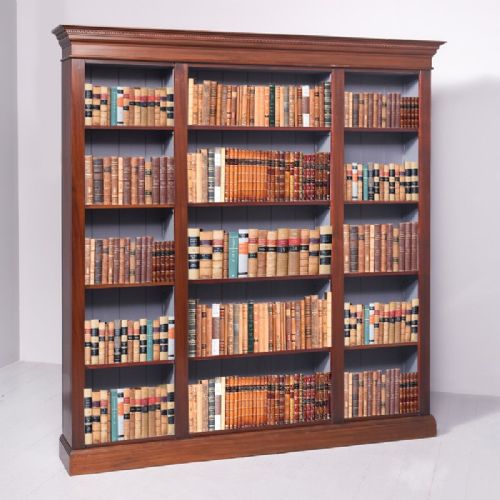


Painted Wooden Display Shelving
Painted wooden display shelving brings functional architecture into domestic rooms, offering open stages for books and collections.
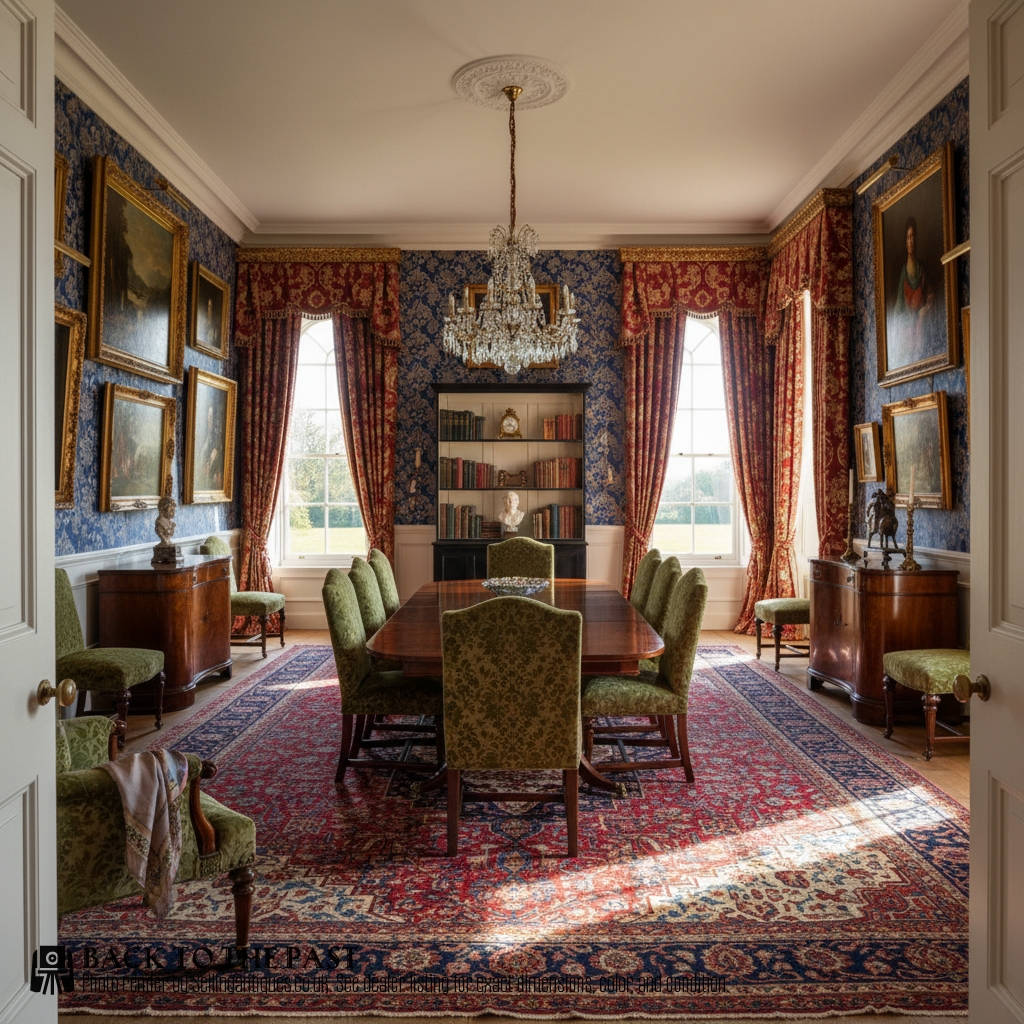
Painted Wooden Display Shelving
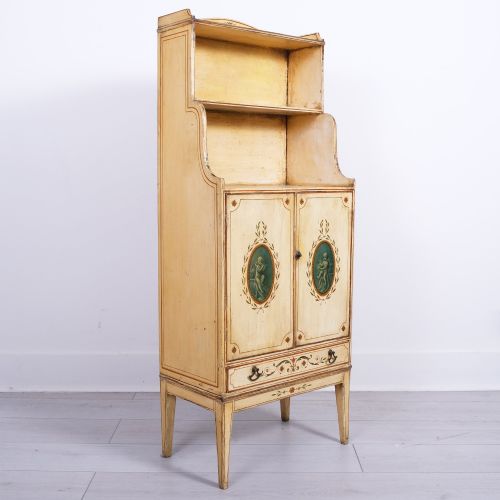
Painted wooden display shelving encompasses architectural bookcases, wall shelves, and cabinets designed to present objects rather than hide them away. Buyers searching for painted wooden display shelving find pieces ranging from late eighteenth-century George III waterfall forms to nineteenth-century open bookcases and twentieth-century school department cabinets.
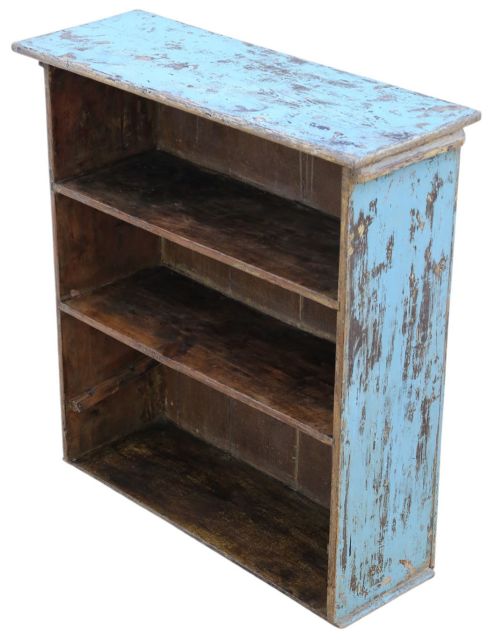
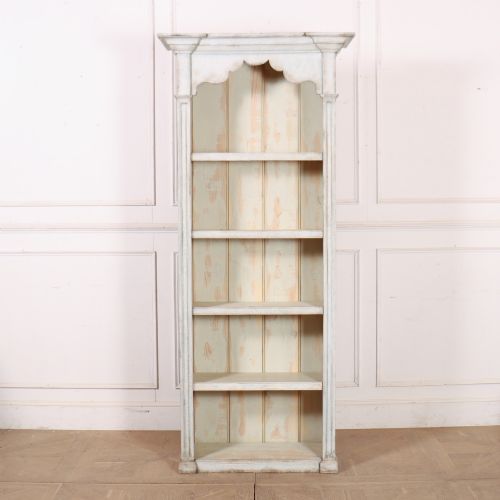
The versions most commonly met on this page span the nineteenth century, including distressed blue painted pieces, red lacquered Chinese cabinets, and Georgian-style open timber shelving. These items serve practical library storage whilst introducing colour and structural presence to domestic spaces.
How they were made
Makers constructed these pieces primarily from timber such as pine, oak, and mahogany, applying surface coatings of paint, lacquer, or ebonisation. Construction methods varied from robust country house joinery to refined breakfront library designs incorporating brass hardware.
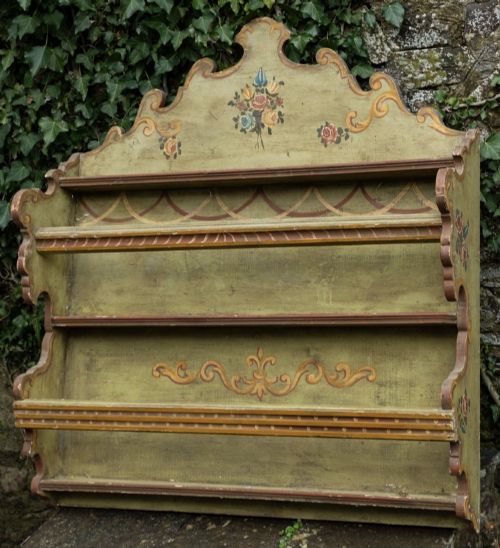
Surfaces received decorative attention through hand painting, layering of coloured pigments, or distinct regional techniques like Chinese lacquering. These finishes interacted directly with the underlying wood to create patinated textures that alter over decades of exposure.
School art departments discarded sturdy cabinets that now happily hold precious pottery instead of clay pots.
What varies in quality
Proportion and structural integrity govern the distinction between standard utilitarian shelving and finer architectural examples. Pieces retaining original painted or lacquered surfaces demonstrate greater historical continuity than those subjected to later redecoration.
The refinement of joinery, from rustic farmhouse assemblies to formal breakfront library proportions, dictates the visual weight and stability of each piece.
The Painted Wooden Display Shelving Glossary
- Waterfall bookcase
- A set of open shelves diminishing in depth from bottom to top, typical of late eighteenth-century design. This form presents books and objects in a cascading tiered arrangement.
- Breakfront
- A cabinet or bookcase whose central section projects forward from the flanking wings. This classical arrangement adds architectural depth to large library furniture.
- Lacquer
- A durable finish applied in multiple coats and polished to a hard sheen, seen on oriental furniture. It protects the timber beneath while offering a smooth decorative surface.
- Ebonised
- Timber treated with a stain or pigment to imitate ebony. This dark finish was favoured during various revival periods to create a formal aesthetic.
Painted Wooden Display Shelving: Frequently Asked Questions
How do I clean painted wooden display shelving?
Dust surfaces gently using a dry, soft cloth to prevent abrasion to aged painted finishes. Avoid modern chemical sprays that can soften historic paint layers.
Maintain stable room humidity to prevent the underlying timber from expanding or contracting, which causes paint to flake.
Can these shelves hold heavy books?
Heavier volumes require sturdy nineteenth-century breakfront bookcases or institutional cabinets built for school departments. Lighter wall shelves suit decorative objects and smaller collections.
Assess the thickness of the timber shelves and the strength of the wall fixings or internal supports before loading heavy items.
Are these pieces suitable for modern kitchens?
Open shelving introduces accessible storage and displays ceramics effectively in contemporary kitchen spaces. Ensure adequate ventilation to protect historic timber from excessive moisture.
Consider the original finish type, as lacquered or robustly painted surfaces withstand domestic environments better than delicate decorative schemes.
How do I distinguish George III styles from later revivals?
Original pieces from the eighteenth century display specific proportioning, traditional joinery methods, and period timber selection. Georgian-style pieces made later often replicate these classical lines with slight variations in construction.
Examine the backboards, nail types, and tool marks to understand the chronological origin of the woodwork.