

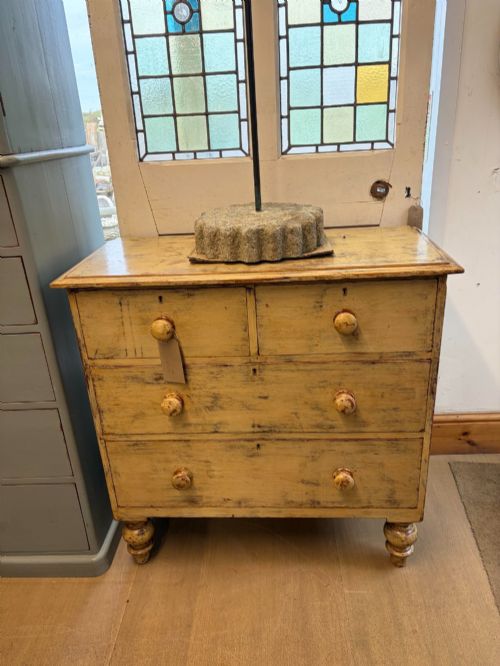
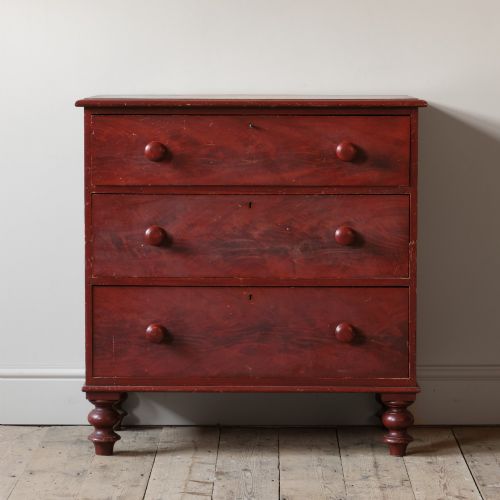
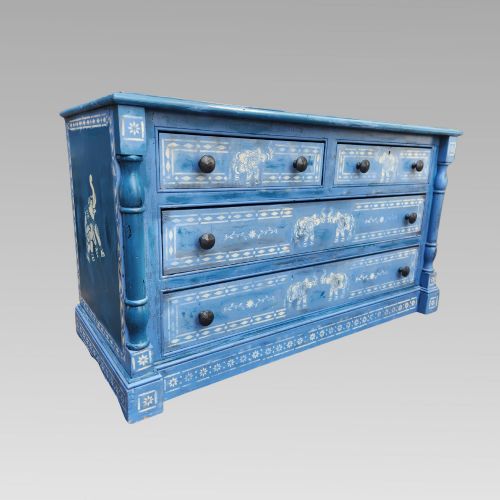
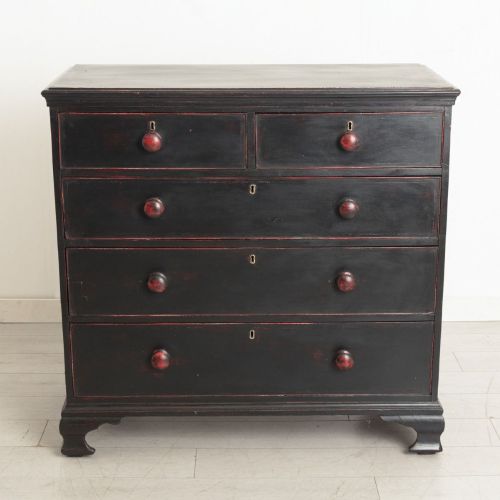
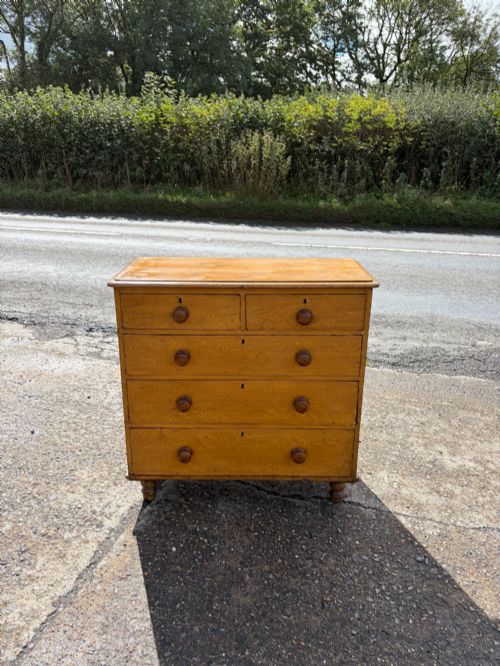
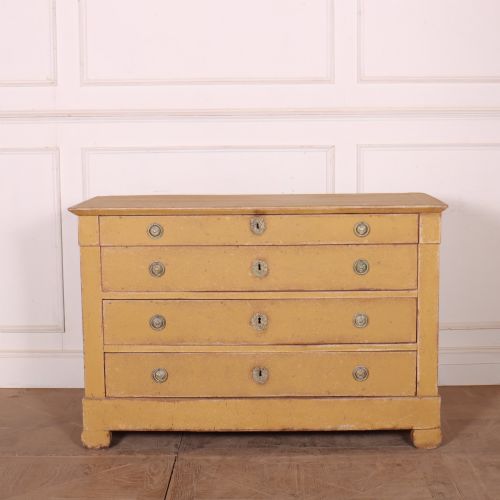
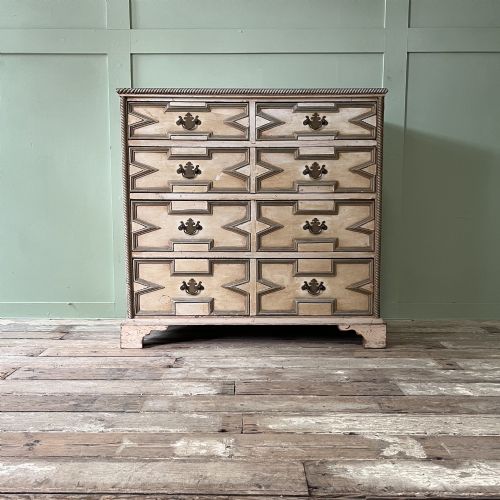
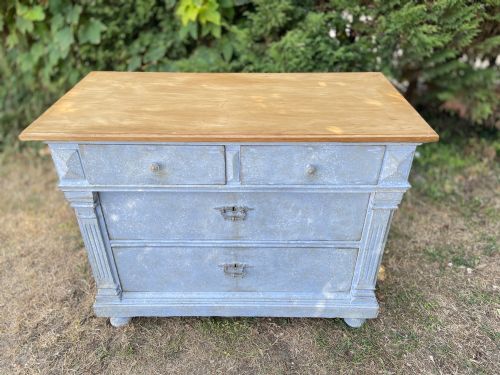
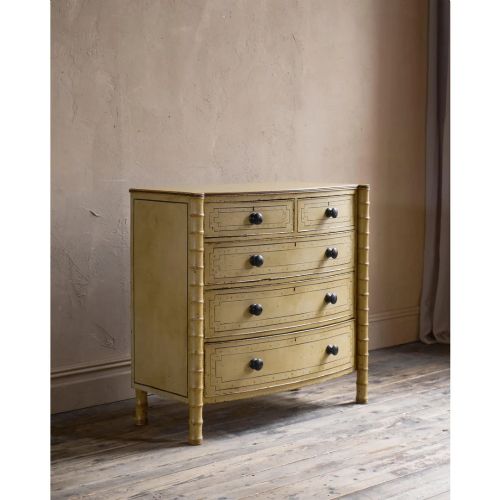
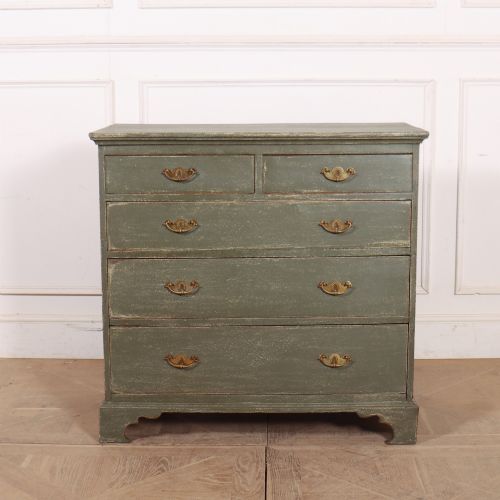
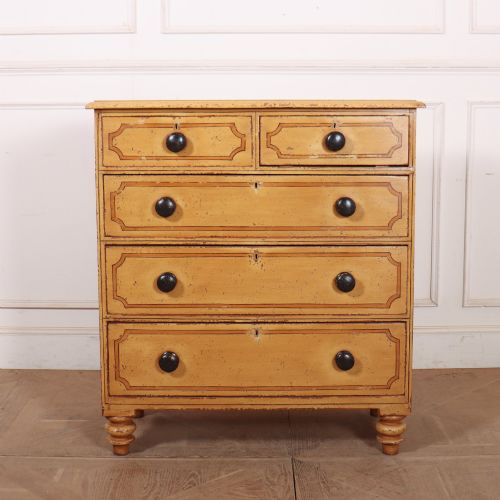
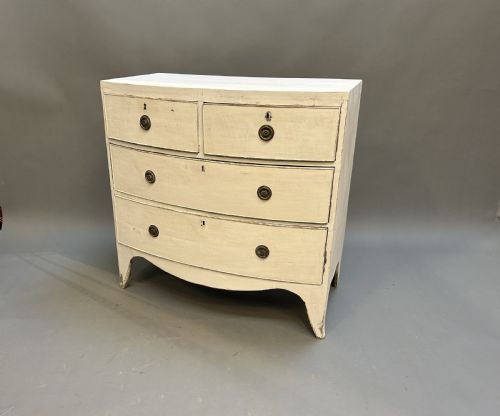
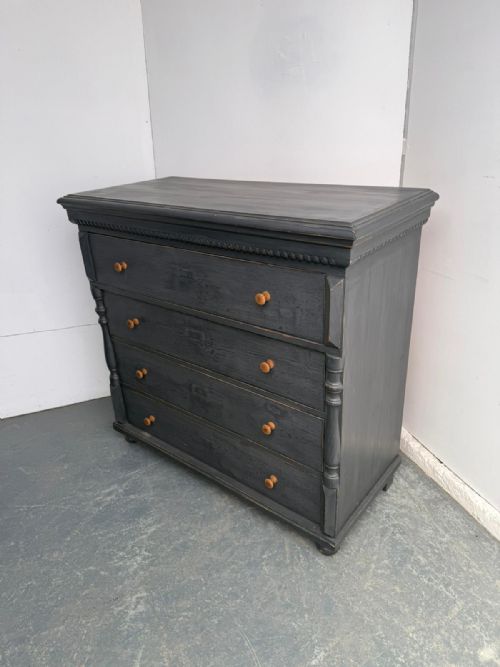
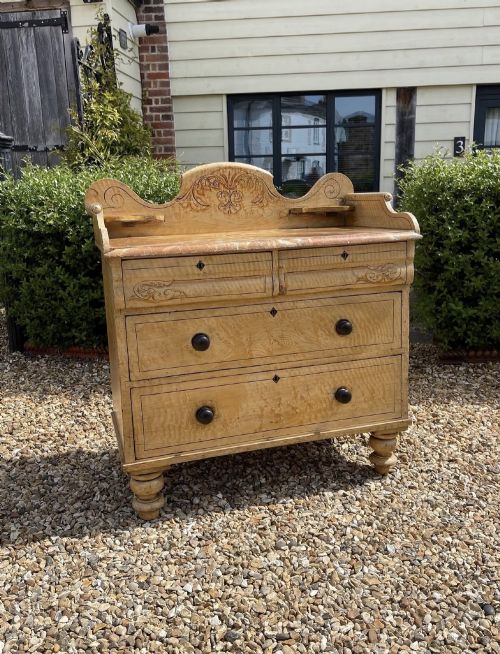
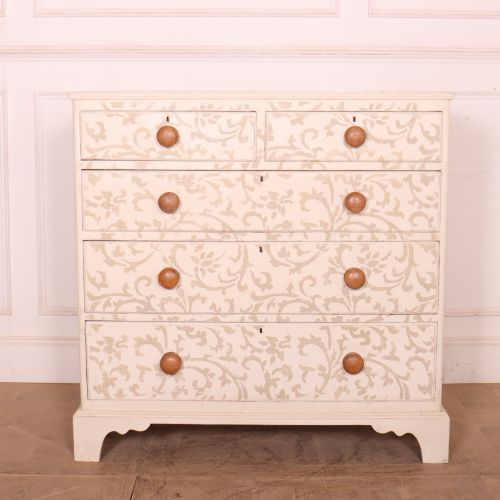
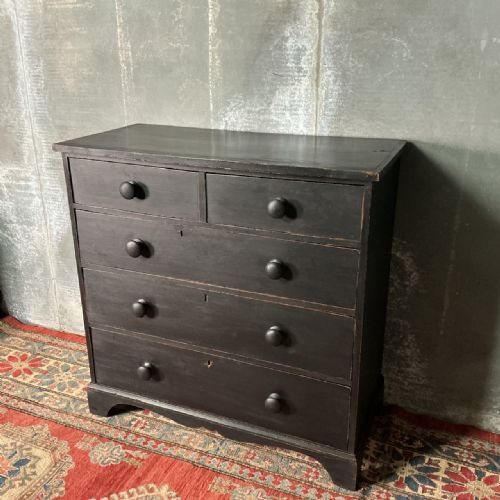
Painted Wooden Commode Chest
A painted wooden commode chest brings together practical storage and surface decoration, offering a character that unpainted timber seldom matches.
Painted Wooden Commode Chest
A painted wooden commode chest appears in several regional traditions, most frequently taking the form of a chest of drawers or a commode originating from English, French, Victorian, and Scandinavian workshops.
The pieces span from the 18th century through the Victorian era into the early decades of the 20th century, encompassing styles such as Gustavian, French Provincial, and English Country.
Buyers encounter variations ranging from tall pine drawer chests to serpentine front commodes and smaller bedside tables finished in muted greys, dark tones, or original decorative schemes.
Materials and Construction
Makers utilised solid timbers including pine, softwood, oak, and ash for the primary carcase and drawer construction, often pairing these woods with brass hardware and metal fittings.
Surfaces received layers of paint, scumble finishes, or hand-applied colour schemes, sometimes incorporating simulated wood effects like faux bamboo or birch to mimic costlier materials.
Painted Wooden Commode Chest Retail Price Guide 2026
Typical asking prices for painted wooden commode chest among the pieces listed under this phrase on Sellingantiques today, from the lower quarter to the upper quarter. They describe what is for sale here now, not the wider market.
Scumble pine chests let previous generations turn plain softwood into grand timber with nothing more than a comb and a steady wrist.
Design and Finish
Quality rests upon the integrity of the original surface finish, distinguishing pieces retaining their authentic period paint from those with later redecorations.
The refinement of the cabinetmaker's joinery, the subtlety of carved serpentine or bow fronts, and the balance of proportions separate standard utility items from finer continental and English examples.
Sir Clough Williams-Ellis·Edwards and Roberts·Gemla Fabrikers
The Painted Wooden Commode Chest Glossary
- Commode
- A low chest of drawers or cabinet. The form originated in France and remains closely associated with decorative living spaces.
- Gustavian
- Swedish neoclassical style characterised by restrained symmetry and pale painted finishes. It developed during the late 18th century.
- Scumble
- A painting technique involving translucent colour dragged over an opaque base. This method creates textured, imitation wood grain effects.
- Serpentine
- A furniture front curving outward at the sides and inward at the centre. This shape demands precise carpentry skills.
Painted Wooden Commode Chest: Frequently Asked Questions
How do I identify original paint?
Original paint exhibits natural wear patterns, craquelure, and integration with the underlying timber that modern repainting fails to replicate. Close inspection reveals layers bonded securely to the wood over decades.
Examination under natural light helps detect uniformity or sanding marks characteristic of later decorative updates. Genuine historical surfaces retain subtle variations in tone from exposure and age.
What is a Gustavian commode?
A Gustavian commode reflects Swedish neoclassical design inspired by French fashions of the period. These pieces typically display lighter painted surfaces and restrained classical carving.
They offer a bright aesthetic distinct from darker English country furniture. Proportions remain balanced and architectural without heavy ornamentation.
Where were pine commodes used?
Pine commodes served primarily in bedrooms, parlours, and domestic chambers across Britain, Scandinavia, and continental Europe. Their secondary woods and painted finishes suited practical household storage.
Regional workshops adapted the form for local domestic requirements, resulting in varying drawer counts and proportions. Surviving examples demonstrate robust daily use over generations.
How do I care for painted wood?
Maintenance requires dry dusting with a soft cloth and avoiding chemical cleaners that soften historical paint binders. Stable indoor humidity prevents timber movement that causes flaking.
Direct sunlight fades pigmented surfaces over time, so positioning pieces away from windows preserves the colour. Wax should be applied sparingly only if the specific finish allows.