



Painted Wooden Brackets
Painted wooden brackets are architectural and decorative supports that bring historic character and colour to any wall.
Painted Wooden Brackets
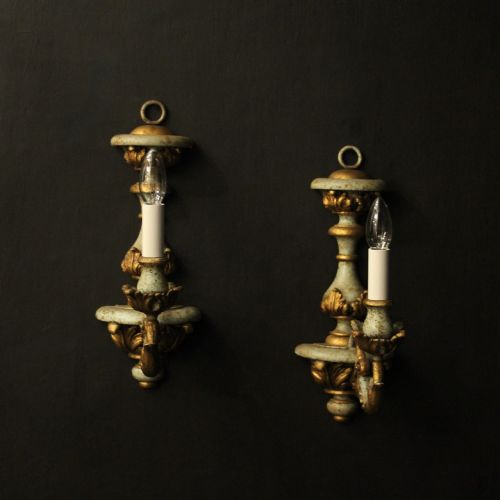
Painted wooden brackets span several centuries, with examples appearing across the nineteenth and eighteenth centuries alongside later twentieth-century pieces. These items serve primarily as decorative wall supports or architectural salvage, often taking the form of wall brackets, wall lights, and wall sconces.
The aesthetic range draws on various historical styles, including Italian Baroque, Italian Neoclassical, Georgian, Regency, French Rococo Revival, Victorian, and Victorian Italianate. Pieces frequently feature original paint surfaces, polychrome finishes, or antique white treatments applied to carved wood and pine.
How they were made
Makers shaped these supports from pine and other woods, employing hand-carving techniques to achieve ornate architectural profiles and decorative flourishes. Metal elements such as brass and iron occasionally integrate into pieces designed to hold lights or sconces.
Surfaces received traditional treatments including gesso, ebonisation, and layered paint finishes. Artisans applied polychrome decoration or simple monochrome coats directly onto the timber to enhance the visual depth of the carving.
Painted Wooden Brackets Retail Price Guide 2026
Typical asking prices for painted wooden brackets among the pieces listed under this phrase on Sellingantiques today, from the lower quarter to the upper quarter. They describe what is for sale here now, not the wider market.
Pine blanket boxes occasionally share shelf space with architectural roof decorations from India.
What varies in quality
The refinement of the hand-carving distinguishes simpler vernacular items from more ambitious works commissioned in high historical styles. Crispness in the execution of architectural details and foliage indicates superior craftsmanship.
The integrity and originality of the paint surface heavily influence the character of each piece. Retaining untouched historical polychrome or early painted finishes provides greater depth than later repainting.
The Painted Wooden Brackets Glossary
- Polychrome
- Decoration executed in multiple colours, frequently seen on historical wood carvings and architectural elements to create vibrant surface patterns.
- Gesso
- A plaster-like mixture applied to wood surfaces to prepare them for painting or gilding, allowing for smooth or relief-moulded details.
- Architectural salvage
- Building elements rescued from older structures for reuse, often retaining period craftsmanship and distinct patination.
- Ebonisation
- A finishing process that treats timber to mimic the dense, dark appearance of ebony wood.
Painted Wooden Brackets: Frequently Asked Questions
How do I hang a heavy wooden bracket?
Heavy carved supports require secure fixings anchored directly into wall studs or masonry using appropriate wall plugs and screws. The weight of the timber and any objects placed upon it dictate the load-bearing requirements.
Ensuring the bracket is level before final tightening prevents structural strain and keeps decorative lines straight against the wall surface.
Can these brackets support heavy shelves?
Load capacity depends entirely on the size, timber density, and method of construction of the individual piece. Architectural salvage designed for structural use handles more weight than purely decorative wall mounts.
Checking the fixing points and overall timber condition helps determine whether a bracket suits functional shelving or remains better suited for display.
How should I clean painted wooden surfaces?
Dusting gently with a dry, soft cloth preserves delicate historic paint layers and prevents moisture damage. Avoid harsh chemical cleaners or abrasive scrubbers that strip away original finishes.
For stubborn grime, a slightly damp cloth with mild soap can be used sparingly, followed immediately by thorough drying with a clean towel.
How do I date a painted wooden bracket?
Stylistic clues such as Regency ebonisation, Victorian proportions, or Italian Baroque motifs offer primary indicators of period origin. Tool marks left by hand-carving also reveal the manufacturing era.
Examining the layers of paint and the type of wood used helps confirm whether a piece dates to the eighteenth, nineteenth, or twentieth century.