


Painted Wood Wall Clock
These painted wood wall clocks bring character to any room, combining functional timekeeping with traditional craftsmanship from the eighteenth century onwards.
Painted Wood Wall Clock
A painted wood wall clock serves as both a practical timepiece and a striking focal point, drawing the eye with decorated dials and timber cases. When exploring these items, collectors encounter various regional interpretations and formats spanning multiple centuries.
Periods represented across these listings extend from the Georgian era through the nineteenth century and into the interwar period. Buyers frequently find dial clocks, drop dial tavern clocks, and picture clocks displaying distinct period styles.
Materials and construction methods
Cases utilise timber such as mahogany and oak, occasionally treated with decorative finishes like faux tortoiseshell. Dial construction often incorporates painted metal, brass, and enamel to create clear, legible faces for time reading.
Mechanical movements rely on traditional brass and iron components, with fusee mechanisms appearing frequently in British pieces. Skilled makers combined robust joinery with precise gear cutting to ensure reliable daily operation.
Some clocks come with picture scenes that move on their own, proving our ancestors loved a bit of automated theatre.
Factors influencing quality
Quality rests upon the preservation of the original painted surfaces and timber patination. Finer examples retain their authentic dial decoration and original case finish without heavy intervention.
Mechanical integrity and the complexity of the movement also dictate the standing of a piece. Standard time-only mechanisms differ significantly in execution and desirability from quarter-striking or automaton movements.
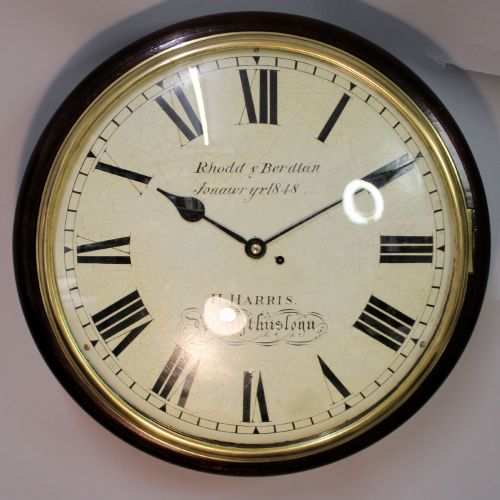
Henry Harris of Monythusloyn
The Painted Wood Wall Clock Glossary
- Dial clock
- A wall clock featuring a prominent circular face, commonly utilised in public spaces and railway stations during the nineteenth century. These clocks typically display Roman numerals on a painted metal or wood ground.
- Fusee
- A conical pulley used in clock movements to maintain an even pull on the gear train as the mainspring unwinds. This mechanism ensures more accurate timekeeping throughout the duration of the winding.
- Drop dial
- A wall clock design where the circular dial sits above a short, glazed trunk or drop box. This case style became popular for tavern and office clocks during the Georgian and Victorian periods.
- Automaton
- A mechanical figure or moving scene integrated into the face of a clock, often animating on the hour. Such pieces require intricate linkage between the clock train and the moving elements.
- Tavern clock
- A large, long-dial wall clock with a bold face and an extended trunk, frequently found in public houses. These clocks were designed for high visibility and robust daily use.
Painted Wood Wall Clock: Frequently Asked Questions
How do I wind a fusee wall clock?
Fusee clocks require a specific winding key inserted into the dial hole to tension the mainspring gradually. Care must be taken not to overwind the movement.
Consulting a professional horologist for initial setup ensures the mechanism operates smoothly without damaging the historical gear train.
Where should I hang a heavy wall clock?
Heavy timepieces need secure fixing directly into masonry or solid wall studs using appropriate wall brackets or heavy-duty screws. Proper weight distribution prevents strain on the case joints.
Ensuring the clock hangs plumb is essential for the pendulum to beat evenly and keep correct time.
What maintenance do antique clock movements need?
Routine care involves professional cleaning and oiling every few years to prevent wear on the brass pivots and wheels. Dust accumulation inside the case should be kept to a minimum.
Avoid using modern household lubricants, which can gum up vintage mechanical parts and attract dirt.
How can I date a painted dial clock?
Dating relies on examining the hand style, the font of the numerals, and the construction methods of the timber case. Painted iron dials became widespread during the late Georgian period.
Comparing the maker's signature against regional records often narrows down the exact decade of manufacture.