

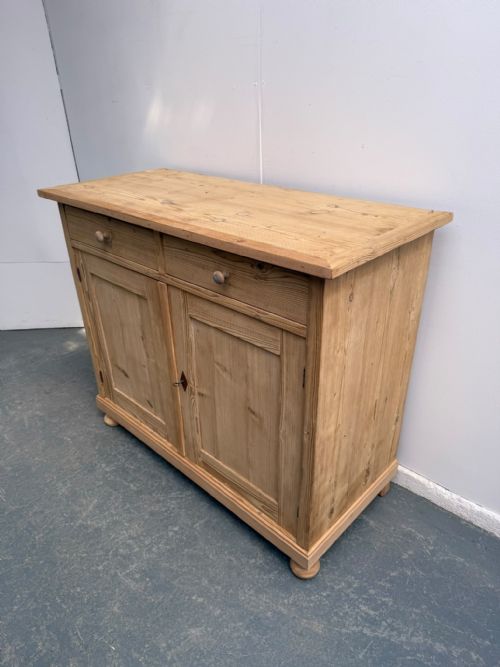
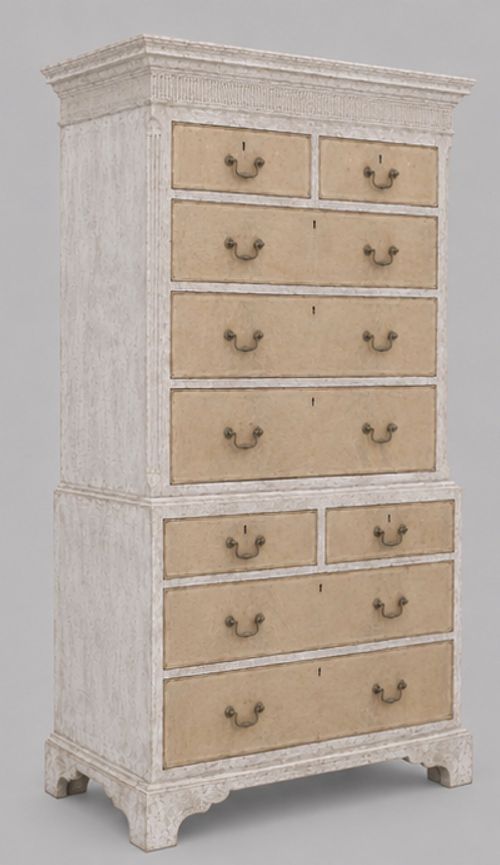
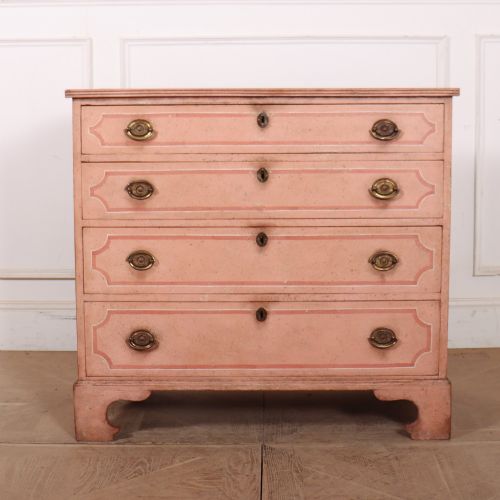
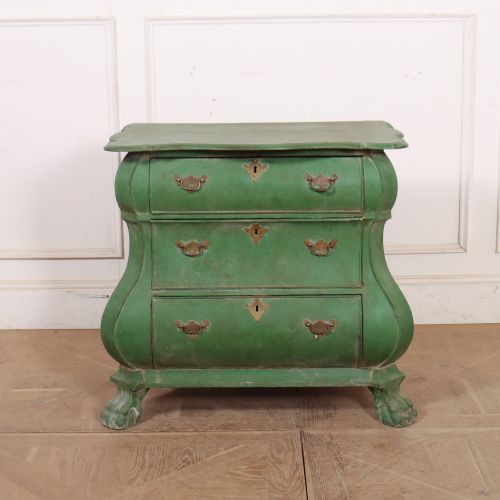



Painted Wood Storage Drawers
These painted wood storage drawers bring character and practical utility to a room, offering robust storage finished in period paint finishes.
Painted Wood Storage Drawers
When you search for painted wood storage drawers, you encounter a varied selection of functional storage furniture originating from the eighteenth, nineteenth, and early twentieth centuries. These pieces encompass chests of drawers, commodes, linen presses, dresser bases, and trunks.
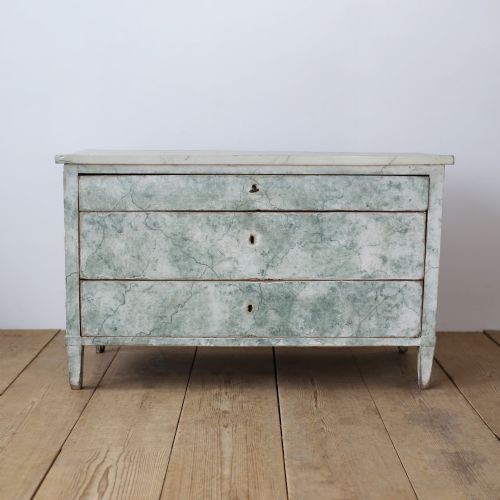
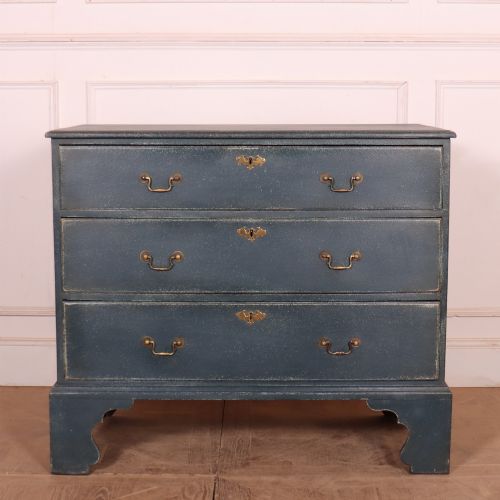
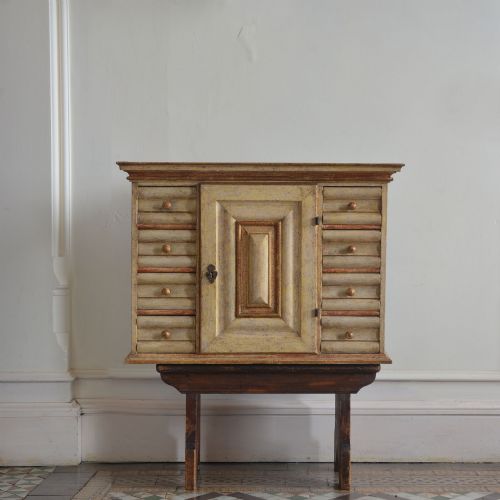
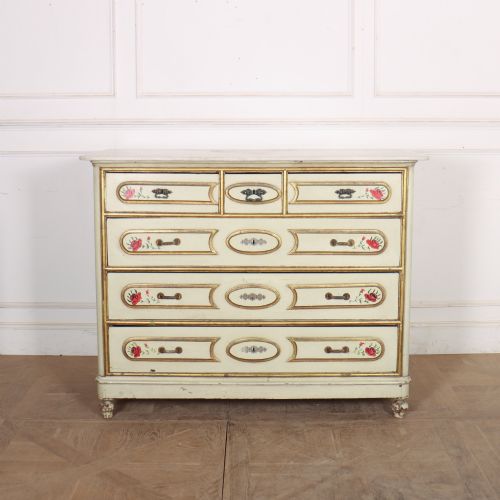
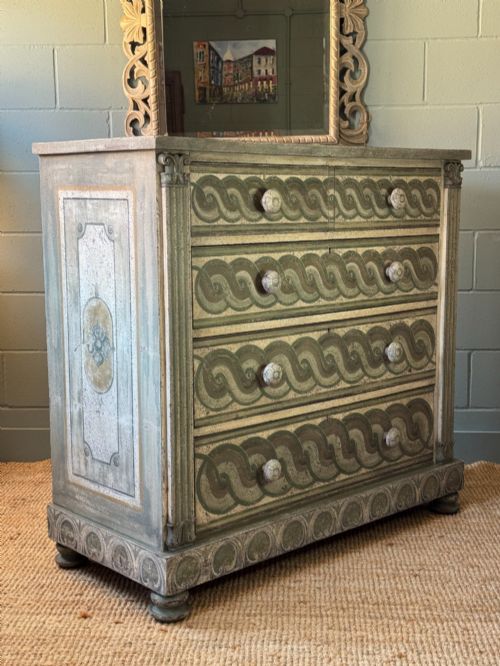
The pieces on this page span diverse regional traditions, including English country styles, French provincial and chateau designs, Dutch baroque, and Spanish neoclassical forms. Pine and oak provide the primary carcasses, often enhanced by decorative paintwork, original scumbling, or simulated wood finishes.
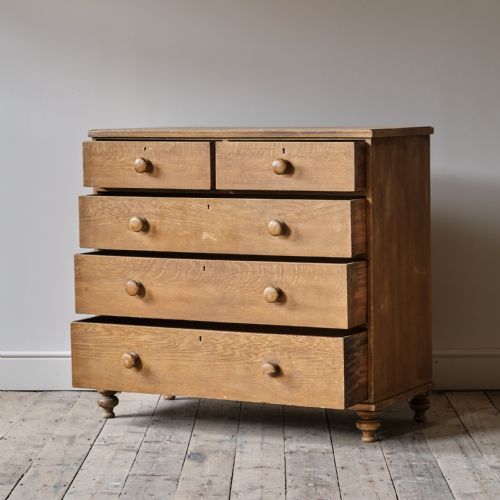
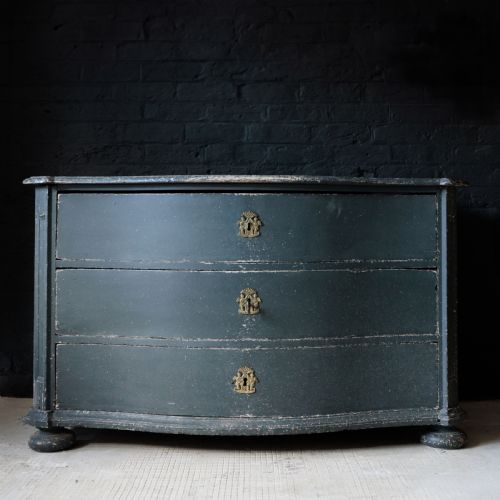
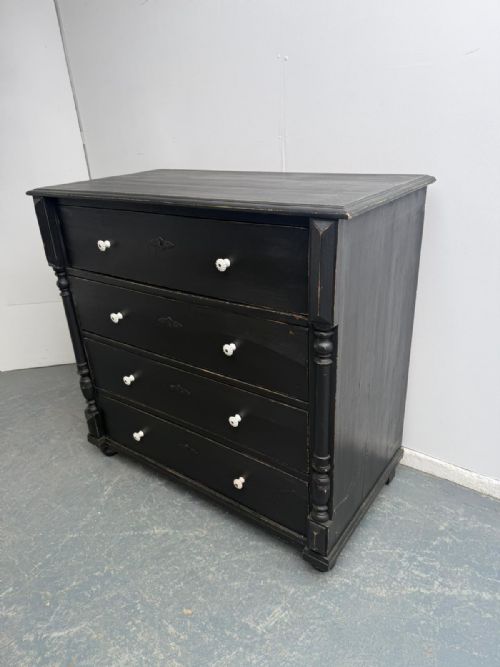
Victorian pine chests and eighteenth-century commodes dominate the selection, offering practical compartmentalisation within distinctive historical silhouettes. Buyers select these items for their combination of authentic surface patination and everyday utility.
How they were made
Cabinetmakers constructed these pieces primarily from solid pine, oak, ash, and mahogany, joining carcases with traditional dovetail and mortise-and-tenon methods. Secondary timbers such as deal often formed drawer linings and backboards.
Surfaces received layers of lead-based or oil paints, sometimes scumbled to imitate finer grained timbers, or decorated with stencilling and faux marble tops. Brass and iron hardware, including drop handles and escutcheons, completed the construction.
Makers applied wax over painted or bare wood surfaces to protect the finish, allowing layers of historic patina to accumulate through decades of use.
Painted Wood Storage Drawers Retail Price Guide 2026
Typical asking prices for painted wood storage drawers among the pieces listed under this phrase on Sellingantiques today, from the lower quarter to the upper quarter. They describe what is for sale here now, not the wider market.
Some nineteenth-century scumbled pine chests disguise themselves so convincingly as expensive hardwoods that even seasoned mill timber struggles to spot the trick.
What varies in quality
The integrity of the original paint surface distinguishes superior examples from later repainted items, with untouched historical pigments commanding greater interest among purists. Subtle decorative details, such as serpentine fronts, hand-painted floral motifs, or integrated faux marble tops, elevate the standing of individual pieces.
Structural soundness in the drawer glides, carcase joints, and backboards determines the functional longevity of each item. High-grade specimens retain their original brass handles, locks, and proportional harmony without excessive timber shrinkage or warping.
The Painted Wood Storage Drawers Glossary
- Scumble
- A decorative painting technique involving the manipulation of translucent glaze over a base coat to simulate the grain of more expensive woods. This method appeared frequently on nineteenth-century utility furniture.
- Bombe
- A swollen or bulging convex contour shape typical of continental European commodes from the eighteenth century. This profile requires advanced woodworking skill to build.
- Serpentine
- A front profile characterised by a central concave curve flanked by two convex curves, or vice versa. It creates an undulating, rhythmic facade on chests and commodes.
- Linen Press
- A tall storage piece combining upper cupboard doors enclosing sliding trays with lower drawers. Originally designed to keep household textiles flat and organised.
- Mule Trunk
- A storage chest fitted with one or two drawers in the base beneath the main compartment. It bridges the design gap between traditional coffers and modern chests of drawers.
Painted Wood Storage Drawers: Frequently Asked Questions
How do I clean painted wood?
Dust surfaces regularly with a soft, dry cloth to prevent particulate accumulation. Avoid harsh chemical cleaners that strip historic paint layers.
Apply a microcrystalline wax sparingly if the finish appears dry, buffing gently to maintain the soft sheen.
Are these drawers suitable for daily use?
Solid construction and dovetailed joints mean these pieces handle everyday clothing storage with ease. Drawers run smoothly when maintained with traditional beeswax on the runners.
Ensure placement avoids direct sunlight and moisture fluctuations to protect the antique wood and paint.
How can I date a painted chest?
Examine the construction methods, such as hand-cut dovetails, backboard thickness, and secondary timbers used inside. Tool marks and nail types provide further clues to the manufacturing decade.
Paint analysis and style characteristics like bracket feet or bow fronts help narrow down the regional origin and period.
What is scumbled pine?
Scumbled pine is timber painted with a translucent top layer that is manipulated with combs or rags to imitate oak, mahogany, or tortoiseshell. Makers used this technique to give affordable softwood the appearance of luxury hardwood.
This finish ages distinctively, developing a rich craquelure over the decades.