





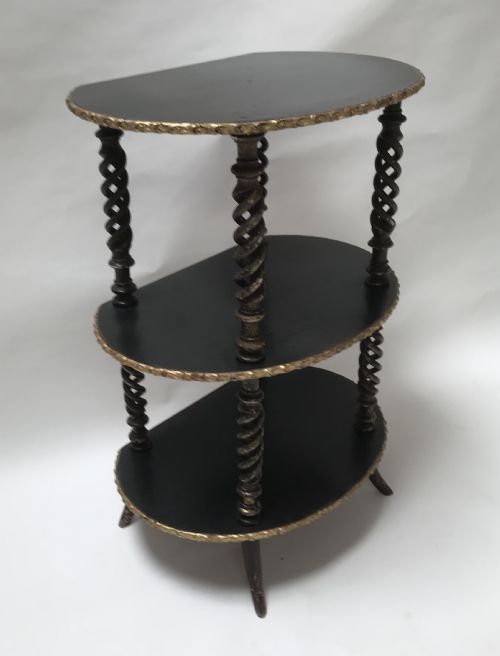
Painted Wood Corner Display
These painted wood corner display pieces turn neglected room junctions into focal points, bringing historic colour and practical display space to any interior.
Painted Wood Corner Display
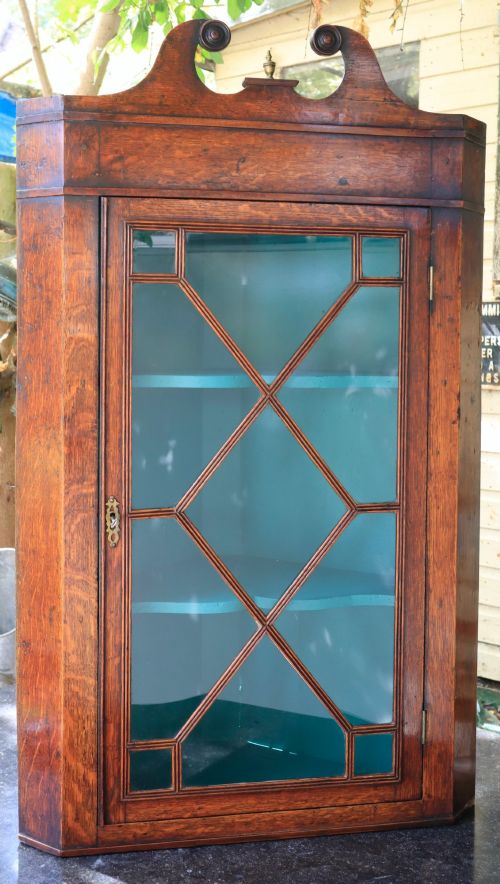
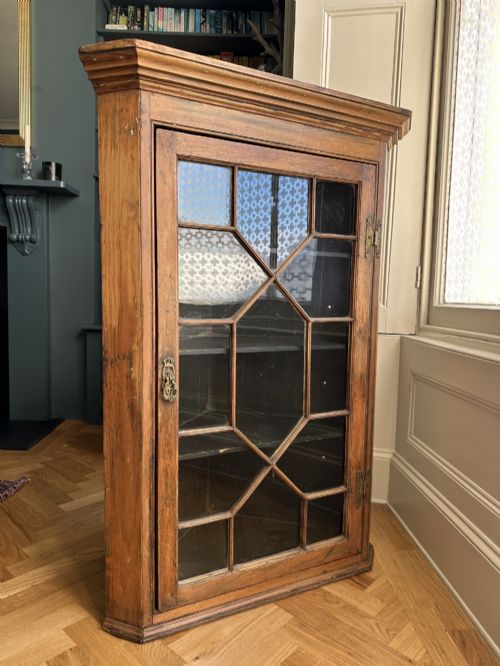
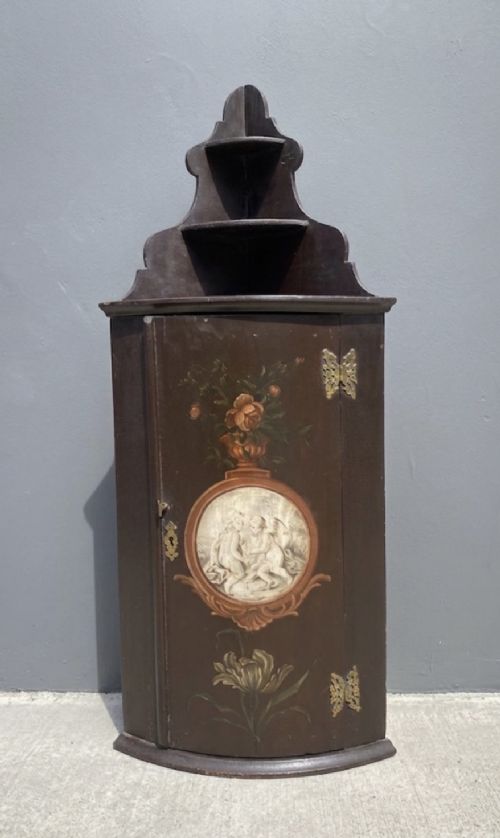
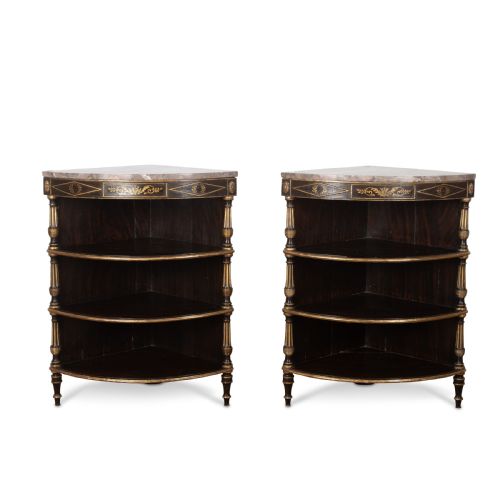
A painted wood corner display is a specialised cabinet or cupboard designed to fit neatly into a room angle, making use of awkward spatial junctions. These items range from glazed vitrines and open-shelved whatnots to enclosed cupboards with painted interiors.
Buyers encountering this selection will most frequently find 18th-century and 19th-century examples, alongside later 20th-century interpretations. Styles span from Gustavian and Scandinavian folk art to Georgian and Regency forms, reflecting diverse European origins.
The primary function remains the exhibition or storage of cherished objects while occupying minimal floor space. Interior shelves and glazed doors appear across various periods to showcase contents securely.
How they were made
Makers utilised timber such as pine, satinwood, and mahogany as the structural foundation for these corner pieces. Pine frequently serves as the carcase for painted folk art and country pieces, whereas satinwood and mahogany support finer decorative treatments.
Surface finish defines these items, employing paint layers alongside gilt accents and occasional marble tops. Glazed doors incorporate glass panes, while brass hardware and iron fittings secure doors and provide functional operational details.
Painted Wood Corner Display Retail Price Guide 2026
Typical asking prices for painted wood corner display among the pieces listed under this phrase on Sellingantiques today, from the lower quarter to the upper quarter. They describe what is for sale here now, not the wider market.
The documented periods span from the eighteenth century through the Regency era up to nineteen-sixty.
What varies in quality
Quality rests upon the integrity of the painted surface and the survival of original decorative details, such as decorated interiors or untouched folk art motifs. Pieces retaining their early paint schemes command greater interest than those subjected to later overpainting.
Construction refinement and timber selection separate standard utility cupboards from high-status furniture. Fine joinery, balanced proportions, and the inclusion of materials like marble tops or detailed satinwood veneers elevate a piece.
The Painted Wood Corner Display Glossary
- Vitrine
- A glass-fronted cabinet designed for displaying porcelain, curiosities, or books. This term originates from the French word for glass.
- Whatnot
- An open set of tiered shelves used for ornament storage and display. These items became popular during the nineteenth century.
- Gustavian
- The Swedish interpretation of French neoclassical style, characterised by restrained carving and pale painted finishes. Light colours dominate this aesthetic to brighten northern interiors.
- Satinwood
- A lustrous tropical hardwood native to Ceylon and India, prized for its golden yellow sheen. Cabinetmakers utilised it extensively for fine inlaid and painted furniture.
- Bow front
- A convex curved cabinet front that softens room angles and adds visual depth. This profile appears on select refined nineteenth-century examples.
Painted Wood Corner Display: Frequently Asked Questions
Are painted finishes original?
Examine the paint surface under magnification to spot craquelure, wear patterns, and underlying timber preparation. Multiple layers or contradictory pigments often indicate later redecoration.
Retained original interior paint provides strong evidence of authenticity and adds character to country pieces.
What is Gustavian style?
Gustavian design emerged in Sweden during the late eighteenth century under King Gustav III, drawing inspiration from French neoclassical architecture. It favours pale greys, whites, and soft blues.
This aesthetic emphasises functional elegance and light reflection over heavy ornamentation.
Can these hold heavy items?
Storage capacity depends on the primary timber and the construction of the internal shelf supports. Pine and hardwood carcasses handle everyday porcelain, but delicate whatnots suit lighter ornaments.
Inspect the fixed shelf ledges inside the carcase to gauge the weight limits of older cupboards.