




Painted Storage Containers
These painted storage containers range from Georgian leather to Scandinavian pine, offering practical utility and decorative folk art charm.
Painted Storage Containers
Painted storage containers encompass utilitarian vessels and decorative boxes designed to hold everything from documents to fuel, drawing on traditions from English country workshops to Qing Dynasty courts. When you search for painted storage containers, you encounter objects built to serve a domestic, commercial, or military purpose while carrying applied colour and ornament.
The selections span distinct periods from the eighteenth century through the nineteen-thirties, utilising forms such as tea caddies, hat boxes, log bins, and chemist jars. You are likely to meet toleware tins, Kashmiri lidded pots, and rustic pine storage containers that reflect regional utility across Britain, Europe, and Asia.
How they were made
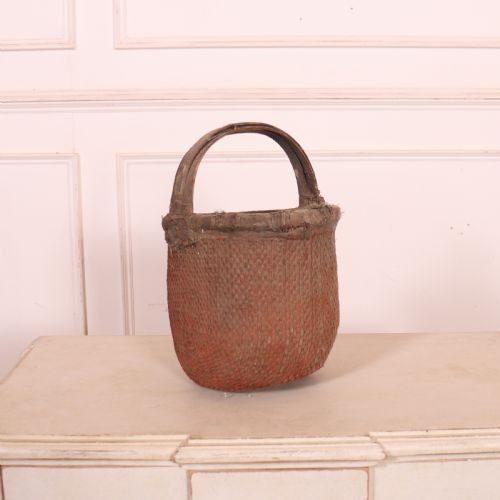
Materials span wood, sheet metal, leather, lacquer, and woven basketry, each chosen for durability and structure. Pine and papier-mâché provide rigid carcases for applied paint, while toleware uses sheet metal shaped for domestic flour bins or solicitor document tins.
Surface decoration relies on oil paint, lacquer, and enamel applied over prepared grounds. Artisans used hand-painted motifs, folk art barge work, or blue and white porcelain glazes to finish the exterior surfaces.
Periods represented span from the eighteenth century through the nineteen-thirties, capturing Georgian, Victorian, and Edwardian design eras.
What varies in quality
Quality rests in the survival of the original painted surface and the crispness of the hand-applied decoration. Pieces showing untouched folk art motifs or clear period pigments hold greater visual integrity than later repainted examples.
Construction details also distinguish the pieces, from hand-dovetailed pine joints to heavy-gauge toleware hinges and fitted internal compartments. The balance between utilitarian strength and fine decorative painting determines the standing of an individual container.
The Painted Storage Containers Glossary
- Toleware
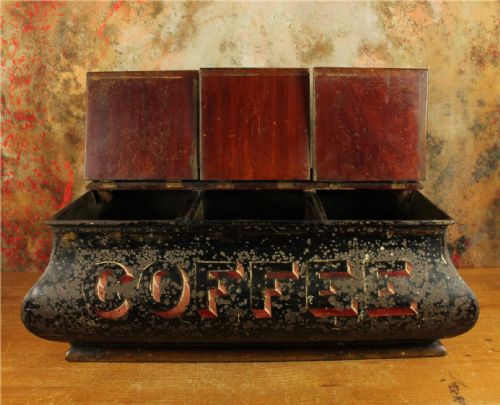
- Lacquered or enamelled sheet metalware, often associated with domestic or commercial containers like tea canisters and document boxes. This technique provided a durable finish on metal objects.
- Tea Caddy
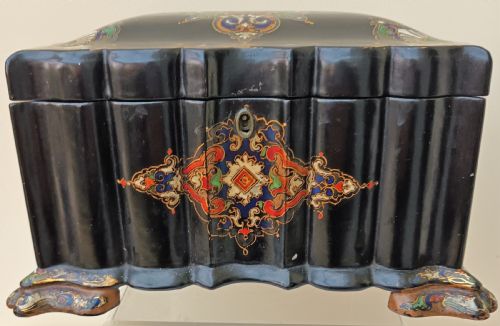
- A small box or chest designed for the storage of loose tea leaves. These vessels frequently included internal lids or multiple compartments.
- Barge Work
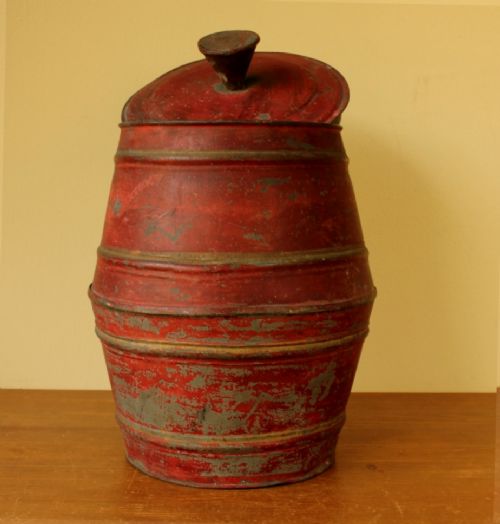
- Traditional British folk art decorating tinplate and narrowboat surfaces with vibrant floral patterns. It is commonly found on nineteenth-century log bins and domestic utility items.
- Kamcheng
- A covered porcelain jar originating from Chinese kilns, traditionally used for food storage or ceremonial purposes. They are known for hand-painted blue and white designs.
- Fire Bucket
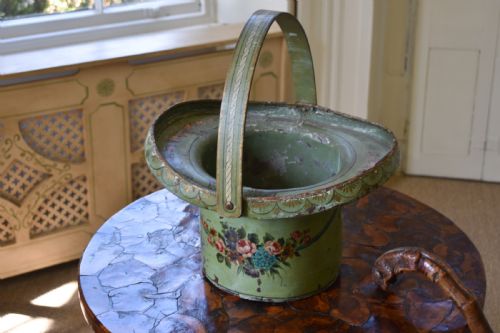
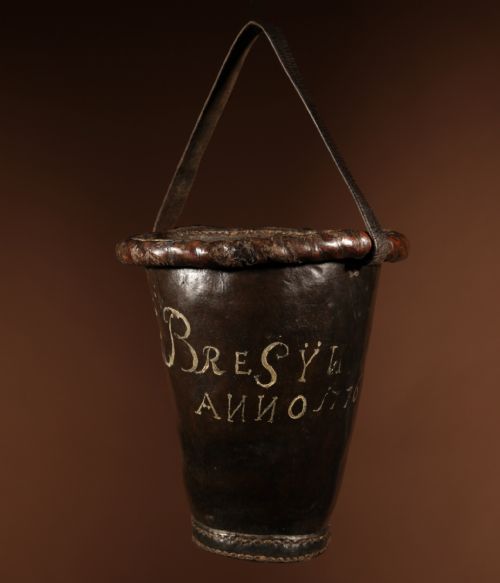
- A leather or metal vessel kept ready for emergency water deployment. Leather examples were often stitched and painted with dates or coats of arms.
Painted Storage Containers: Frequently Asked Questions
What were painted storage containers used for?
These containers served everyday domestic and commercial functions, holding tea, flour, documents, tobacco, and coal.
Larger vessels like log bins and fire buckets managed heavy household fuel and safety, while smaller boxes secured precious commodities.
How do I clean a painted container?
Dust gently with a dry, soft cloth to protect fragile nineteenth-century pigments and lacquer finishes from moisture damage.
Avoid chemical cleaning agents or abrasive cloths that can strip original folk art or enamel decoration.
Are these containers safe for food?
Most antique storage tins and chemist jars were made for dry goods or medical contents rather than modern food safety standards.
It is best to treat them as decorative display pieces or use them for non-perishable household storage.
How can I tell the period of a painted box?
Examine the underlying materials, construction methods, and hardware such as hinges, latches, and nails.
Stylistic cues in the painted motifs and the type of pine or sheet metal also point to eighteenth, nineteenth, or early twentieth-century origins.