

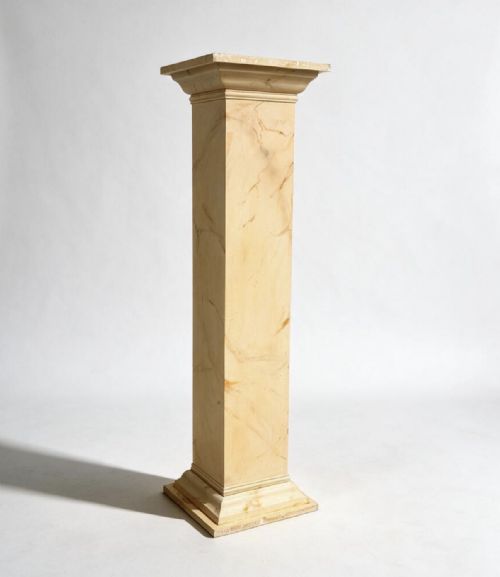







Painted Statue Stand
A painted statue stand elevates figures and bronzes with colour and presence, drawing the eye directly to the art it supports.
Painted Statue Stand
A painted statue stand is a sturdy plinth, column, or pedestal designed to display sculptural works, figures, and decorative objects at an advantageous height. When searching for a painted statue stand, buyers encounter nineteenth-century and early twentieth-century examples ranging from turned wooden columns and faux marble pedestals to figural stands holding shells.
The selections span various global traditions and aesthetic movements, including Victorian pieces, Orientalist works, and Qing Dynasty figures alongside Anglo-Indian and Viennese designs. These practical supports serve to anchor a room while lifting bronze, terracotta, wood, or plaster sculptures into the line of sight.
How they were made
Carved wood, plaster, and terracotta form the structural core of these stands and figures, shaped by hand before receiving their surface treatments. Artisans applied gesso to smooth wooden or plaster surfaces, preparing a receptive base for intricate polychrome schemes.
Painters used hand-applied pigments, gold leaf, lacquer, and cold-painting techniques to render realistic textures on bronze figures or rich decorative patterns on wood and plaster columns. Faux finishes were also employed on pedestals to imitate high-status materials like marble through careful layering of paint.
Painted Statue Stand Retail Price Guide 2026
Typical asking prices for painted statue stand among the pieces listed under this phrase on Sellingantiques today, from the lower quarter to the upper quarter. They describe what is for sale here now, not the wider market.
Several pieces double as charming assistants, including figural boys holding shells and waiters ready to serve.
What varies in quality
The sophistication of the modelling and the crispness of the hand-carved details separate finer examples from simpler workshop output. In wooden columns and faux marble pedestals, the precision of the turning and the depth of the painted grain determine the visual weight and presence of the piece.
Surface preservation is crucial, as original polychrome, parcel-gilt, and cold-painted finishes dictate the historical integrity of the object. Stands that retain their original layered pigments without heavy overpainting demonstrate superior craftsmanship and age.
Franz Bergman·Fabergé·Goldscheider
The Painted Statue Stand Glossary
- Polychrome
- Painted in several colours. This term describes surfaces decorated with multiple pigments to create vibrant, lifelike figures or patterned architectural supports.
- Gesso
- A plaster mix applied to wood. It creates a smooth, durable ground for gilding and painting.
- Cold-painted bronze
- Metal cast without subsequent firing. Pigments are applied to the bronze surface after casting rather than baked on.
- Parcel-gilt
- Partly gilded with gold leaf. Artisans apply thin sheets of gold to specific highlights while leaving other areas painted or exposed.
- Pedestal
- An architectural support for a statue. These columns or plinths lift sculptures off the floor to display them properly.
Painted Statue Stand: Frequently Asked Questions
What holds up a heavy bronze?
Sturdy wooden columns, terracotta bases, and solid pedestals provide the necessary weight capacity for heavy bronze sculptures.
Selecting a stand with a broad top and stable base ensures safety for dense metal figures.
How do I clean painted wood?
Dust gently with a dry, soft cloth to prevent abrasion to delicate surface pigments.
Avoid liquid cleaners and moisture, which can lift old gesso, lacquer, and paint.
Are faux marble columns heavy?
Many Victorian faux marble pedestals are built around turned wood or plaster cores rather than solid stone.
This construction method makes them lighter and easier to position within a room while retaining a grand appearance.
Where should I place a stand?
Corners, entryways, and empty wall spaces provide stable environments away from heavy foot traffic.
Positioning the stand out of direct sunlight protects delicate polychrome finishes and painted details from fading.