



Painted Serpentine Console Table
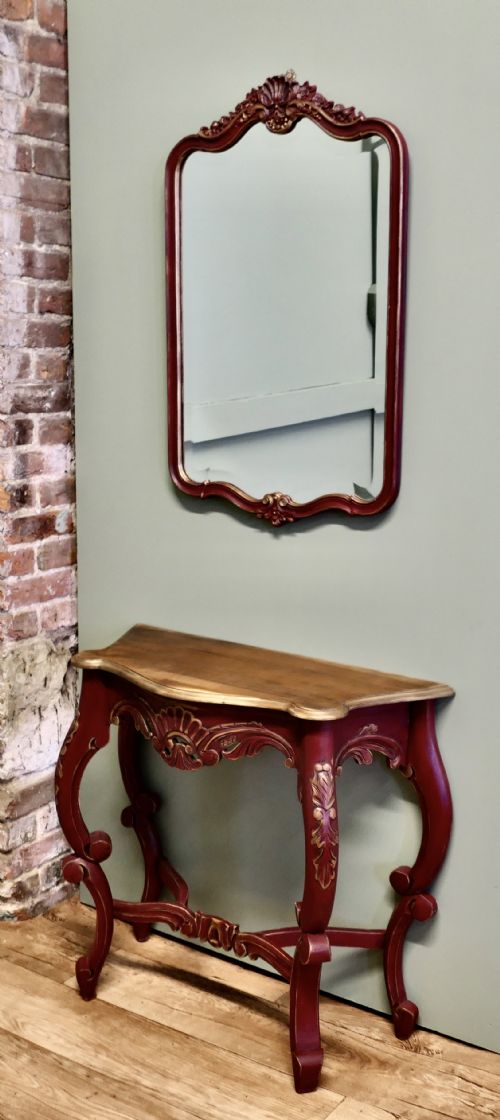
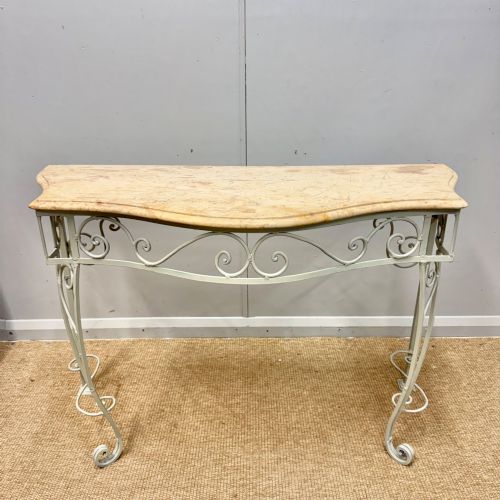
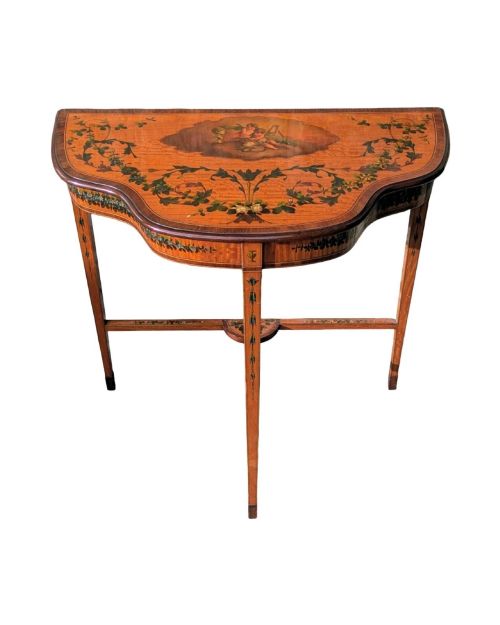
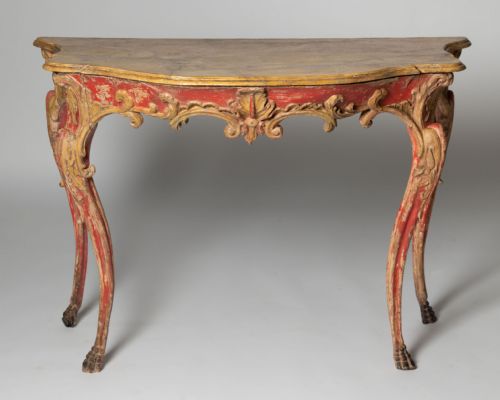
These painted serpentine console table pieces bring curved lines and decorative painted surfaces into a room.
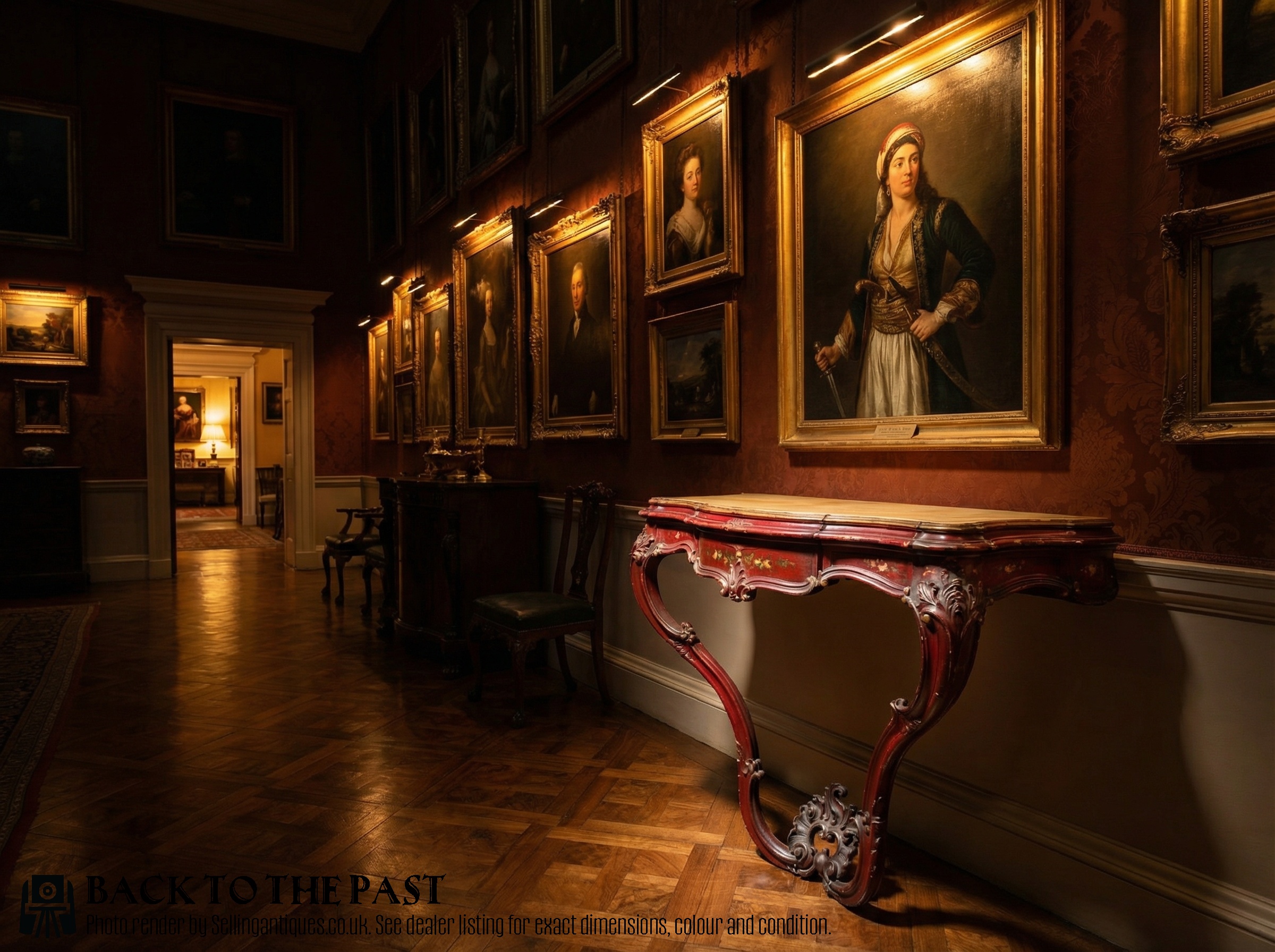
Painted Serpentine Console Table
A painted serpentine console table displays a distinct undulating front edge that curves inward and outward, paired with painted wooden surfaces. These items appear across various periods from the nineteenth century into the early twentieth century, reflecting styles such as French Rococo, Italian Rococo, Venetian Rococo, and Rococo Revival.
The inventory on this page runs from the mid nineteenth century through to the 1930s, taking forms labelled as console tables or side tables. Origins span Italy, France, Ireland, and Sheraton revival workshops, often incorporating marble tops alongside the painted timber frames.
How they were made
Maker workshops utilised wood, timber, and carved wood to shape the distinctive undulating frames, frequently applying gesso to prepare surfaces for decoration. Paint and gold leaf provide the finished exterior appearance, sometimes enhanced with parcel gilt details.
Many examples incorporate heavy stone tops, notably marble, requiring robust structural support beneath the curved wooden aprons. Artisans employed traditional joinery and carving techniques appropriate to the French and Italian regional cabinet-making traditions recorded in the archive.
Painted Serpentine Console Table Retail Price Guide 2026
Typical asking prices for painted serpentine console table among the pieces listed under this phrase on Sellingantiques today, from the lower quarter to the upper quarter. They describe what is for sale here now, not the wider market.
Irish makers occasionally tried their hand at the serpentine curve, proving that even straight-laced shores could not resist a bit of a wiggle.
What varies in quality
Quality rests in the precision of the carved serpentine curves and the execution of the painted or gilded surface decoration. Finer examples show deeper hand-carved relief in the wood and more sophisticated handling of paint and gesso layers.
The integration of materials also defines the tier of the piece, particularly where shaped marble tops meet the timber framework. The refinement of the stylistic details, whether following Italian Rococo or French provincial designs, determines the distinction between standard production and higher-grade workshop output.
The Painted Serpentine Console Table Glossary
- Serpentine
- A furniture front configuration featuring a convex centre flanked by concave curves, or vice versa. This contour creates visual movement across the width of the table.
- Console table
- A wall-mounted or freestanding table designed to stand against a vertical surface, frequently topped with marble. These pieces often feature decorative aprons and legs suited to formal reception rooms.
- Gesso
- A plaster-based mixture applied to wood surfaces to prepare them for gilding or painting. It provides a smooth base that holds crisp decorative detail.
- Parcel gilt
- A decorative technique where specific carved elements or details are highlighted with gold leaf while the rest of the surface is painted. This creates contrast against the primary painted finish.
- Rococo Revival
- A nineteenth-century design movement that reinterpreted the curving, asymmetrical forms of the eighteenth-century Rococo style. It favoured elaborate scrolling motifs and naturalistic ornamentation.
Painted Serpentine Console Table: Frequently Asked Questions
What is a serpentine console table?
A serpentine console table is a narrow table designed to stand against a wall, characterised by its undulating front edge that curves inward and outward.
These pieces typically date from the nineteenth and early twentieth centuries, appearing in styles like French and Italian Rococo with painted or gilded finishes.
Where do these tables originate?
The pieces listed originate primarily from European workshops, with particular representation from French, Italian, Venetian, and Irish makers.
Design influences range from regional Rococo traditions to later revival periods such as Sheraton and Rococo Revival.
What materials are used on them?
Construction relies on wood, timber, and carved wood, frequently prepared with gesso before the application of paint and gold leaf.
Many examples feature stone surfaces, specifically marble tops, resting on the decorated wooden frames.
How do I date a console table?
Dating relies on stylistic clues, construction methods, and the specific decorative vocabulary of periods like the nineteenth century or the 1920s and 1930s.
Comparing the paint application, carving style, and form against documented pieces helps place the item within its era.
How are side tables different from console tables?
Console tables were historically designed to be fixed to a wall or supported by brackets at the front, whereas side tables are fully freestanding pieces of furniture.
In practice, many antique tables share similar proportions and functions within domestic interiors.