

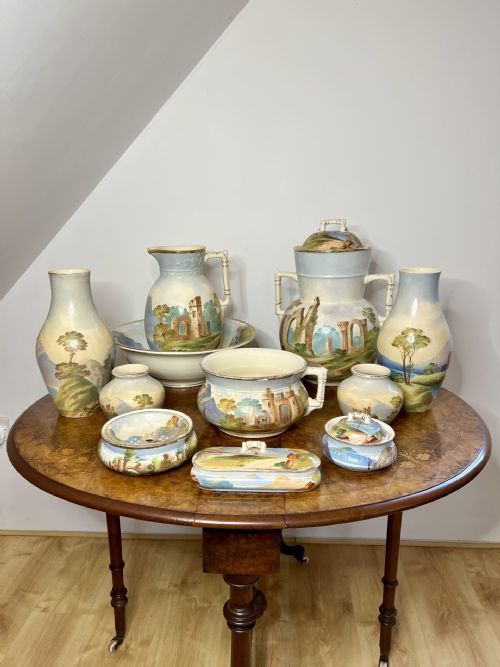


Painted Pottery Set
These painted pottery set examples bring together hand-decorated earthenware, porcelain, and faience from across centuries of skilled ceramic production.
Painted Pottery Set
A painted pottery set gathers coordinated ceramic items designed for display, dining, or daily use, featuring hand-applied decoration across plates, vases, and tea services. These collections unite utilitarian forms with artistic execution, bridging domestic utility and decorative arts.
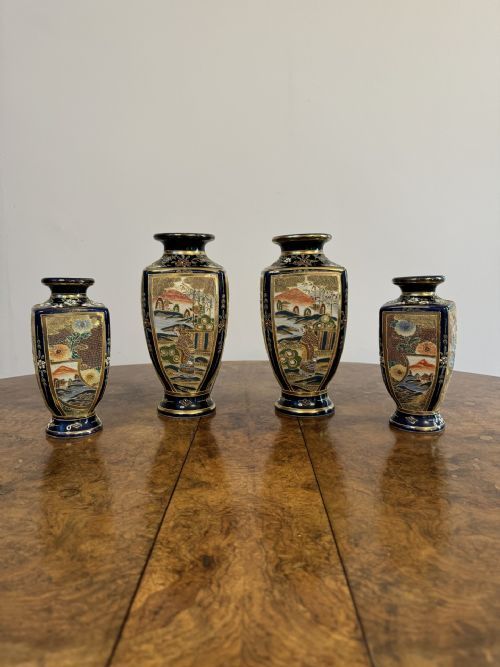
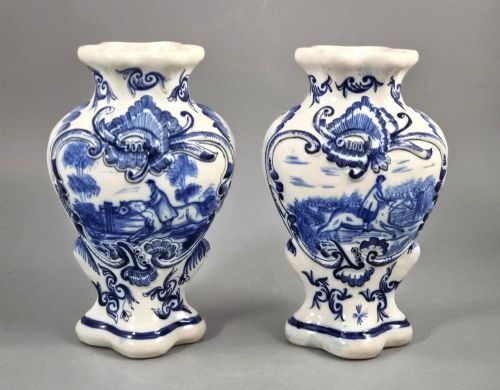
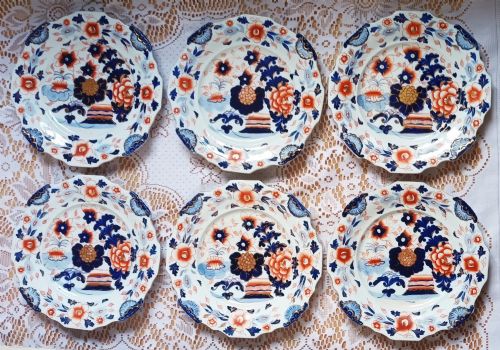
The selections span English creamware, Dutch Delftware, Japanese Satsuma, and French faience, ranging from eighteenth-century chargers to twentieth-century Art Deco designs. Buyers encounter everything from complete dessert services and wash sets to matched garnitures of vases.
Nineteenth-century and early twentieth-century examples dominate the offerings, alongside eighteenth-century Delft plates and tiles. Forms vary widely from practical teapots and inkstands to miniature furniture pieces and cabinet plates.
How they were made
Makers shaped these wares from earthenware, ironstone, porcelain, and creamware, applying tin glazes, enamel, and gold leaf for surface enrichment. Kiln firing fixed the body before artisans added intricate hand-painted motifs.
Techniques relied on precise brushwork over glazes, seen in blue and white Delft designs, vibrant Japanese Satsuma palettes, and bold Clarice Cliff Bizarre patterns. Faience and stoneware bodies required steady temperature control during firing to accept the painted pigments successfully.
Painted Pottery Set Retail Price Guide 2026
Typical asking prices for painted pottery set among the pieces listed under this phrase on Sellingantiques today, from the lower quarter to the upper quarter. They describe what is for sale here now, not the wider market.
Miniature nineteenth-century Dutch Delft furniture pieces let collectors furnish an entire dollhouse with hand-painted ceramic chairs and tables.
What varies in quality
Quality rests upon the crispness of the hand-painted brushwork and the complexity of the palette, where fine gilding and detailed pictorial scenes elevate a piece above standard production. The weight of the ceramic body and the uniformity of the glaze also distinguish master workshops from regional potteries.
Completeness dictates value in sets, as matched groups of plates, garnitures, or tea services retain greater integrity when all original components survive together. Maker attribution, through factory marks or distinctive regional styles, further separates exceptional pieces from ordinary wares.
Fourmaintraux-Courquin·Clarice Cliff·Kinkozan·Doulton Lambeth·Taniguchi·Davenport
The Painted Pottery Set Glossary
- Faience
- Tin-glazed earthenware, often featuring hand-painted blue and white decoration or polychrome scenes inspired by majolica traditions.
- Creamware
- A refined earthenware developed in England during the eighteenth century, known for its warm pale yellow tone and smooth lead glaze.
- Garniture
- A matched set of three or more vases or decorative objects designed to be displayed together on a mantelpiece or cabinet.
- Imari
- A style of Japanese porcelain decorated in underglaze blue and overglaze red, gold, and other colours, originating from Arita.
- Ironstone
- A heavy, durable type of ceramic patented in the nineteenth century to imitate Chinese porcelain while offering greater strength for tableware.
- Charger
- A large decorative plate intended for display on a wall or dresser rather than for practical dining use.
Painted Pottery Set: Frequently Asked Questions
How do I care for antique painted ceramics?
Wash painted pottery sets gently by hand in lukewarm water using mild detergent, avoiding soak times that might compromise historic glazes. Keep delicate pieces away from direct sunlight to preserve the vibrant pigments of enamel and gold leaf decoration.
Display tables and cabinets away from high-traffic areas to prevent accidental knocks against fragile rims and handles. For stacked items like plates or tea sets, use felt separators between pieces to protect painted surfaces from friction.
How are different periods of pottery identified?
Examine the ceramic body, glaze characteristics, and painting style to determine the era, comparing pieces against known regional manufacturing standards. Eighteenth-century wares often feature tin glazes and hand-drawn blue pigments, while nineteenth-century items introduce ironstone and transfer-printed or hand-enhanced polychrome designs.
Maker marks stamped or painted on the underside provide definitive dates and workshop attributions. Stylistic shifts, such as the geometric patterns of Art Deco or the intricate gilding of Victorian services, further anchor pieces within specific decades.
Were these sets used daily or displayed?
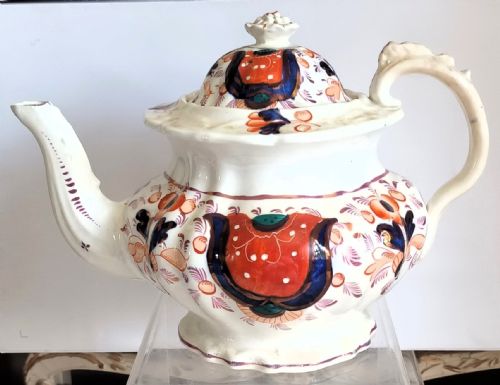
Many painted pottery sets served practical domestic functions, including tea services, wash sets, and dessert plates used during formal meals. Utilitarian items like inkstands and teapots show that makers prioritized everyday utility alongside aesthetic appeal.
Larger garnitures of vases and decorative chargers were strictly ornamental, designed to enhance the interior decor of period homes. Even dining sets frequently transitioned to display pieces as they aged and families preserved them as heirlooms.
What defines a complete painted pottery set?
A complete set contains all its original matching components, such as every cup in a tea service or all plates in a dessert service. Matched garnitures require the full complement of vases specified by the workshop to maintain visual balance.
The presence of original storage boxes or fitted presentation packaging confirms completeness for certain nineteenth-century Japanese porcelain sets. Maintaining every piece together preserves the historical integrity and decorative harmony intended by the maker.