



Painted Porcelain Piece
When you handle a painted porcelain piece, you hold centuries of refined craft in porcelain, enamel, and gold leaf.
Painted Porcelain Piece
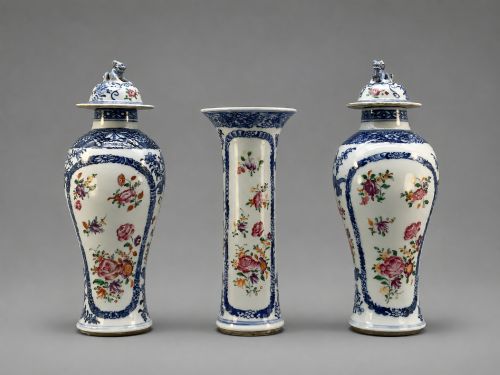
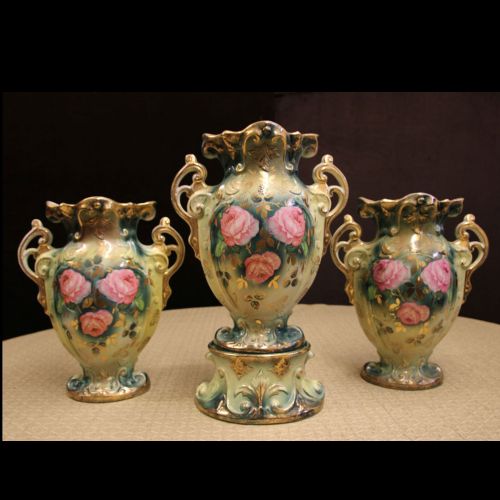
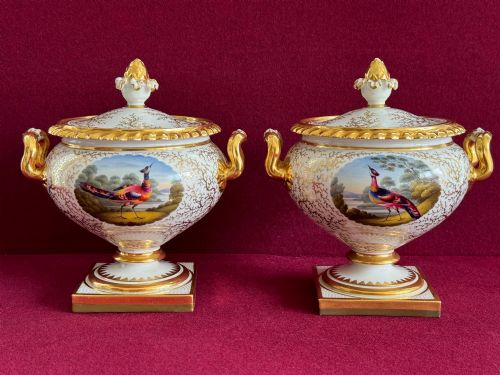
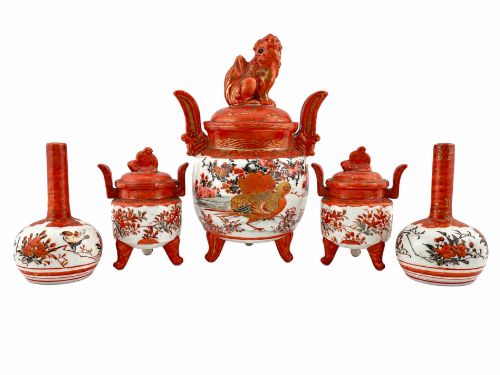
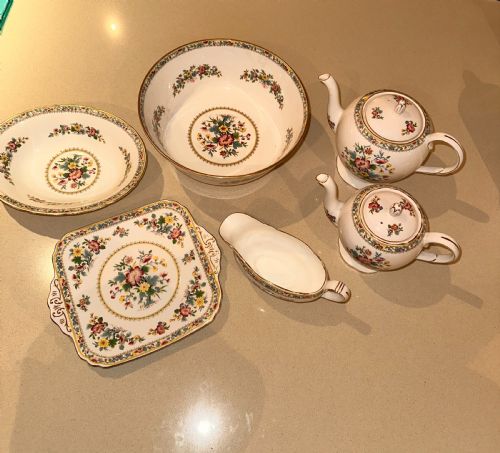
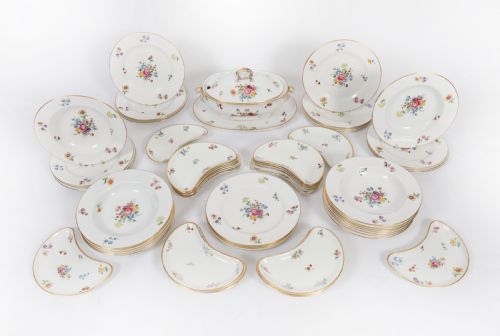
A painted porcelain piece encompasses domestic dinner services, tea services, dessert sets, and ornamental garnitures designed for European and Japanese interiors across the nineteenth and twentieth centuries. These works range from large floor vases and clock sets to delicate miniatures and cream tureens.
Buyers looking for a painted porcelain piece will encounter diverse styles spanning Regency, Rococo Revival, Victorian, and Japanese Meiji periods. The selection covers everything from English porcelain factories to French mantle arrangements and German figurines.
How they were made
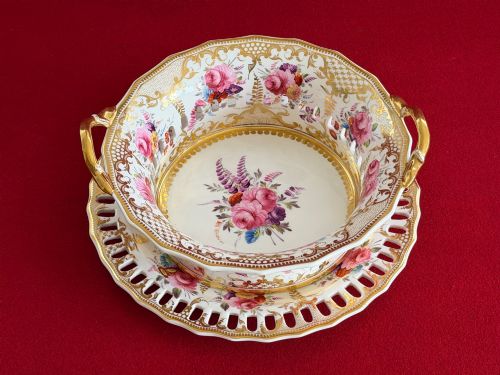
Makers formed these items using porcelain clay fired to high temperatures, often applying intricate hand-painted enamel designs depicting flowers, figures, and birds. Artisans frequently enhanced the bodies with gold leaf, gilt, and gilt bronze mounts.
Structural elements incorporated brass fixtures alongside ceramic elements, while specific garnitures and clocks combined glazed porcelain with ormolu or cast metal frames. Dutch delft miniature furniture pieces utilised traditional blue and white earthen techniques.
Painted Porcelain Piece Retail Price Guide 2026
Typical asking prices for painted porcelain piece among the pieces listed under this phrase on Sellingantiques today, from the lower quarter to the upper quarter. They describe what is for sale here now, not the wider market.
Tiny porcelain cherubs cling persistently to decorative shells, determined to hold up heavy nineteenth-century mantel displays without complaining.
What varies in quality
Quality rests in the precision of the hand-painting, particularly where artists rendered delicate floral motifs, figural processions, and avian subjects. The crispness of the enamel work and the application of gold leaf distinguish finer examples.
The sophistication of the mounting - such as ormolu on French garnitures or gilt bronze on clock sets - shapes the overall calibre. Intricacy in moulded porcelain forms like cherubs, shell motifs, and tripod structures also elevates the piece.
Flight Barr And Barr·Grainger Lee And Co·Spode·Müller Volkstedt·Kpm Berlin·Samson Of Paris·Royal Vienna·Royal Worcester·Sevres
The Painted Porcelain Piece Glossary
- Garniture
- A set of three or more ornamental vases or vessels designed to match and display together on a mantelpiece or sideboard.
- Ormolu
- Finely ground high-carat gold cast and chased onto a bronze base, frequently utilised for mounts on nineteenth-century French porcelain.
- Koro
- A traditional Japanese incense burner, often appearing in Meiji period porcelain sets supported on tripod feet.
- Tureen
- A deep covered dish used for serving soups, creams, or sauces, often found in ceramic dinner services.
- Pot pourri
- A perforated vessel designed to hold dried fragrant plant material, allowing scent to diffuse through a room.
Painted Porcelain Piece: Frequently Asked Questions
How do I date a painted porcelain piece?
Dating relies on identifying factory marks stamped or painted on the underside, combined with stylistic cues from periods like the Regency or Meiji eras. Examining the style of hand-painting and any metallic mounts offers further chronological context.
Changes in porcelain body composition and glaze textures across the nineteenth and twentieth centuries help narrow the manufacturing window.
Are garniture sets always three pieces?
Garniture sets commonly consist of three matching vessels, such as a central vase flanked by two smaller ones, though Japanese sets can comprise five pieces.
These arrangements were historically composed to balance mantelpieces or cabinetry displays according to nineteenth-century interior design conventions.
What is the difference between porcelain and earthenware?
Porcelain is fired at higher temperatures until vitrified, producing a dense, non-porous white ceramic that often rings when struck. Earthenware is fired at lower heats and remains more porous.
Items like Dutch delft pieces utilise earthenware bodies, whereas fine service plates and decorative vases are typically porcelain.
How should I clean hand-painted porcelain?
Cleaning requires gentle dusting with a soft brush, avoiding chemical agents that might lift delicate enamel colours or gold leaf. Immersion in water should be avoided for pieces with metal mounts or clock mechanisms.
For safe maintenance, professional conservation advice is recommended for antique items featuring extensive gilt bronze or ormolu.