


Painted Porcelain Perfume Bottle
A painted porcelain perfume bottle brings small-scale colour and delicate hand-painting to the dressing table or cabinet.
Painted Porcelain Perfume Bottle
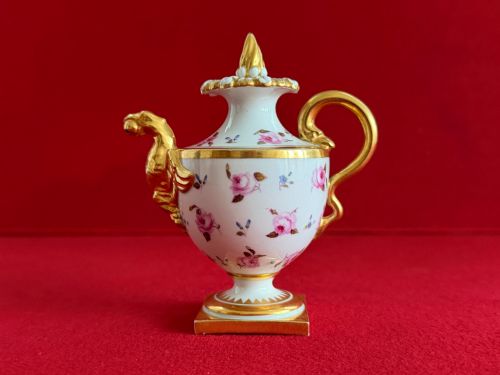
A painted porcelain perfume bottle is a small vessel designed to hold scents, oils, or rose water, shaped by various 19th-century ceramic traditions. On this page, buyers will frequently encounter English Worcester porcelain rose water sprinklers from the Regency period, French porcelain scent bottles, and Chinese porcelain snuff bottles decorated in the Famille Rose palette.
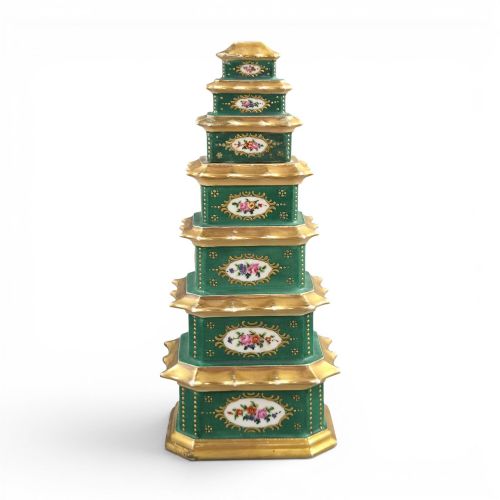
The forms range from figural pagoda designs and ewers to traditional snuff bottles and sprinkler vessels. These objects reflect the diverse global influences and revivalist styles of the 1800s, including Chinoiserie and Rococo Revival aesthetics.
How they were made
The makers utilised porcelain, including hard-paste porcelain, as the primary body for these vessels, shaping them into elaborate figural or botanical forms. Artisans then applied detailed painted decoration, enamel work, and gilding with gold leaf to accent the surfaces.
Many examples incorporate applied details, such as flower encrustations or original stoppers, requiring careful kiln firing to fuse the enamel colours and metallic highlights to the ceramic base.
Several bottles double as reclining sages and pagodas, proving that a nineteenth-century apothecary kept room for a little theatre.
What varies in quality
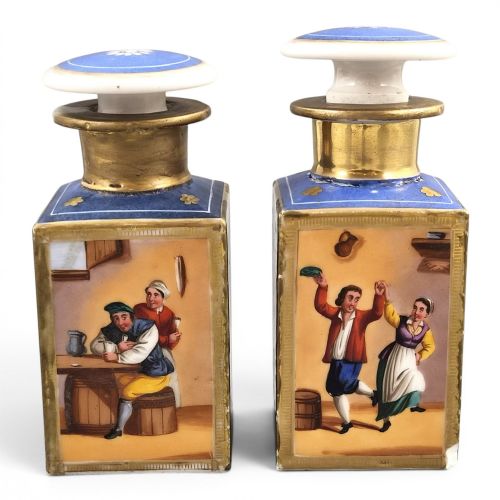
Quality in a painted porcelain perfume bottle is determined by the crispness of the moulding and the skill of the hand-painting. Finely rendered figural scenes, such as Teniers-style subjects or detailed Famille Rose motifs, distinguish superior pieces from simpler commercial output.
The preservation of original elements, including stoppers, gilt highlights, and enamel depth, marks the distinction between standard items and those representing notable workshops.
Flight Barr And Barr·Jacob Petit·Minton
The Painted Porcelain Perfume Bottle Glossary
- Hard-paste porcelain
- A durable ceramic composition fired at high temperatures, made from kaolin and petuntse. It provides a dense, vitreous body ideal for intricate painted and gilded vessels.
- Famille Rose
- A palette of opaque enamel colours dominated by pink, introduced in Chinese ceramics during the Qing dynasty. It allows for subtle tonal shading in figurative and floral designs.
- Rose water sprinkler
- A vessel with a slender neck and perforated or narrow opening designed for dispensing fragrant waters. English makers such as Worcester produced these in porcelain during the Regency period.
- Gilt
- A thin layer of gold or gold leaf applied to the surface of the porcelain for decoration. It is often used to accent rims, handles, and figural details.
- Chinoiserie
- A European artistic style reflecting Chinese motifs and techniques. It appears frequently in 19th-century ceramic design and ornamentation.
Painted Porcelain Perfume Bottle: Frequently Asked Questions
How do I identify a Regency period bottle?
Regency period pieces often display specific English factory characteristics, such as the refined porcelain bodies and classical forms produced by Worcester manufacturers around eighteen fifteen.
Examination of the paste, the style of the hand-painting, and any associated gilding helps confirm this earlier nineteenth-century origin.
What is the difference between a scent bottle and a snuff bottle?
Scent bottles are generally designed to hold liquid perfumes or rose water and frequently include stoppers or sprinkler spouts. Snuff bottles are compact vessels made to hold powdered tobacco, typically featuring tight-fitting lids.
Chinese snuff bottles in the Famille Rose style represent a distinct eastern form compared to European porcelain scent containers.
Are original stoppers important?
Original stoppers add significantly to the completeness and character of a perfume bottle. Because stoppers are easily separated or broken over time, finding a piece retaining its matching original component is notable.
Replacements are common, so verifying the fit and material consistency helps determine originality.
How should I care for painted porcelain?
Painted porcelain requires gentle handling to preserve delicate enamel colours and gold leaf accents. Dusting with a soft, dry cloth is usually sufficient for routine maintenance.
Keep these vessels away from direct sunlight and moisture to protect the historic painted surfaces.