

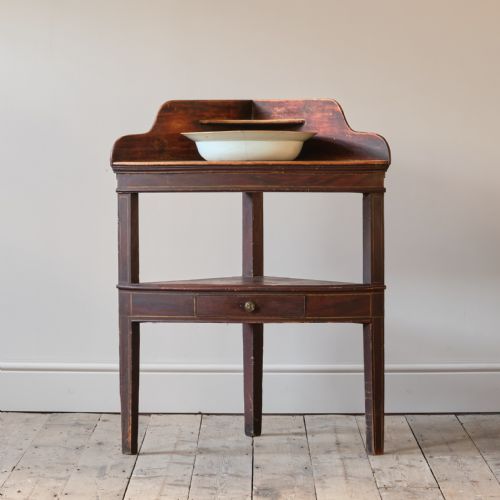
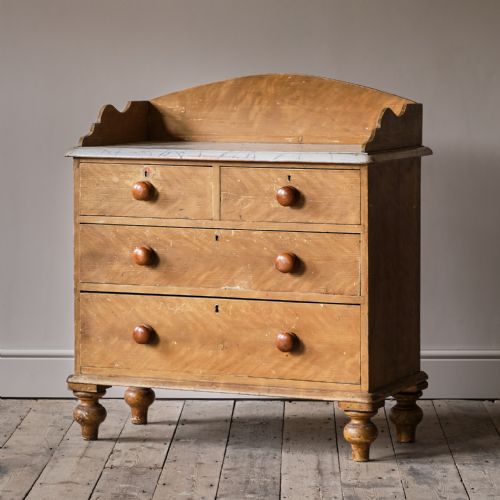
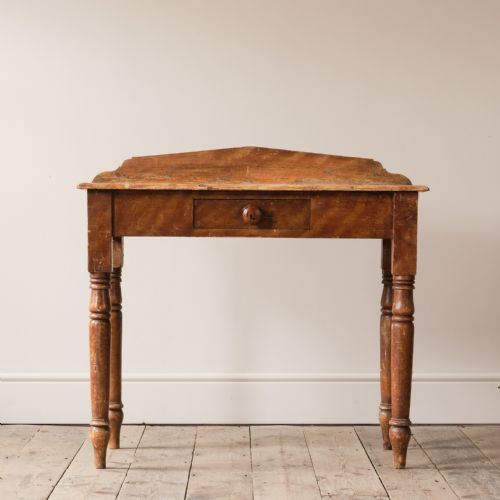


Painted Pine Country Washstand
A painted pine country washstand brings honest nineteenth-century utility and decorative surface character directly into a modern bedroom.
Painted Pine Country Washstand
When you search for a painted pine country washstand, you encounter utilitarian furniture made during the nineteenth century, including the Regency and Victorian eras. These items served a practical purpose in domestic bedrooms before modern plumbing transformed daily routines.
The pieces on this page appear in forms such as washstands, side tables, chests of drawers, console tables, dressing tables, and dressers. They originate from English country workshops and feature robust construction suited to hardworking households.
You are most likely to meet straightforward washstands and side tables finished in original paint or scumble glaze. Their proportions remain modest and domestic, reflecting the spaces they originally inhabited.
How they were made
Carpenters built these items using pine as the primary wood, selected for availability and workability in regional workshops. Secondary metals like iron and zinc occasionally appear in structural or functional fittings.
Surfaces received decorative treatments including layers of paint and scumble glaze, a technique used to imitate finer timbers or create mottled patterns. These finishes were applied by hand using oil or water-bound mediums directly over the bare wood.
Painted Pine Country Washstand Retail Price Guide 2026
Typical asking prices for painted pine country washstand among the pieces listed under this phrase on Sellingantiques today, from the lower quarter to the upper quarter. They describe what is for sale here now, not the wider market.
Listings demonstrate forms spanning washstands, side tables, chests of drawers, console tables, dressing tables, and dressers.
What varies in quality
Quality rests in the survival of original surface decoration, where untouched paint or scumble glaze distinguishes a piece that retains its historic character from one stripped or heavily repainted later. The integrity of the pine timber itself, showing honest wear without inappropriate timber replacement, dictates the overall standard.
Construction details also separate regional vernacular pieces, as well-joined drawers and stable frames demonstrate competent rural craftsmanship. The sophistication of the decorative paintwork, from simple flat coats to complex scumble effects, determines the visual weight of the item.
The Painted Pine Country Washstand Glossary
- Pine
- A softwood commonly used for everyday domestic furniture throughout the nineteenth century. It accepts paint and glazes readily.
- Scumble glaze
- A translucent decorative finish manipulated with combs or rags while wet to create faux wood grain or mottled textures. This technique was popular in Victorian country pieces.
- Regency
- A stylistic period spanning the early nineteenth century, known in country furniture for restrained classical proportions.
- Victorian
- The era covering the mid to late nineteenth century, represented here by robust pine washstands and dressers.
- Washstand
- A dedicated piece of furniture designed to hold a basin and jug for washing before indoor plumbing.
Painted Pine Country Washstand: Frequently Asked Questions
How were washstands used originally?
They supported basins, ewers, and soap dishes for daily personal hygiene before running water was common.
Some examples include drawers or lower shelves to store towels and washing accessories out of sight.
How do I live with a washstand today?
These pieces adapt easily as hallway console tables, bedroom side tables, or bathroom surfaces for toiletries.
Keep them away from direct heat sources and excessive moisture to protect the historic pine and painted finishes.
How do I tell Regency from Victorian pieces?
Regency items generally display lighter, more restrained proportions influenced by classical design traditions.
Victorian examples tend toward sturdier construction and heavier decorative painted surfaces like scumble glazes.