
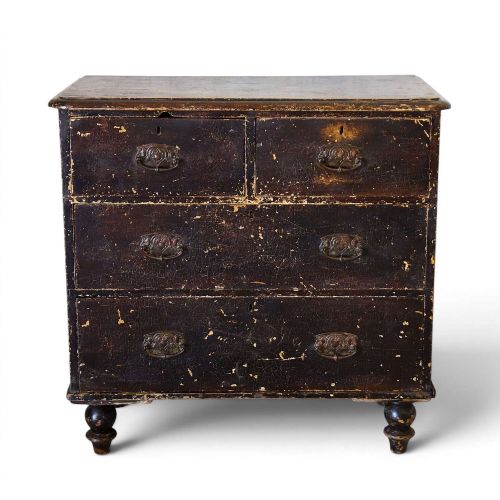
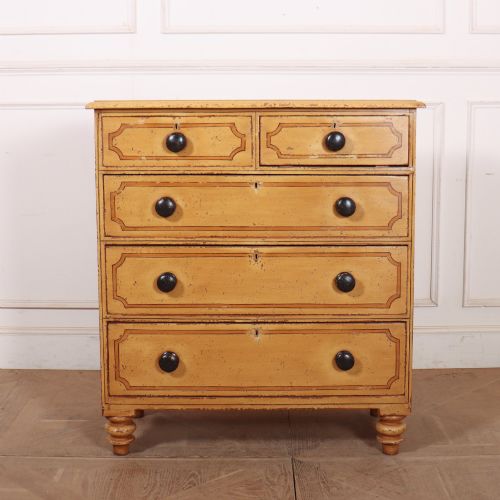
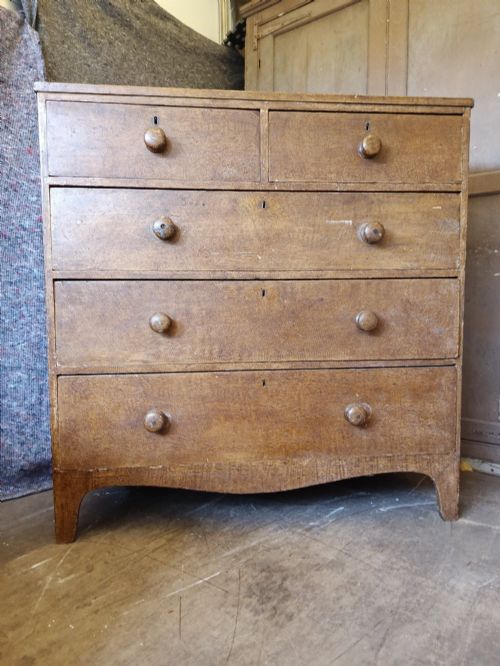
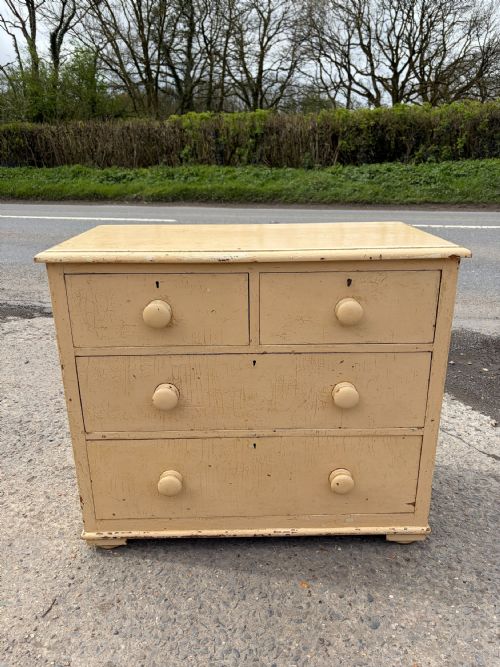

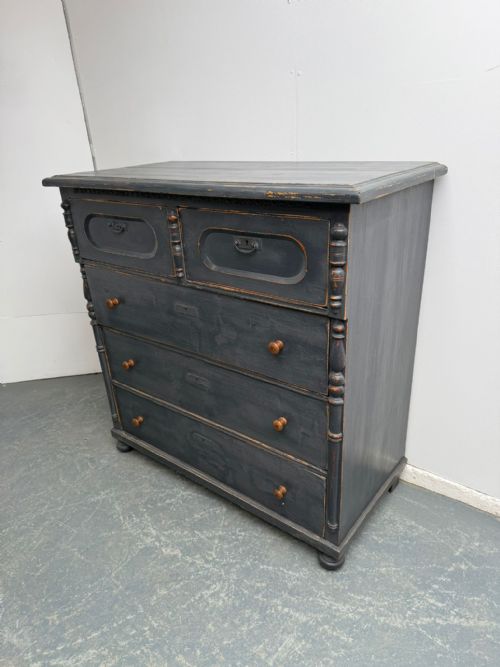
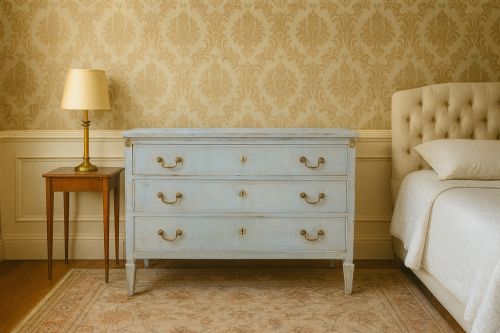


Painted Pine Bureau Chest
A painted pine bureau chest offers practical storage combined with a dedicated writing surface, bringing rustic charm and utility to any room.
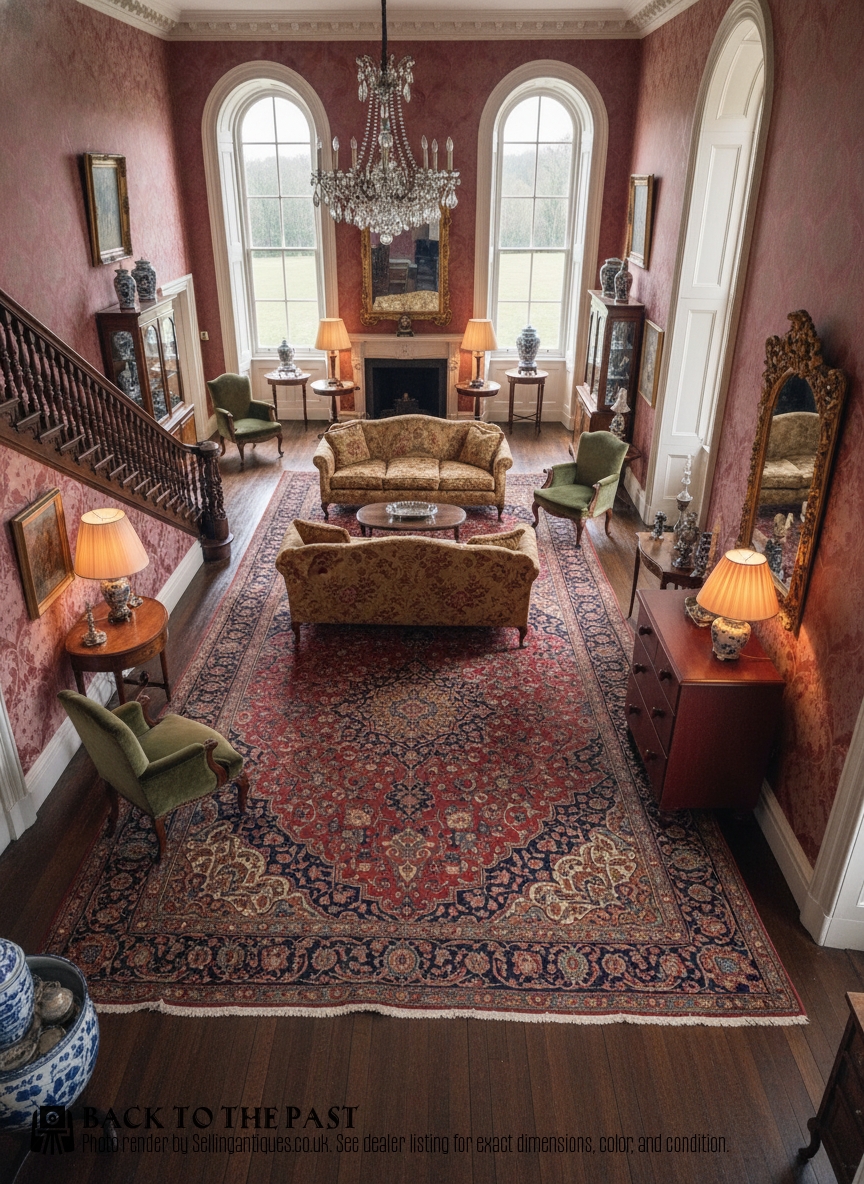
Painted Pine Bureau Chest
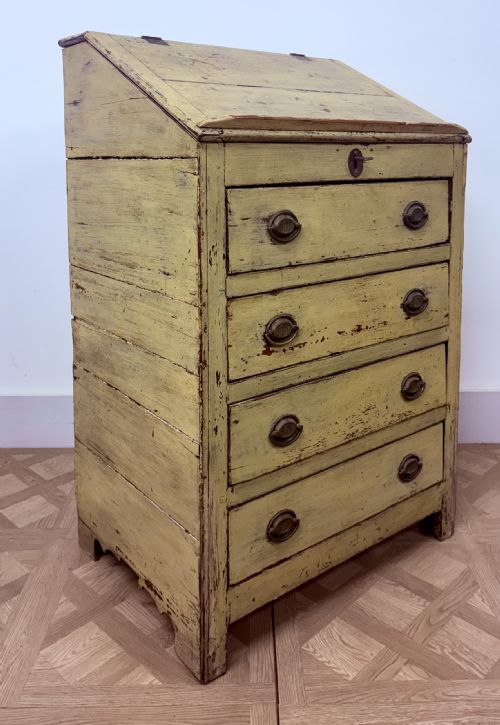
A painted pine bureau chest merges the traditional drawer storage of a standard chest with the drop-front writing slope of a bureau. These pieces range from Georgian and Regency examples to later Victorian and Scandinavian country designs.
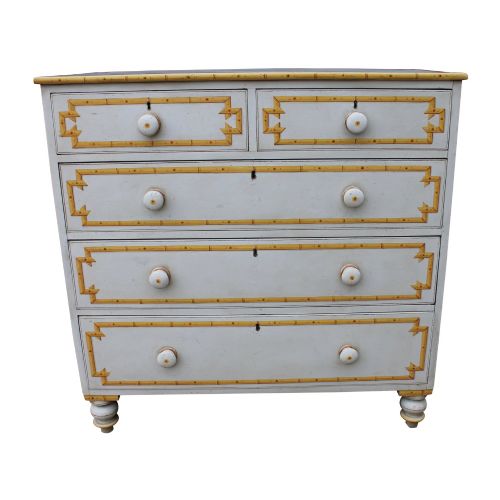
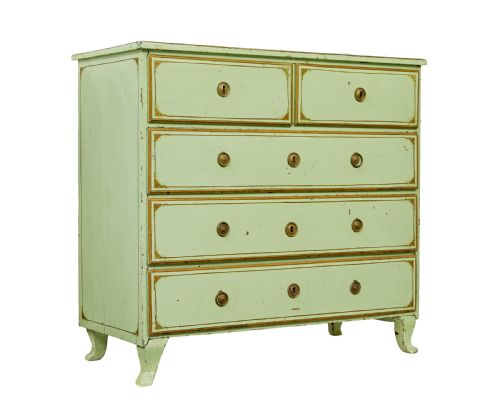
Buyers encounter numerous variations, including Swedish Gustavian and Baroque revival pieces, alongside English country furniture featuring original scumble paint, faux bamboo, or muted grey finishes.
Materials and construction
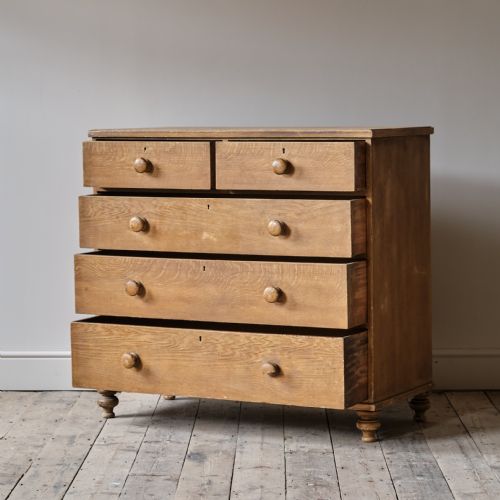
Makers utilised solid pine timber as the primary structural material, shaping panels for drawer fronts, carcasses, and writing surfaces. Iron and brass handles, pulls, and key escutcheons completed the hardware.
Surfaces received layers of paint, ranging from original light grey and black finishes to decorative scumble and Chinoiserie details. Artisans built these pieces to withstand daily use in provincial and domestic settings.
Listings feature pine, iron, brass, and painted wood across Victorian, Georgian, Regency, and 1750 periods.
Evaluating quality and finish
Quality rests significantly on the survival and authenticity of the surface finish. Pieces retaining original paintwork with honest patination command greater interest than later, heavily restored or overpainted surfaces.
Joinery standards and timber selection also differentiate examples. Heavier carcases with well-fitted drawers, intact writing interiors, and original brass or iron fittings represent superior craftsmanship.
The Painted Pine Bureau Chest Glossary
- Scumble paint
- A decorative surface treatment involving translucent darker glaze dragged or patterned over a lighter base coat. This technique created imitation wood grains or mottled textures on Victorian pine furniture.
- Gustavian
- The Swedish neoclassical style spanning the late eighteenth and early nineteenth centuries. It is characterised by restrained carved details, light paint finishes, and classical proportions.
- Escritoire
- A standing writing desk or cabinet featuring a sloping front or fall-front panel. These pieces provide enclosed compartments for correspondence and stationery.
- Faux bamboo
- A decorative carving style mimicking the segmented joints of natural bamboo canes. Craftsmen applied this finish to pine furniture during the nineteenth century to achieve an exotic aesthetic.
Painted Pine Bureau Chest: Frequently Asked Questions
What is a bureau chest?
A bureau chest combines a chest of drawers with an integrated writing desk, typically featuring a fold-down flap or slope. This design provides both concealed compartment storage for writing materials and traditional drawer capacity below.
Such dual-purpose items proved essential in historical homes where space was limited, serving as both bedroom storage and a functional workspace.
How do I identify original paint?
Original paint shows natural wear, craquelure, and an integration with the underlying pine timber that modern repainting cannot replicate. Examining edges, drawer interiors, and hidden surfaces reveals layers of accumulated age and consistent oxidation.
Pieces with untouched early paint finishes display subtle variations in tone and texture resulting from decades of cleaning and environmental exposure.
Where were these pieces made?
These items originated across various European regions, with strong representation from English provincial workshops and Swedish country makers. English examples often showcase regional country styles, while Swedish pieces frequently reflect Gustavian or Baroque revival tastes.
Local timber availability dictated the widespread use of soft pine in these rural and domestic furniture traditions.
How do I care for painted pine?
Protect painted pine surfaces by keeping them away from direct sunlight and fluctuating humidity, which causes timber to expand and contract. Dust gently with a dry, soft cloth and avoid chemical polishes that can degrade historical paint.
Maintaining stable indoor conditions preserves both the structural integrity of the pine carcass and the delicate patination of the original paint.