
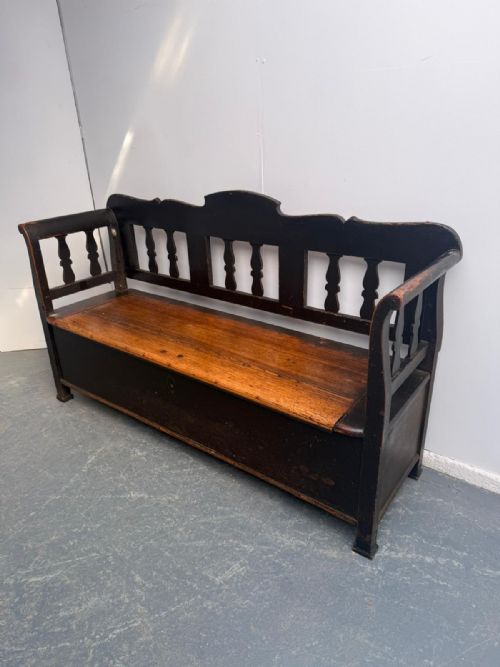


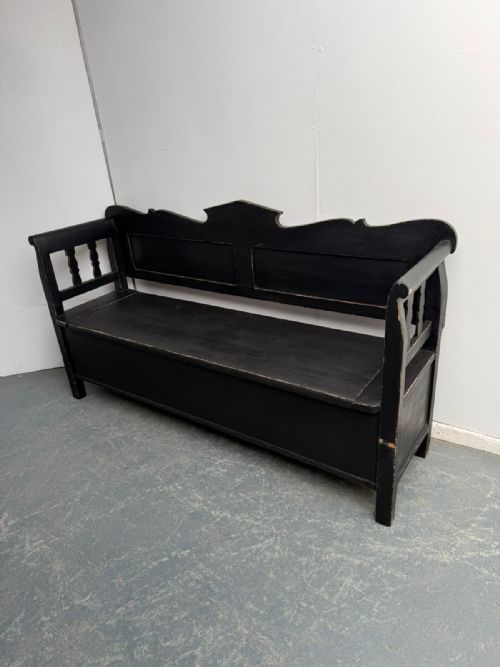
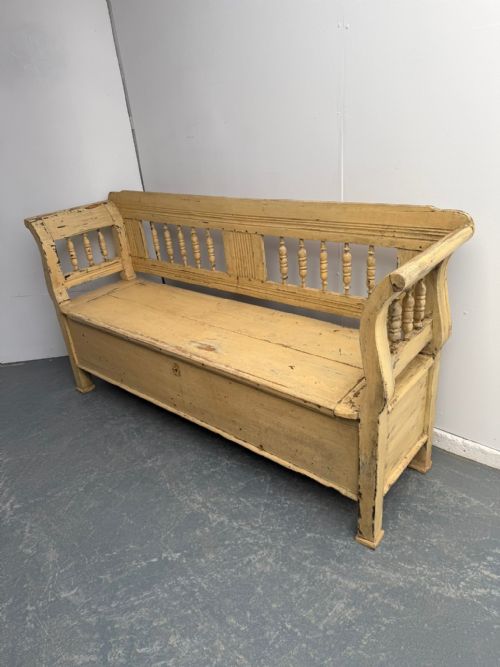
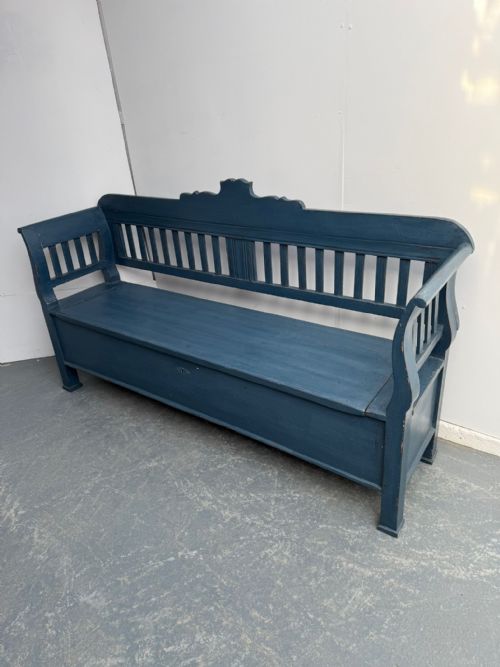


Painted Monks Bench
A painted monks bench brings sturdy country practicality and colour into a hallway, constructed from solid pine and finished in original historic coats.
Painted Monks Bench
When you search for a painted monks bench, you encounter robust seating forms built primarily for farmhouse utility during the Georgian and Victorian eras. These items serve as multi-functional furniture, combining a seat with integrated storage compartments or convertible chair-table designs.
The versions most commonly met on this page originate from English and Hungarian country workshops, showcasing vernacular traditions. They appear in forms such as box settles, three-seater benches, storage benches, and lambing chairs.
Makers constructed these pieces to endure heavy daily use in domestic settings, resulting in substantial proportions and practical configurations. Their survival depends on the durability of their pine construction and the retention of their early paint finishes.
Materials and construction methods
Carpenters relied on solid pine for the primary framework of these pieces, ensuring structural stability for everyday seating and storage. Joinery methods reflected vernacular traditions, employing sturdy boards and robust fixings designed to withstand heavy use.
Makers applied layers of paint to the pine surfaces, which protected the wood and introduced distinct colour finishes including black, grey, cream, and blue. Additional hardware components incorporated iron and metal details to reinforce hinges, joints, and lifting lids.
Some benches double as tables, allowing tired farmers to convert their seat into a dining surface with a simple tilt of the back.
Distinctions in quality and finish
Quality rests significantly upon the integrity and age of the surface coating, distinguishing pieces retaining original paint from later decorative layers. The balance of proportions and the retention of vernacular joinery details separate standard items from superior examples.
The Painted Monks Bench Glossary
- Settle
- A wooden bench with a high back, solid arms, and often a closed base or box compartment beneath the seat. This form provided protection from draughts in traditional farmhouses.
- Box settle
- A variation of the bench featuring a hinged seat lifting to reveal a storage cavity underneath. These items doubled as linen chests or dry storage spaces.
- Vernacular
- Architecture or furniture built by local craftsmen using traditional regional methods and materials rather than academic architectural styles. These pieces reflect local practical needs.
- Lambing chair
- A hooded or high-backed chair, sometimes incorporating a table surface or storage, traditionally used by shepherds during lambing season. They offered shelter from cold indoor drafts.
- Pine
- A softwood commonly utilised in country furniture due to its availability and ease of working. Carpenters frequently painted these softwoods to enhance their appearance.
Painted Monks Bench: Frequently Asked Questions
What is a painted monks bench used for?
These pieces functioned as practical seating and storage units in traditional farmhouses and cottages, offering a place to sit near the hearth while keeping household items stored inside the base.
Today, they serve well in hallways and kitchens as functional statement furniture that provides concealed storage for boots, shoes, and everyday items.
How do I date a painted monks bench?
Dating relies on examining the construction methods, nail types, joinery style, and the wear patterns visible on both the wood and the paint layers.
Pieces originating from the Georgian period often display simpler, heavier vernacular lines, whereas Victorian examples frequently feature box settle configurations and specific regional folk art influences.
Are the paint finishes original?
Many listings feature pieces with early or original painted surfaces, which display natural wear, patination, and the characteristic texture of historic brushwork.
Evaluating the layers of paint helps determine whether the finish dates to the period of manufacture or represents a subsequent decorative application.
Where were these benches made?
The pieces originate from various European and domestic country workshops, with notable examples stemming from English rural traditions and Hungarian folk art communities.
Local craftsmen utilised readily available regional timbers such as pine to construct robust furniture suited to domestic and agricultural life.