




Painted Metal Dishes
These painted metal dishes bring colour and character to a desk or surface through cold painted bronze, gilt bronze, and toleware.
Painted Metal Dishes
When you search for painted metal dishes, you encounter a varied selection of desk accessories, desk tidies, and comports from the nineteenth and twentieth centuries. These objects combine metalwork with applied colour, often taking the form of small dishes mounted with animals or figures.
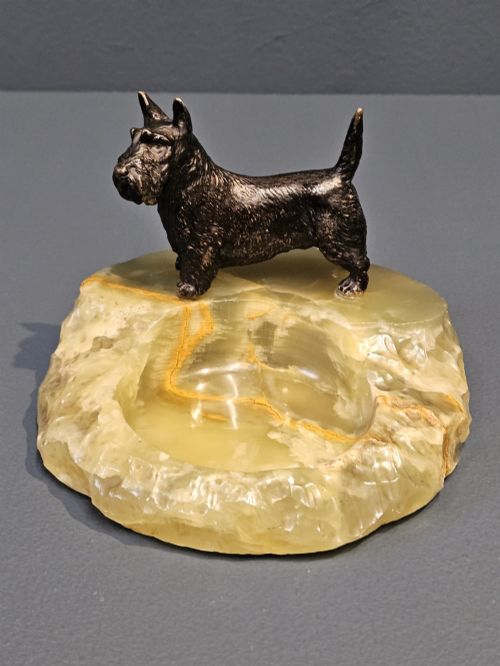
The most common forms on this page include Austrian cold painted bronze desk tidies featuring dogs, ducks, and monkeys alongside nineteenth-century toleware bowls and papier mache comports. Each piece serves a decorative or organizational purpose, whether holding pens or resting upon a mantelpiece.
Origins span from Victorian Britain and Regency France to early twentieth-century Austria and Qing Dynasty China. This geographical spread introduces diverse manufacturing traditions, uniting enamel work, gilt bronze, and painted iron under a single decorative category.
How they were made
Makers utilised bronze, brass, iron, and papier mache as substrates for detailed surface decoration and painting. Cold painted bronze pieces involved casting molten metal before applying unfired paint directly to the surface, a technique that preserved fine sculptural detail without requiring high-temperature kiln firing.
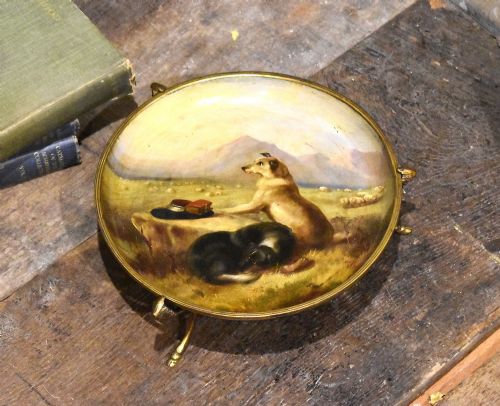
Toleware items relied on sheet metal coated with lacquer or paint, often building up multiple layers to create a durable finish on bowls and trays. Ormolu and gilt bronze elements underwent mercury gilding or electroplating to provide metallic lustre alongside the painted components.
Comports and centrepieces frequently integrated cut crystal bowls or onyx plinths to complement the metal structures. These mixed-media assemblies required precision fitting between stone, glass, and painted metal components.
Painted Metal Dishes Retail Price Guide 2026
Typical asking prices for painted metal dishes among the pieces listed under this phrase on Sellingantiques today, from the lower quarter to the upper quarter. They describe what is for sale here now, not the wider market.
Desk tidies frequently feature dogs and ducks acting with human composure, including mallards on plinths and sporting greyhounds.
What varies in quality
Quality in painted metal dishes rests upon the crispness of the original metal casting and the preservation of the applied paint surface. Superior examples retain their original cold painted pigments with minimal flaking, whereas lesser specimens show extensive pigment loss or later overpainting.
The sophistication of the modeling distinguishes finer decorative figures, particularly in Austrian bronze animal studies where anatomical precision matters. Materials also dictate distinction, moving from standard iron to cast bronze, carved onyx bases, and genuine cut crystal.
The Painted Metal Dishes Glossary
- Cold painted bronze
- A process where bronze figures are cast and painted with oil-based paints that are not fired in a kiln. This technique allows for subtle shading and fine detail on small sculptures and desk accessories.
- Toleware
- Tin-plated steel or sheet iron that has been painted and lacquered. It appears frequently in domestic decorative objects and bowls from the eighteenth and nineteenth centuries.
- Ormolu
- Gilded bronze used widely in furniture mounts and decorative objects during the eighteenth and nineteenth centuries. The term derives from the French for milled or ground gold.
- Comport
- A raised dish or bowl on a stand, traditionally used for serving fruit or sweets at the table. In later periods, these served primarily decorative functions.
Painted Metal Dishes: Frequently Asked Questions
What are painted metal dishes?
These items encompass decorative bowls, desk tidies, and comports fashioned from metals such as bronze, iron, and toleware, finished with paint or enamel.
They range from Austrian animal studies to French toleware bowls, serving both ornamental and functional roles in historical interiors.
How do I care for cold painted bronze?
Cold painted bronze requires gentle dusting with a soft, dry brush to protect the fragile, unfired pigment layers from moisture and abrasion.
Avoid using liquid cleaners, polishes, or chemical solvents, which will strip the original painted surface.
How do I date a toleware bowl?
Dating toleware involves examining the weight of the sheet iron, the composition of the lacquer, and the hand-painted motifs.
Early nineteenth-century examples typically display distinct hand-mixed pigments and heavier iron bases compared to later reproductions.