

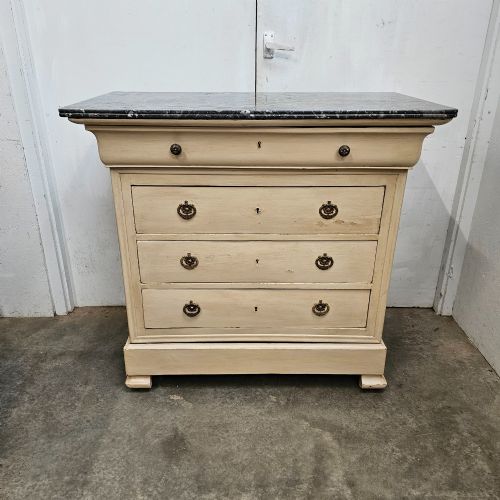
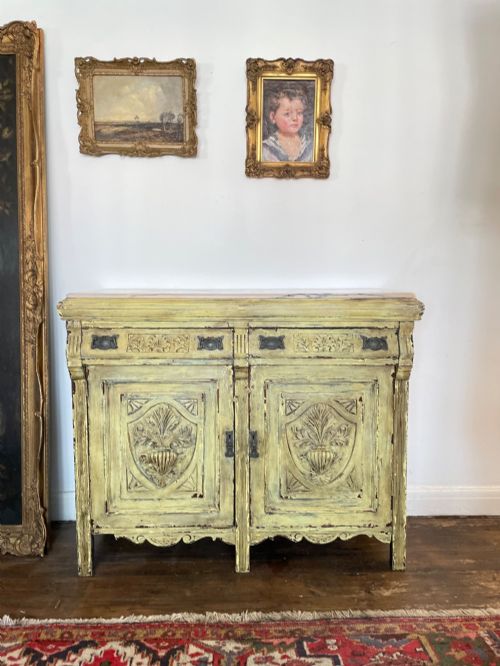
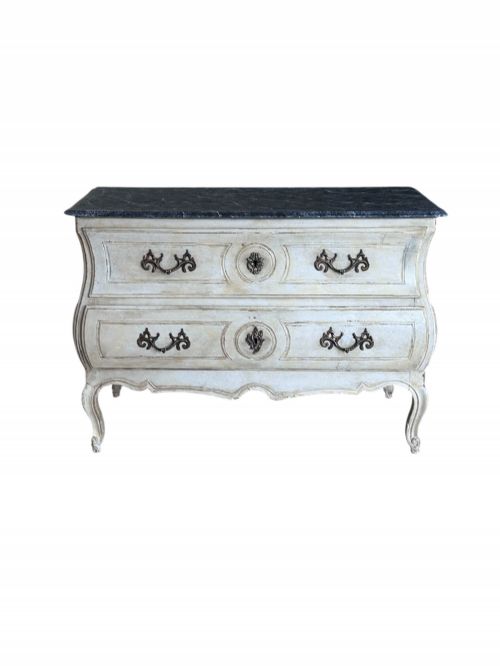
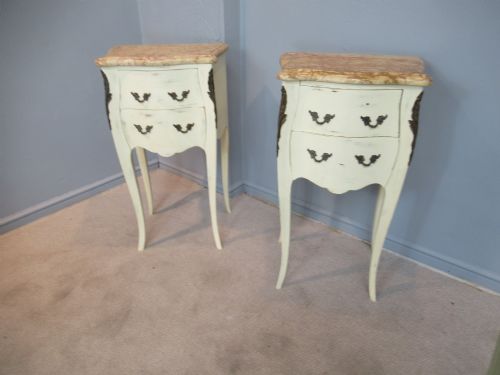


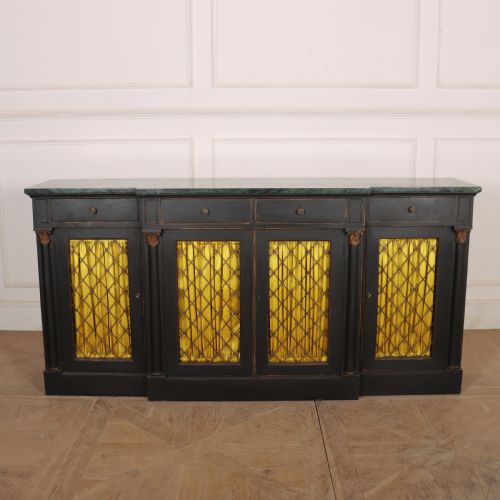


Painted Marble Top Sideboard
A painted marble top sideboard brings heavy stone and aged colour together, offering a solid surface built for practical rooms.
Painted Marble Top Sideboard
A painted marble top sideboard combines a heavy stone slab with a wooden base, creating a sturdy piece of furniture designed for storage and display. These items appear across several distinct periods, ranging from eighteenth-century examples to pieces made in the early twentieth century.
The designs draw on continental and British traditions, including French provincial, Louis XV style, Dutch neoclassical, and English country aesthetics. Buyers encounter forms such as commodes, breakfront dresser bases, enfilades, and side cabinets equipped with stone tops.
Makers shaped these items using materials like walnut, painted wood, and brass mounts, alongside the defining marble slabs. The selection on this page captures how these sideboards evolved from formal eighteenth-century commodes into later country house and provincial iterations.
How they were made
Workshops constructed the carcass from timbers such as walnut and general wood, applying paint finishes, lacquer, or gilt to the exterior surfaces. Carpenters fitted heavy marble slabs to the tops, often using pink or standard varieties to handle daily wear.
Metalworkers contributed brass and bronze hardware, including handles and mounts that defined styles from French provincial to Neoclassical. Artisans shaped fronts into serpentine or breakfront profiles, joining panels to support the significant weight of the stone above.
Painted Marble Top Sideboard Retail Price Guide 2026
Typical asking prices for painted marble top sideboard among the pieces listed under this phrase on Sellingantiques today, from the lower quarter to the upper quarter. They describe what is for sale here now, not the wider market.
One display cabinet carries hand-signwritten text marking the Rhone valley vineyards of Châteauneuf-du-Pape.
What varies in quality
The integration between the stone slab and the wooden base dictates the structural integrity of the piece. Superior examples feature marble that sits flush against well-joined cabinet work without shifting.
Surface treatments differ greatly across periods, separating original painted or lacquered finishes from later applications. The precision of the carved details on the woodwork and the weight of the bronze or brass hardware further separate standard items from finer works.
The Painted Marble Top Sideboard Glossary
- Demi-lune
- A half-moon shape used for the footprint of console tables and side cabinets. This curve allows the furniture to sit flat against a wall while projecting into the room.
- Breakfront
- A piece of furniture where the central section projects forward from the flanking outer sections. This arrangement adds depth and visual structure to large dresser bases and commodes.
- Commode
- A low chest of drawers that functions as a decorative storage cabinet. These items often feature shaped marble tops and ornate painted finishes.
- Serpentine
- A curved line that undulates with a convex centre flanked by concave sides. This contour appears frequently on the drawer fronts of Rococo furniture.
Painted Marble Top Sideboard: Frequently Asked Questions
What rooms suit a painted marble top sideboard?
These pieces fit naturally into dining rooms, hallways, or living spaces where surface durability and storage matter. The stone top handles serving dishes or lamps while the cupboards below hide tableware.
Their varied widths and shallow depths allow them to sit against walls in narrow corridors or act as focal points in larger reception rooms.
How do I care for the marble top?
Clean the stone surface using warm water and a soft cloth, avoiding acidic cleaners that etch the polished finish. Using coasters and mats prevents staining from liquids and oils.
Treat the painted wooden base with a dry duster to preserve the finish without introducing excess moisture to the timber.
How do I distinguish eighteenth-century pieces from later revivals?
Examine the construction methods inside the drawers and the backboards for hand-cut joints and tool marks. Timber shrinkage and wear patterns offer clues to the age of the wood.
Style indicators also help, as eighteenth-century makers employed specific proportions compared to twentieth-century revivals like Louis XV style cabinets.
Why are the marble slabs often coloured?
Quarries produced various types of stone featuring pink, grey, or white tones depending on the regional source. Makers selected specific slabs to complement the painted or lacquered finish of the cabinet carcass.
This contrast between the cold stone and the warm painted wood formed a central part of continental furniture design.