



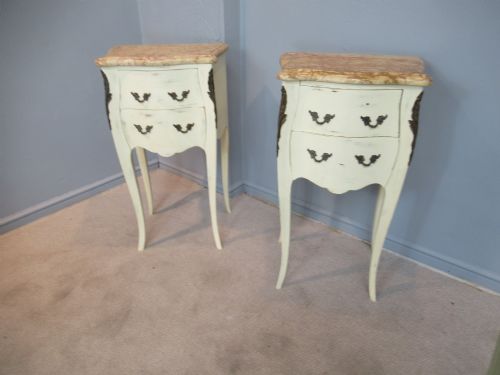
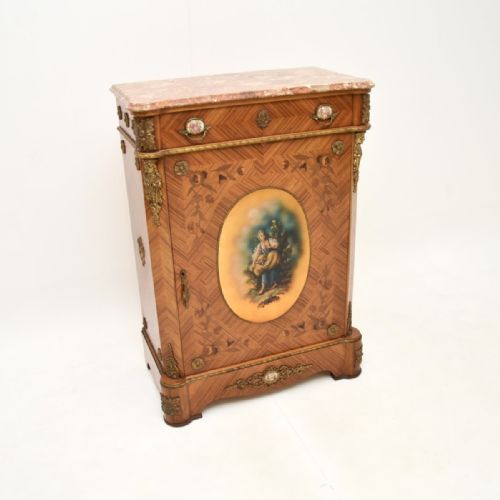


Painted Marble Cupboard
A painted marble cupboard brings solid stone and pigmented timber together, offering practical storage topped with cool, veined mineral surfaces.
Painted Marble Cupboard
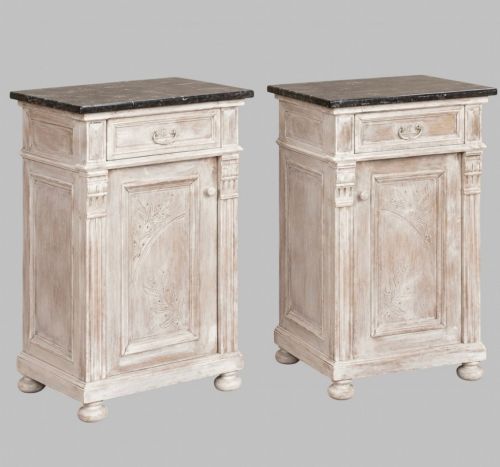
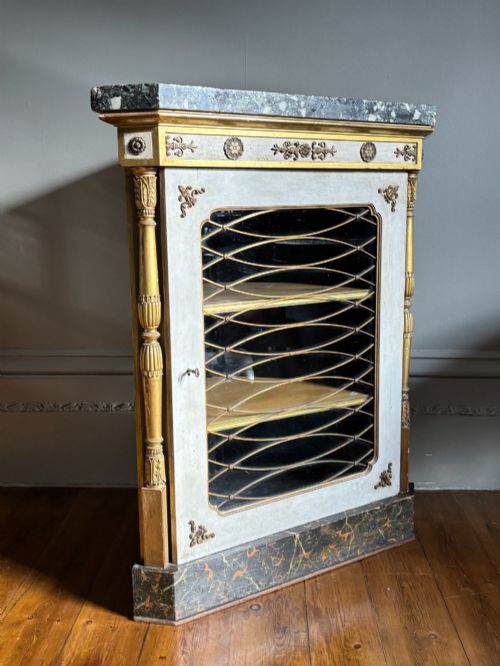
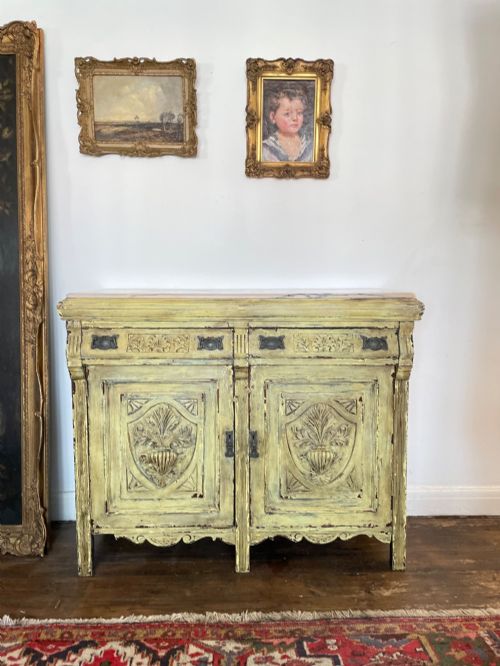
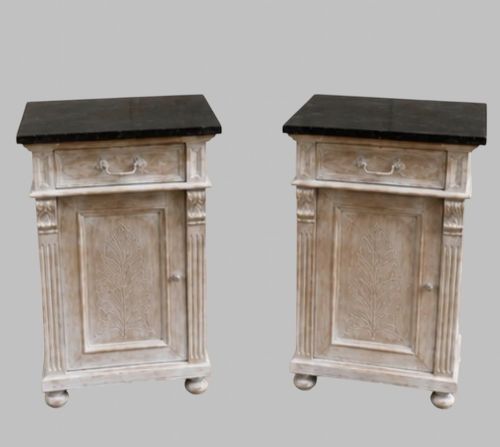
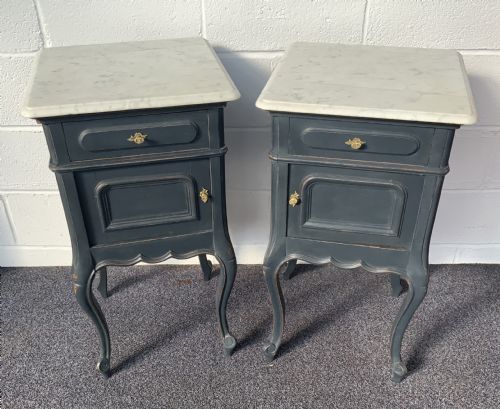
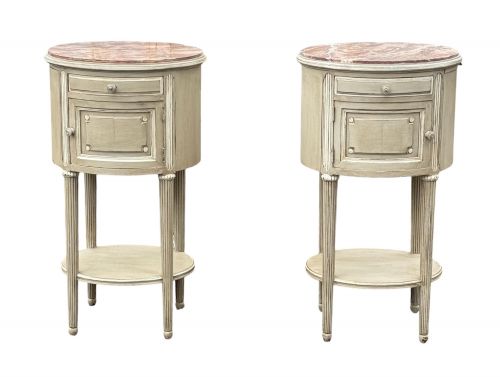
A painted marble cupboard brings together sturdy timber carcasses and cool stone surfaces, serving as practical storage for bedrooms and living spaces. When you search for a painted marble cupboard, you encounter a variety of forms ranging from compact bedside tables to grander side cabinets and corner units.
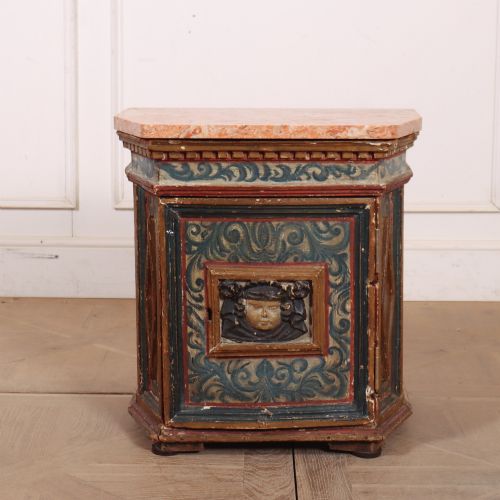
The pieces appearing here span several distinct periods, most notably the nineteenth century and the early decades of the twentieth century. French styles, including Louis XV and Louis XVI revivals alongside provincial interpretations, sit alongside Eastern European country pieces and Regency designs.
Bedside cabinets and small lamp tables dominate the selection, often found in pairs. Alongside these smaller bedroom pieces, larger sideboards, commodes, and corner cupboards offer deeper storage while retaining the signature combination of painted wood and stone tops.
How they were made
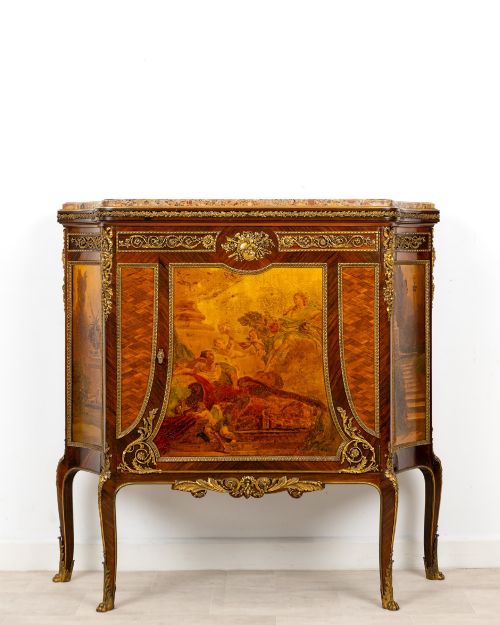
Construction relies heavily on timber frameworks, utilising pine, oak, kingwood, and general painted wood to build the main bodies and drawers of each cupboard. These wooden structures are then finished with layers of paint, sometimes incorporating decorative gilding or Vernis Martin techniques.
The defining feature of these cabinets is the inset stone surface, utilising genuine marble or occasionally faux marble finishes. Brass, gilt-bronze, and ormolu mounts frequently accent the cabinetry, providing functional hardware and decorative detail to the doors and corners.
Painted Marble Cupboard Retail Price Guide 2026
Typical asking prices for painted marble cupboard among the pieces listed under this phrase on Sellingantiques today, from the lower quarter to the upper quarter. They describe what is for sale here now, not the wider market.
Listings feature items dated across the nineteenth and early twentieth centuries, spanning periods from 1750 through the 1930s.
What varies in quality
The distinction between standard examples and superior pieces rests on the integration of materials and the execution of the painted finish. Original painted surfaces applied to period pine or oak carry a different character compared to later decorative treatments.
Cabinetry execution dictates the overall standard, seen in how tightly doors align and how smoothly drawers operate within their housings. The thickness, veining, and polish of the marble top, along with the refinement of any brass or gilt-bronze mounts, further distinguish the tier of the piece.
François Linke
The Painted Marble Cupboard Glossary
- Vernis Martin
- A type of decorative lacquer finish developed in eighteenth-century France, imitating Asian lacquer work. It appears on finer side cabinets and commodes alongside painted details.
- Ormolu
- Gilded bronze mounts and decorative elements applied to furniture. This technique adds metallic highlights to the corners and handles of cabinets.
- Commode
- A low chest of drawers or cabinet with legs, commonly featuring a marble top. These pieces serve as decorative storage units in French and continental interiors.
- Breakfront
- A piece of furniture where the central section projects forward from the flanking sides. This architectural form breaks up the linear profile of larger dressers and sideboards.
- Faux marble
- A painted finish designed to imitate the natural veining and coloration of real stone. Artisans apply this technique to timber surfaces to achieve the look of a stone top without the heavy weight.
Painted Marble Cupboard: Frequently Asked Questions
What rooms suit a painted marble cupboard?
Bedside cabinets and small tables fit naturally beside a bed for holding lamps and nighttime essentials. Larger side cabinets and corner cupboards serve dining rooms, hallways, or living spaces for tableware and general storage.
The stone top provides a durable surface that resists minor spills and everyday wear. This makes the furniture practical for high-use areas where wooden surfaces might otherwise suffer damage.
How do I care for the marble top?
Cleaning requires only a soft cloth dampened with warm water and mild, non-acidic soap. Strong chemical cleaners and acidic substances like citrus or vinegar can etch the polished stone surface over time.
Using coasters and mats under glasses and heavy objects prevents scratches and staining. Periodic sealing helps protect natural stone from absorbing oils and liquids.
Are these cabinets usually sold as pairs?
Many bedside cabinets and smaller lamp tables in this selection appear as matching pairs. This reflects their traditional use flanking a bed or balancing a room layout.
Single larger cabinets, commodes, and sideboards also feature prominently for standalone placement. Each listing specifies whether the piece is offered individually or as part of a pair.
How do I distinguish French styles?
Louis XV revival pieces typically display curved lines, cabriole legs, and ornate ormolu mounts. Louis XVI style leans toward neoclassical restraint with straighter legs and more symmetrical proportions.
Provincial and country furniture strips away elaborate carving in favour of simple panelled doors and painted finishes. Eastern European country pieces often showcase sturdy pine construction with regional painted details.