




Painted Mantel Clock
A painted mantel clock brings architectural form and hand-finished detail to a room, drawing the eye with porcelain panels and gilded bronze.
Painted Mantel Clock
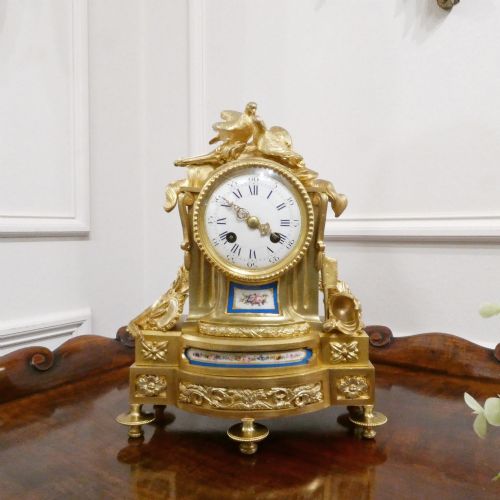
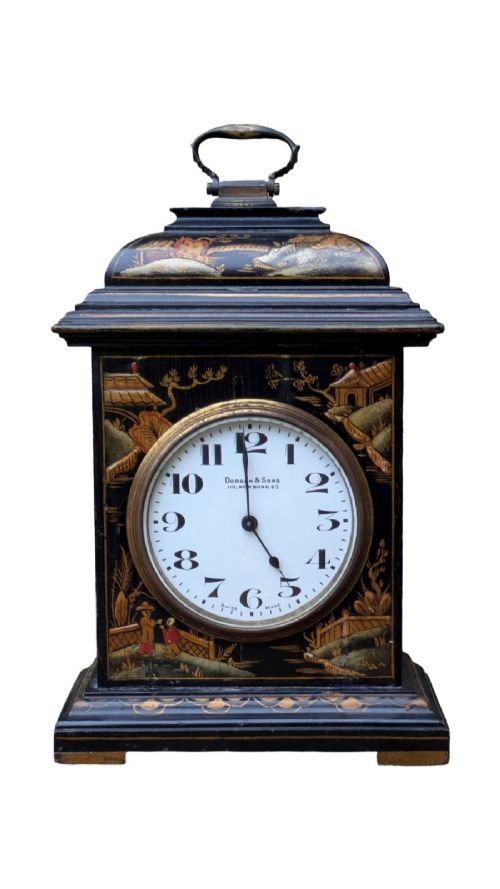
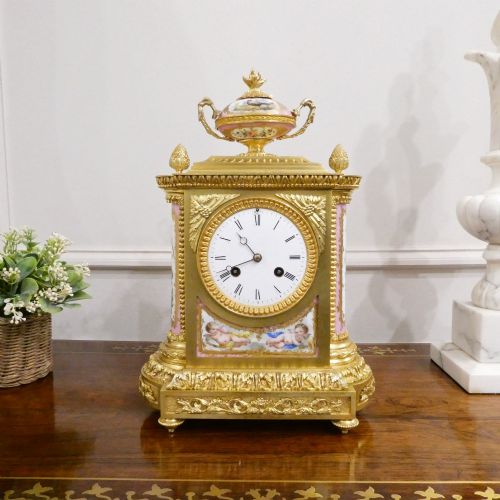
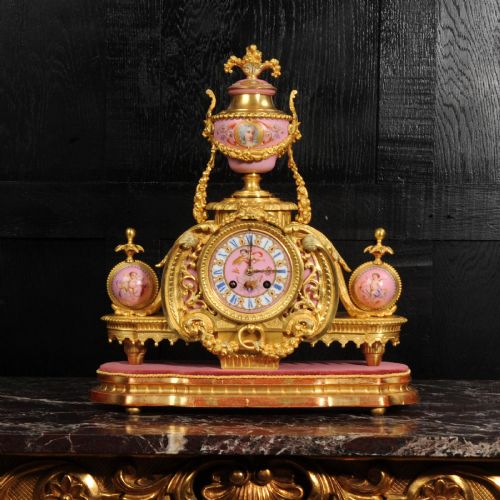
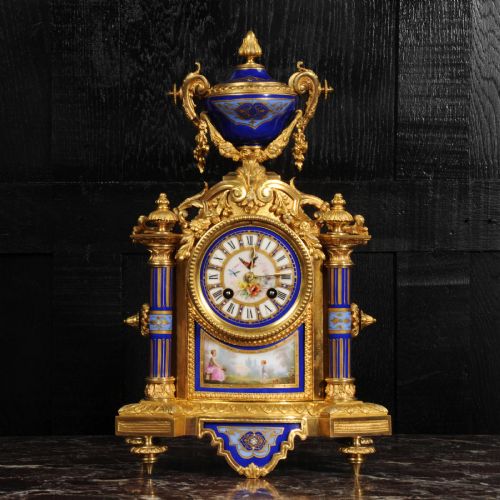
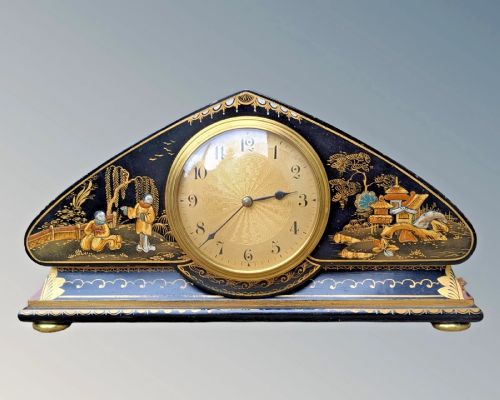
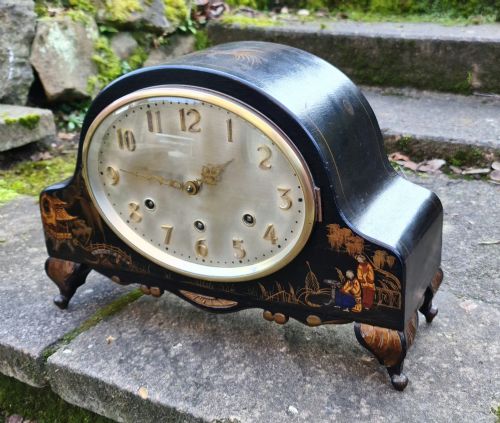
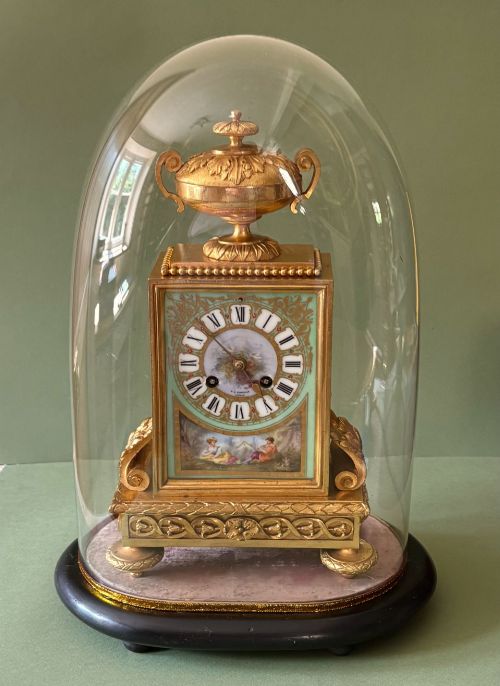
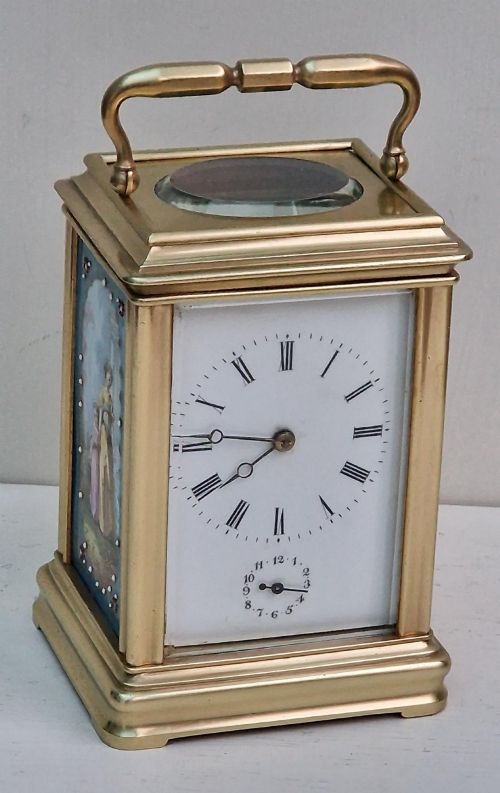
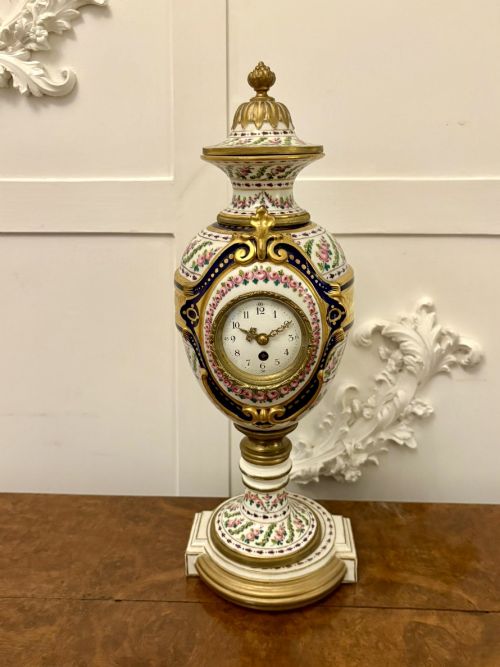
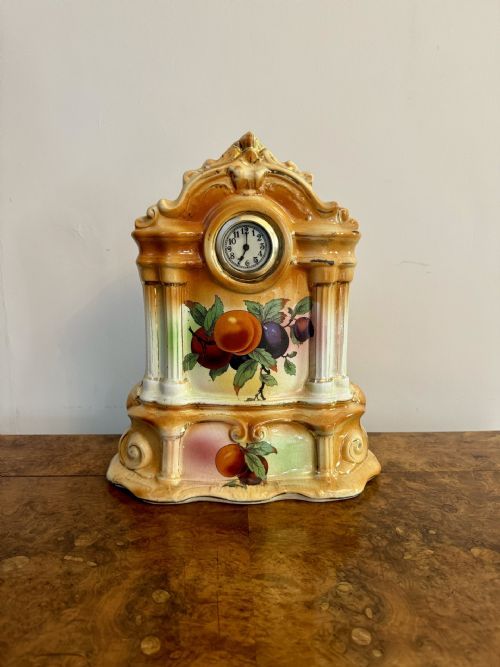
A painted mantel clock combines horology with decorative arts, most commonly appearing in nineteenth-century French ormolu and porcelain formats. These pieces range from upright urn shapes and crystal regulators to lacquered Chinoiserie cases and Staffordshire pottery figures.
Victorian examples dominate the selection, bringing substantial gilt bronze mounts and hand-painted ceramic faces into domestic interiors. Buyers encounter everything from boudoir pieces to large garniture sets complete with matching side ornaments.
Materials and construction methods
Casings rely on brass, gilt bronze, ormolu, and wood, frequently paired with porcelain panels and glass elements. Artisans applied delicate hand-painted decoration to clock dials and ceramic plaques depicting floral scenes or figural subjects.
Movement assembly involved brass gear trains, often housing eight-day double-barrel mechanisms or repeater systems within heavy metal housings. Enamel dials and painted metal surfaces received protective glazes before final mounting into the architectural frames.
Painted Mantel Clock Retail Price Guide 2026
Typical asking prices for painted mantel clock among the pieces listed under this phrase on Sellingantiques today, from the lower quarter to the upper quarter. They describe what is for sale here now, not the wider market.
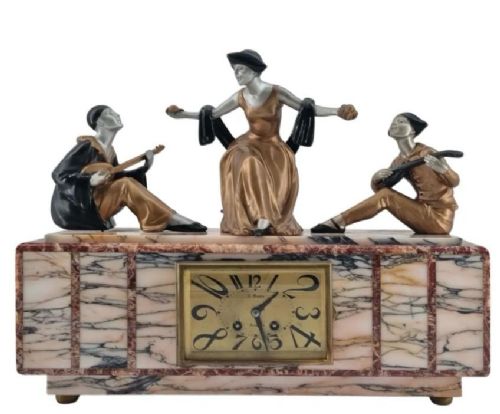
Pierrot and Columbine figures occasionally dance across Art Deco dials, keeping theatrical time above the hearth.
Quality variations in domestic timepieces
Superior examples display crisp chasing on gilt bronze mounts alongside finely articulated hand-painted ceramic panels attributed to established porcelain manufactories. Lesser pieces show softer casting details and simpler painted dials on standard wooden or ceramic bodies.
The integration of the movement into the decorative case distinguishes finer workshop production from mass commercial output. Complete garniture sets with matching components command greater interest than standalone timepieces.
Japy Freres·Jean-Baptiste Delettrez·Achille Brocot·Rene Lalique·Le Roy & Fils·KPM Berlin·Sega
The Painted Mantel Clock Glossary
- Ormolu
- Gilded bronze produced by applying a mercury-gilding amalgam to cast brass or bronze. This technique creates a rich golden finish characteristic of French decorative arts.
- Garniture set
- A matching group consisting of a central clock flanked by two decorative ornaments such as urns or vases. These arrangements traditionally decorated fireplace mantels.
- Crystal regulator
- A clock encased in glass panels that expose the mechanical movement from all sides. These pieces often feature painted enamel dials.
- Repeater
- A mechanical complication that chimes the hours and quarters upon command when a lever or cord is activated. This function proved useful during dark winter nights.
- Chinoiserie
- European decorative style reflecting Chinese artistic traditions, applied here to lacquered clock cases. Painted motifs typically feature pagodas, figures, and botanical landscapes.
Painted Mantel Clock: Frequently Asked Questions
How do I wind a painted mantel clock?
Most mechanical movements utilise a key inserted into the dial holes to tension the mainsprings every eight days. Care must be taken not to overwind the mechanism.
Matching the key size to the square arbor prevents damage to the internal gearing during weekly maintenance.
Where should I place a mantel clock?
These timepieces sit securely on flat surfaces such as fireplace mantels, console tables, or bookshelves away from direct sunlight. Stable placement ensures the pendulum beats evenly.
Drafts and excessive temperature changes can affect the delicate painted surfaces and the accuracy of the brass movement.
What is a clock garniture?
A garniture comprises a central clock accompanied by matching side pieces like porcelain urns or bronze figures. These sets created symmetrical decorative displays on nineteenth-century hearths.
Pieces within a set share identical styling, materials, and painted motifs to maintain visual harmony across the mantel.
How do I identify French revival styles?
Louis XVI and Rococo revival pieces display classical symmetry, scrolling foliage, ormolu mounts, and hand-painted Sevres-style porcelain plaques. Maker stamps on the movement backplate often confirm French origin.
Stylistic cues include urn finials, ribbon motifs, and gilt bronze framing around miniature enamel dial paintings.